Costa Rica

You are currently browsing articles tagged Costa Rica.

Located near the northeastern corner of Costa Rica, surrounded by rain forest on one side and Caribbean beach on the other, is Tortuguero National Park, whose name means “The Place of Turtles.”

Costa Rica's Tortuguero National Park is the easiest place in the world for viewing sea turtles.

Costa Rica's Tortuguero National Park is the easiest place in the world for viewing sea turtles.

Tortuguero’s 22-mile long beach is the main nesting area for Green Turtles in the Caribbean. It is also the easiest place in the world to view sea turtles.

Green Turtles mate and nest several times during a season. In mating, an amorous male holds onto a female with the sharp hook on his front flippers. If he can’t locate a female, he will improvise and substitute anything that floats, whether it be a piece of driftwood, another male turtle, or a skin diver.

Read the rest of this entry »

Bookmark and Share

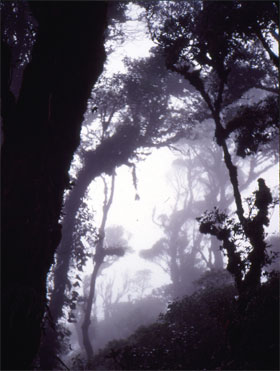
The quetzal was a sacred symbol to the Aztecs and the MayasLet’s catch a quetzal—on camera that is. We can begin our hunt by hiking through the Monteverde cloud forest, on a California Native Costa Rica Adventure. If we are lucky, we may see this incredible looking bird winging its way through the sky. With its shimmering emerald green body, red belly, and blue back, the bird does not look real. Adding to this effect is his long flowing blue and green tail, twice as long as his 15 inch body. Truly, the Resplendent Quetzal is one of the most beautiful birds in the world.

To the Aztecs and Mayas, the quetzal was their most sacred symbol. Its name was derived from quetzalli, an early Aztec word for the bird’s beautiful tail feathers. The quetzal was a symbol of both freedom and wealth. Freedom, because a quetzal was believed to die in captivity, and wealth, because the Mayas were traders, and quetzal feathers along with jade were their most sought after treasures. They traded the feathers as far north as the central valley of Mexico and as far south as the Empire of the Incas. Only the priests were allowed to wear the feathers of the quetzal. It is said that the feathers were only taken from living birds which were then released to grow new feathers.

A Mayan legend describes how the bird got its crimson breast. When the Mayan chieftain Tecun Uman fell in battle, mortally wounded by the Spanish conquistador Pedro de Alvarado, a gold-and-green quetzal landed on his chest. As the chieftain died, the bird flew off, its breast forever stained with the blood of the Mayan.

Read the rest of this entry »

Bookmark and Share

Located in the Central Mountain Range, not far from Costa Rica’s capital city of San Jóse, the town of Sarchí is the center of Costa Rica’s painted oxcart industry.

Decorated oxcart in Costa RicaAccording to legend, around 1910 a farmer was suddenly inspired to spruce up the appearance of his oxcart. He painted the wheels with multi-colored designs. Others copied his designs and oxcart painting became a uniquely Costa Rican art form. At one time each district in the country had its own special design, and people could tell by looking at an oxcart what region it came from.

Until about thirty years ago, oxcarts were the principal means of transporting coffee beans and other agricultural products to market. Today some farmers still rely on this traditional method of transporting their goods. The father of former president Oscar Arias Sánchez made his fortune hauling coffee in oxcarts to the port of Puntarenas.

Read the rest of this entry »

Bookmark and Share

Need a clue? It is also related to the horse and rhinoceros. Give up? It’s a tapir.

Tapir in Costa RicaTapirs are rather strange, primitive creatures. They are big animals—measuring about six to eight feet between their short little trunk and their stubby little tail, and weighing up to 700 pounds. Unlike elephants, who pick up food with their trunks, the tapirs move their trunks aside and browse like horses. Tapirs are the only animals native to the Americas which have four toes on their front feet and three toes on their hind feet.

In ancient times, tapirs were found throughout North America and tropical Eurasia. When the weather cooled down the European tapirs became extinct. The North American tapirs migrated south across the isthmus of Panama. Today tapirs are found only in Central and South America, and Southeast Asia.

There are only four species of tapirs—the Malayan tapir in Asia, the Brazilian tapir in the rain forests of South America, the mountain tapir in the high northern Andes, and the Baird’s tapir in Mexico and Central America.

Read the rest of this entry »

Bookmark and Share

From a place like no other in the world, come animals like no others in the world.  A few of the animals that can be spotted on California Native Costa Rica Explorer tours are the Jesus Christ Lizard and the Two- or Three-toed Sloth.

In Costa Rica, a two-toed sloth hangs lazily in a tree.Hanging upside-down from the branches of trees in Costa Rica’s lush rain forests, sleep the two and three-toed sloths. The Spanish word for sloth is perezoso, meaning “lazy”, and  sloths, who sleep around eighteen hours a day, live up to their reputation.

Because of their “lazy” or slow-moving nature, sloths live high in the forest canopy, which camouflages them from predators. They spend most of their time in the trees. By adulthood sloths are about as big as a medium sized dog. Their permanent smiling expression gives them almost human-like characteristics. These fascinating creatures can live up to thirty years. They begin reproducing at about age three and bear one baby a year.

Read the rest of this entry »

Bookmark and Share

Costa Rica has always been known as an excellent destination for the outdoor adventurer or bird watcher. Another attraction to this peaceful, central American country is the fact that Costa Rica is a fruit-lover’s paradise. Having a warm tropical climate year round makes Costa Rica a perfect place for growing a wide variety of fruits. Fresh pineapples, tree-ripe bananas, and delicious coconuts are just a few of the delicacies to be enjoyed there. Add buttery papayas and juicy mangoes to the list and you’ve got a true Costa Rican fruit cocktail. Many of these fruits you can readily find in supermarkets across the U. S. (and there is a good chance that many of them come from Costa Rica) but some of the more exotic fruits require a passport to taste.

Included among these exotic fruits are Mamones, Tamarindo, and Pejibayes. Curious names for equally curious tastes, these gems highlight the diversity of fruit-filled Costa Rica.

Mamones Chinos (mem-MO-nays), or Chinese Suckers, are pit fruits whose skins are covered with soft red spines. You may have heard them called by the name lychee. Lychees or Mamones Chinos are slightly sweet, not very acidic, and have a chewy texture similar to that of a peeled grape. Their subtle flavor is addictive. The spiny skins are fun to peel into and resemble the seed pod of a Gum tree. Sold in big bags by street vendors, Mamones have unique taste that is not soon forgotten.

Read the rest of this entry »

Bookmark and Share

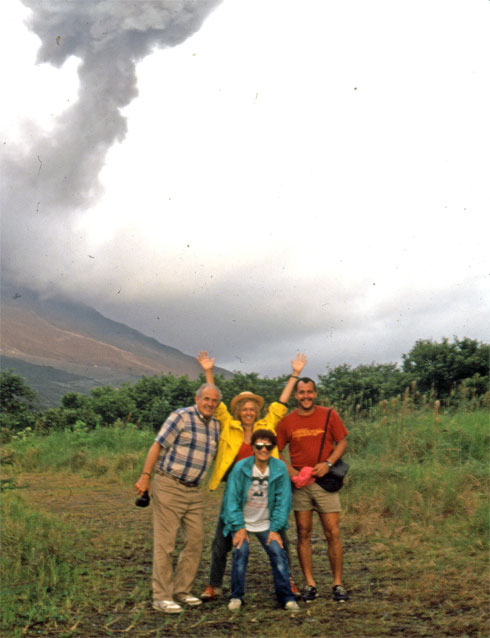
There is nothing like standing at a safe distance while watching glowing-hot boulders being pitched into the night sky.

California Native tour group poses by Costa Rica's Arenal Volcano

Costa Rica, located at the center of the America’s along the Pacific Ring of Fire, has five active volcanoes.

Read the rest of this entry »

Bookmark and Share

Jason:

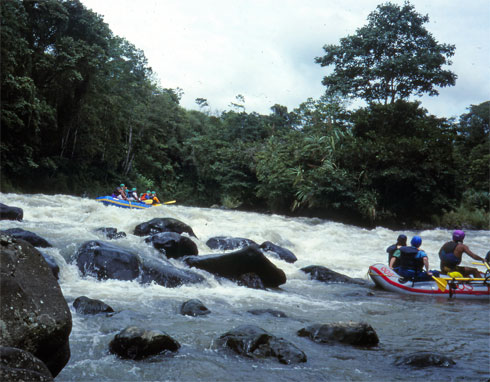
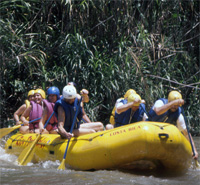
I want to thank you and California Native for arranging our recent trip to Costa Rica. The itinerary was perfect for us. We particularly liked Tortuguero, seeing the diverse range of birds and animals during our exploration by boat along the canals and the long boat trip out of the national park, when we briefly entered Nicaragua. Monteverde was wonderful too; we even saw the elusive quetzal and a green toucan in the rain forest. The white water rafting trip on the Pacaure River was terrific and we loved the overnight stay at the rustic lodge on the river. I’m so glad we did a two day trip on the Pacaure River, it was a little bit of paradise. In San Jose we attended a performance by the National Orchestra of Costa Rica at the grand old National Theatre, which was a fitting finale to our visit.

Congratulations to California Native for having such impressive local contacts. Our guides were expert and friendly.

Read the rest of this entry »

Bookmark and Share

For 26 years, The California Native has been leading travelers to destinations all over the world, but may be best known as the foremost authority on tours of Mexico’s Copper Canyon. But did you know that we have also been arranging and leading trips to Costa Rica? In the following letter, travelers Christine Grenning and James Dickson take a moment to comment on visiting this natural paradise.

I want to thank you for arranging our recent trip to Costa Rica. The itinerary was perfect for us.  We particularly liked Tortuguero, seeing the diverse range of birds and animals during our exploration by boat along the canals and the long boat trip out of the national park, when we briefly entered Nicaragua.  Monteverde was wonderful too; we even saw the elusive quetzal and a green toucan in the rain forest. The white water rafting trip on the Pacaure River was terrific and we loved the overnight stay at the rustic lodge on the river. I’m so glad we did a two day trip on the Pacaure River, it was a little bit of paradise. In San Jose we attended a performance by the National Orchestra of Costa Rica at the grand old National Theatre, which was a fitting finale to our visit.

Congratulations to The California Native for having such impressive local contacts. Our guides were expert and friendly.

Read the rest of this entry »

Bookmark and Share

The Summer/Fall 2009 edition of The California Native Newsletter is now in the mail. The newsletter, published by The California Native since 1984, has more than 10,000 readers (not counting those who download from the web). If you are not already a subscriber to this free newsletter you can signup now.

This issues feature stories include:

Lee Klein prepares to fly over the Nazca Lines on The California Native Peru ToursREVISITING PERU’S NAZCA LINES

Read the rest of this entry »

Bookmark and Share
Toucan in Costa Rica rain forest.
Oxcart in Costa Rica.

We are offering a $100 discount for each person joining our Costa Rica Nature Explorer trips. All you have to do is mention this offer when you phone us and sign up before July 31, 2009. This offer is valid for departures on any day through December 31, 2010.

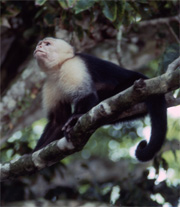
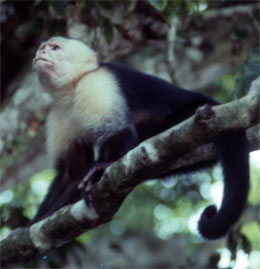
Costa Rica is a nature lover’s paradise. Unlike most tropical rainforests, where you can only view animals at a distance, in Costa Rica they are right up close. Sloths hang from trees, monkeys scamper through the canopy, basilisks (Jesus Christ lizards) run across the streams (they actually walk on water), and crocodiles sun themselves on river banks.

Read the rest of this entry »

Bookmark and Share

Here at the The California Native, we are always looking for new ways to connect with our “fans.” We love to share any information we have about our destinations like Mexico’s Copper Canyon, Costa Rica, Yucatan, Peru, Bhutan, Burma and more. Lately we have noticed that more and more people are joining social networking sites to keep abreast of their friends and interest groups.

We are happy to announce that we now have a California Native Page on Facebook, and you can become a fan on our Facebook page. If you are not yet a member of Facebook, you can also join and connect with old friends and make new ones too. You might learn about a trip some old friend took that you are dying to try yourself! Maybe they even posted some great pictures.

You may also have noticed that all of our stories, and this blog itself, are available for sharing on dozens of social networking sites as well as e-mail. Just click on the “share” icons on our website, www.calnative.com, to share a story, or page.

Read the rest of this entry »

Bookmark and Share

« Older entries