Colors set our mood and add an important dimension to our feelings and memories of the places we visit. I thought it might be fun to group some of the photos from our library of California Native images by their predominant colors. Our first collection was based on the color yellow.
This, our second collection is based on the color blue. Blue is the color of the sky and the ocean. It symbolizes trust, loyalty, wisdom, confidence, intelligence, faith, and truth.
“Somewhere over the rainbow, skies are blue, and the dreams that you dare to dream really do come true”—Lyman Frank Baum
“Mozart has the classic purity of light and the blue ocean”—Henri-Frédéric Amiel, 18th century Swiss philosopher
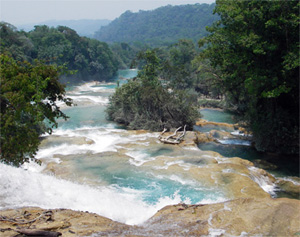
Beautiful, blue Agua Azul falls, located 40 miles from the Mayan ruins of Palenque, in the Mexican state of Chiapas, tumble down from the jungle in a series of cascades where they have carved out delighful limestone swimming holes.
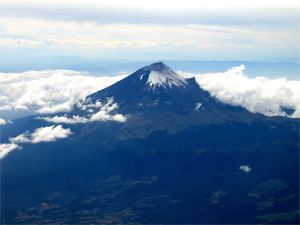
Photographed from an aircraft, the dark blue hues of Mount Popocatépetl, located in central Mexico, are highlighted by the blue sky just before sunset. Popocatépetl, which can be seen from Mexico City is a very active volcano, whose last eruption was just last year (May, 2013).
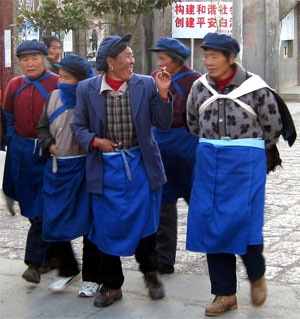
Wearing blue aprons and caps, Chinese ladies go home from work in Yunnan Province.
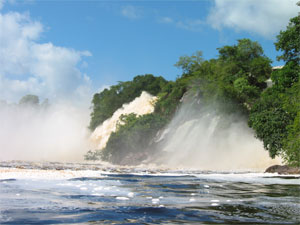
Falls cascade down into the refreshing lagoon in Venezuela’s Canaima National Park.
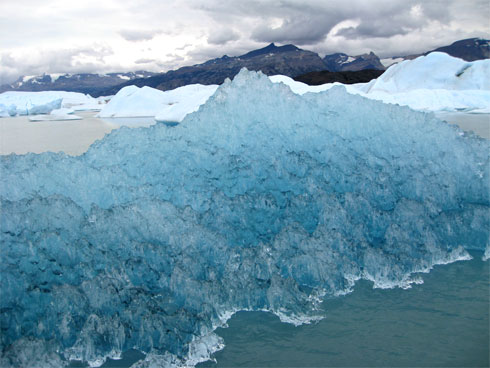
The blue of this Patagonian glacier looks almost unreal as it glistens in the sunlight near the bottom of the world.
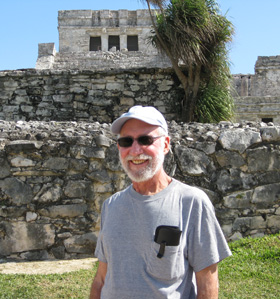
California native founder, Lee Klein, at a Mayan ruin in Mexico's Yucatan. What a way to make a living.
This June we are celebrating our 30th Anniversary—30 years of leading fantastic trips to exotic destinations around the world.
This anniversary comes as a proud moment for our company’s founder, Lee Klein, who continues to scout new locations world-wide in search of new destinations for the active traveler. Klein, who holds an MBA in Management and a BS in International Marketing, spent more than two decades as a corporate manager and college professor until, in 1983, while climbing Ayer’s Rock in the Australian Outback, he decided to drop out of the corporate world, take off his suit and tie, and create an adventure travel company based on the lessons he taught his students on how to succeed in business: “keep the quality high, keep it affordable, and treat people the way you would like to be treated.”
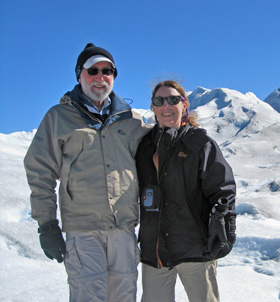
Lee and Ellen Klein hiking on Patagonia's Perito Moreno Glacier.
The initial offering from The California Native was a tour billed as “The Other Los Angeles.” This day-long excursion traced the route of the San Andreas Fault from the Mojave Desert to the San Gabriel Mountains without ever leaving Los Angeles County. The tours became so popular that colleges in three California counties offered them as part of their community-education programs. From this, the company expanded its offerings to include tours to the Channel Islands, Death Valley, Yosemite, and other uniquely California destinations, as well as white-water rafting, ballooning, spelunking (caving), sailplane gliding, and other outdoor adventures. “My family has lived in Los Angeles for generations,” writes Klein in the company newsletter, “hence the name The California Native.”
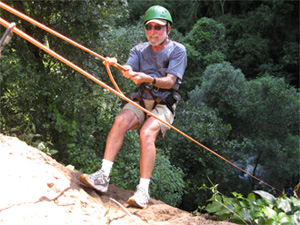
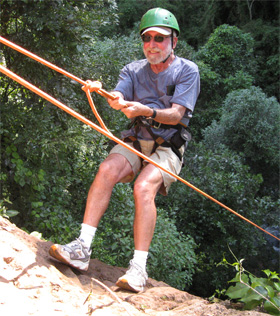
Lee rappelling in Argentina. Hey, this is research.
Satisfying the growing client base led to the development of The California Native’s most popular destination—Mexico’s Copper Canyon. These escorted and independent tours feature the Chihuahua al Pacifico Railroad (labeled as one of the most spectacular train rides in the western hemisphere) and highlight one of the most primitive indigenous cultures still subsisting in North America—the Tarahumara Indians. The California Native has become a leading source of information on this remote area and the company and it’s guides are known throughout the area for their work with the Tarahumara.
The world is a fascinating collage of cultures, each with its own traditions, customs and history, which gives them a uniqueness and sets them apart from all of the others. But the more we travel the more we find that so many things are the same and we are more united by our similarities than divided by our differences. In our series, Images of the World, we group our similarities to enjoy them and appreciate their cultural differences.
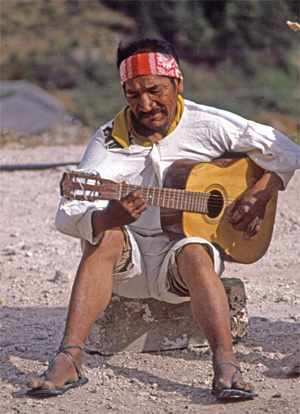
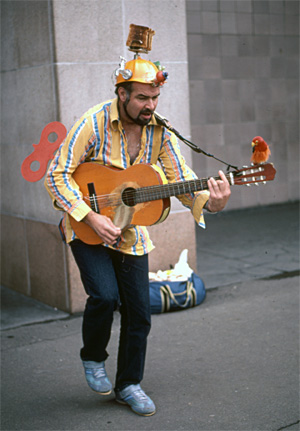
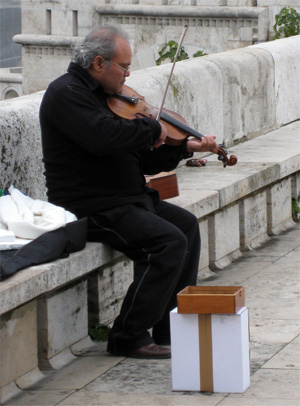
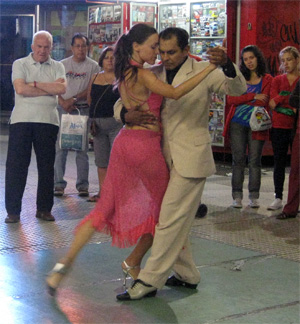
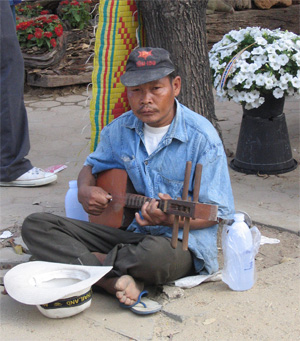
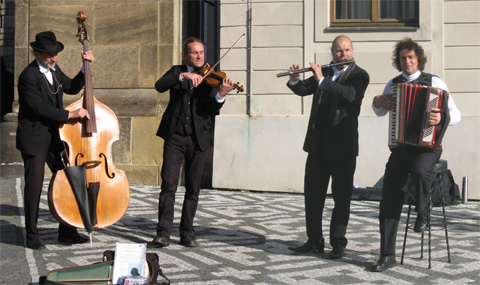
The Street Musicians: No matter where you are in the world, everyone enjoys music, and entertainment provided by street musicians is universal.
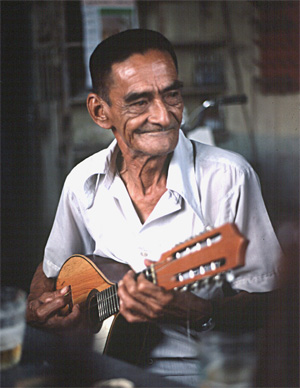
In Iquitos, Peru, a musician plays huayno music, the traditional music of the Andes, on his mandolin.
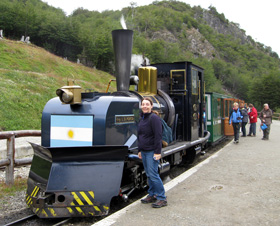
Criminals captured by police are often told metaphorically that they have reached the end of the line. In the case of repeat offenders in Argentina in the early 20th century, that statement was literal—they were sent to the prison at the end of the world.Ellen Klein stands alongside the Prisoner's Train, in Ushuia, Argentina, on a California Native Patagonia Adventure.
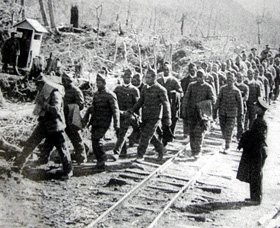
Ushuaia is known as the southernmost city in the world. Located at the southern tip of South America, it is an environment of extremes. The city was founded to establish Argentine sovereignty in the Tierra del Fuego region, and in 1896 a penal colony was set up for repeat offenders. To be sent here was seen as little better than a death sentence.
In order to transport the materials needed for the construction of the prison, a xilocar—a narrow-gauge train with shallow cars that ran on wooden tracks and was pulled by oxen—was constructed. However, it was limited in its ability to transport lumber from the forests, so in 1910 construction of a narrow-gauge railway began. The original steam locomotive that operated on the 15.5-mile line earned the nickname “La Coqueta” because of the little jumps and hops that it made as it chugged along the line.Between 1910 and 1947, Ushuia's 'Prisoner's Train' transported convicts to their daily labor.
The train was vital to the prison and the town itself. It transported prisoners to the surrounding forests to do the backbreaking work of logging. The lumber was then loaded onto the train for transportation back to Ushuaia. The prisoners’ efforts provided wood for cooking and heating during the harsh winters, as well as for construction. A large portion of the town, including buildings, streets and bridges, was built by the convicts, and it was not uncommon in the early days of the town to see teams of prisoners walking down the street.
After over fifty years of use the prison was shut down by Argentine President Juan Perón in 1947, and the train was decommissioned in 1952.
Forty-two years later, in 1994, the prisoners’ train was resurrected under the new name of Ferrocarril Austral Fueguino. It offers tourists a chance to ride along a new line that follows the old right-of-way.
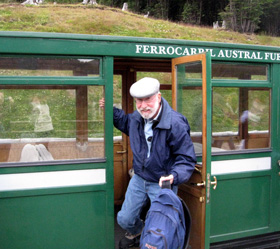
There are three steam locomotives that run on the line, and all are fired by oil, rather than coal, in order to minimize the risk of igniting forest fires. They pull heated antique coaches with large windows that offer great views of spectacular scenery.California Native founder, Lee Klein, escapes from the Prisoner's Train in Ushuia, Argentina.
Leaving Ushuaia the train follows the Pipo River through the Cañadon del Toro as a bilingual guide explains the history and ecology of the area. At the Macarena waterfall, passengers can debark to visit a reconstructed campsite of the Yámana Indians. Continuing on through sub-Antarctic forest, passengers may see high stumps that are remnants of trees cut down by prisoners during the harsh winters, when snow could accumulate to tremendous depths. The next stop is at the entrance of Tierra del Fuego National Park. Here passengers can either debark and continue their journey into the park or return on the train to Ushuaia.
Modern Ushuaia, with its hotels, restaurants, internet cafés and shops, is very different from the conditions endured by its early settlers, and it is difficult to imagine the bleak future that loomed before those who were sentenced to imprisonment and forced labor in a time when the town barely existed. Thankfully, we can now leisurely ponder this thought in the comfort of a car on the FCAF line, a huffing and puffing tribute to those who unwillingly toiled to tame the end of the world.
It’s a good thing we enjoy a good ham and cheese sandwich. On our recent trip to Argentina and Patagonia, we were amazed at the ubiquity of this tasty combination.
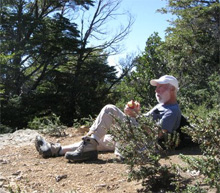
On our very first day in Buenos Aires, exhausted from jet lag and very hungry, we stopped at an empanada stand. Empanadas are a staple of Argentinian food. Basically, they are dough folded around a filling and baked. The name comes from the Spanish verb empanar, meaning to wrap or coat in bread. The available fillings were meat, onions and cheese, or ham and cheese. We opted for the latter. Delicious! OK, it was the first day, but we found a great lunch. Along the way, in other towns, we stopped in grocery stores, bakeries, etc. and ham and cheese was the filling we could consistently count on for empanadas.
As we traveled through the country, on most of our excursions, hikes, and sightseeing walks, a sack lunch was usually included. In the bags were an abundance of items—fruits, chips, salads, snacks and a ham and cheese sandwich.
Because of the size of the Country, it is often necessary to fly from one place to another. We flew on Aerolineas Argentinas, a nice domestic airline that goes everywhere. On each domestic flight, no matter the distance, we were served—you guessed it—a ham and cheese sandwich (with a sweet dessert).
So, we are walking along and exploring a town on our own, and decide to stop at a restaurant or cafe for lunch. Maybe just pick up a quick sandwich? Looking at the menu under sandwiches, there are several options: ham and cheese, ham, cheese, ham and cheese and egg, ham and cheese and tomato, ham and egg…well you get the picture. Substitute the word “Spam” for “ham” and you have a Monty Python routine.
Why so much ham? Much of the cuisine in Argentina comes from the Spanish and Italian immigrants, and hams were very popular in both countries.
Rolling through the countryside and looking at the farmland, we see lots of cows (explaining the cheese and the milk in the wonderful cafe con leche), sheep, horses and other animals, but the one animal that seems to be missing is a pig. I guess all the hams are out to lunch!
What do blue lakes, snow-capped mountains, roaring rivers, lush forest and chocolate have in common? All are found in abundance in and near the northern Patagonian city of San Carlos de Bariloche (known commonly as Bariloche). Bariloche sits in the foothills of the Andes, on the shore of Lake Nahuel Huapi, and at the foot of Cerro Catedral (Cathedral Peak), one of the most popular ski areas in Argentina.
In the winter (our summer), when the snows fall, South Americans flock to the city to take advantage of the many winter sports. In the summer and fall (our winter and spring), people come to hike, raft, kayak, fish, enjoy lakeside beaches, and much more. On our recent scouting trip to Argentina, we sampled some of the abundance of activities Bariloche has to offer. We hiked beautiful mountain trails, stopping for lunch at overlooks above clear blue lakes while giant condors flew to and from their nests on adjacent peaks. We river-rafted down the scenic Rio Manso all the way to the Chilean border. And we enjoyed sumptuous meals of pasta, lamb and steak—to re-energize ourselves after all that exercise.
Oh, did I mention chocolate? Bariloche is famous for it’s chocolate shops. Strolling from the quaint main square, with its wooden and stone alpine-look municipal buildings, down the main street, you are confronted on every block by at least two or three chocolate shops. We’re not talking about little shops—we are talking about big stores with cases and cases of chocolates by the pound, café sections for sampling decadent desserts, and aisles of every size box of chocolates you can imagine. Visit just before Easter as we did, and you can see some of the most beautifully decorated confections you can imagine. The store windows are like museums of chocolate. And, ALL of it is delicious! I know! I tasted! More than once!
What is blue, white, frosty and cold? If you guessed a type of drink, try again! It is a glacier in Patagonia, and there are hundreds of them to see. The California Native scouting team was on our third trip to explore the area in March. This time we are developing a new itinerary for our adventures not only in Patagonia (Chile and Argentina) but also in other areas of the two countries.
In the first of three weeks of travel in the region, we were able to set foot on Cape Horn (as far south as you can get without being in Antarctica), hiked an island in the Straits of Magellan, crunched our way up an ice field fjord in a zodiac, trekked in Torres del Paine National Park in the shadows of the snow-capped towers, visited the largest and the longest glaciers in Argentina, and even hiked up the glacier itself (crampons on!).
And, that was just our first week! There is a lot of excitement to be had in this region, and The California Native is constantly adding adventures so that you can join us in experiencing these wonders. Stay tuned for more on Patagonia and Argentina.
We’re coming to the end of another year, and we at California Native are looking forward to enjoying a great new year, with more fun, more adventures and more opportunities for everyone.
So, what’s new for 2010?
I recently traveled to Argentina where I made new contacts and researched new destinations to offer our fellow traveling enthusiasts. I will be returning there in a few months to continue this project.
Next month we will be traveling to Loreto to survey new and exciting adventures in Baja California—tours to petroglyphs and historical sites, relaxing “sit-by-the-pool-and-sip-margaritas” getaways, and more whale watching trips.
This coming year we will continue to look for more ways to make it more convenient for our fans to obtain information on the destinations they would like to visit. Last year we introduced “The Desktop Traveler,” our email newsletter as an up-to-date supplement to our semi-annual printed newsletter, which we have published for more than 25 years. We also now have a Facebook page and daily update on Twitter. Soon we will include a slide show on our website for each of our California Native destinations.
We are always looking for new ways to make our trips even more fun, and offer more unique destinations.
At California Native, we are always exploring new and exciting destinations to develop unique itineraries to offer our fellow travel enthusiasts.
Last week I returned from a business trip to Argentina, where I was a guest of the Argentina Tourist Board. I interviewed many Argentinian tour operators and hotel owners and found several that appeared to meet the high standards that we set for California Native suppliers. I plan to return to Argentina in a few months to do an in-depth survey of this fascinating country. Then we will develop a new series of unique trips to Patagonia, Iguazu, and the many other wonderful destinations in this beautiful, friendly South American country.
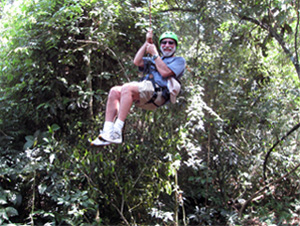
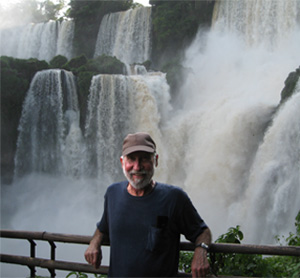
While on last week’s trip I spent several days at Iguazu Falls, traveled under the falls in a high-speed Zodiac, rappelled down the face of cliffs, zip-lined through the jungle canopy, and hiked to the many beautiful spots where the views of the falls were breathtaking. At California Native, even our business trips are fun because, after all, fun is the business we’re in.
 On our very first day in Buenos Aires, exhausted from jet lag and very hungry, we stopped at an empanada stand. Empanadas are a staple of Argentinian food. Basically, they are dough folded around a filling and baked. The name comes from the Spanish verb empanar, meaning to wrap or coat in bread. The available fillings were meat, onions and cheese, or ham and cheese. We opted for the latter. Delicious! OK, it was the first day, but we found a great lunch. Along the way, in other towns, we stopped in grocery stores, bakeries, etc. and ham and cheese was the filling we could consistently count on for empanadas.
 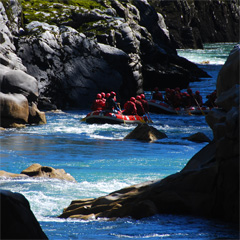 In the winter (our summer), when the snows fall, South Americans flock to the city to take advantage of the many winter sports. In the summer and fall (our winter and spring), people come to hike, raft, kayak, fish, enjoy lakeside beaches, and much more. On our recent scouting trip to Argentina, we sampled some of the abundance of activities Bariloche has to offer. We hiked beautiful mountain trails, stopping for lunch at overlooks above clear blue lakes while giant condors flew to and from their nests on adjacent peaks. We river-rafted down the scenic Rio Manso all the way to the Chilean border. And we enjoyed sumptuous meals of pasta, lamb and steak—to re-energize ourselves after all that exercise.
 Oh, did I mention chocolate? Bariloche is famous for it’s chocolate shops. Strolling from the quaint main square, with its wooden and stone alpine-look municipal buildings, down the main street, you are confronted on every block by at least two or three chocolate shops. We’re not talking about little shops—we are talking about big stores with cases and cases of chocolates by the pound, café sections for sampling decadent desserts, and aisles of every size box of chocolates you can imagine. Visit just before Easter as we did, and you can see some of the most beautifully decorated confections you can imagine. The store windows are like museums of chocolate. And, ALL of it is delicious! I know! I tasted! More than once!
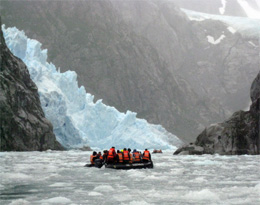 What is blue, white, frosty and cold? If you guessed a type of drink, try again! It is a glacier in Patagonia, and there are hundreds of them to see. The California Native scouting team was on our third trip to explore the area in March. This time we are developing a new itinerary for our adventures not only in Patagonia (Chile and Argentina) but also in other areas of the two countries.
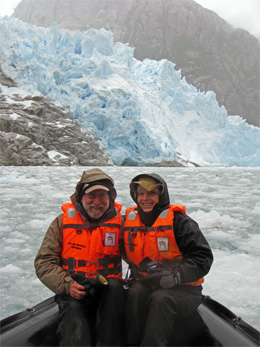 In the first of three weeks of travel in the region, we were able to set foot on Cape Horn (as far south as you can get without being in Antarctica), hiked an island in the Straits of Magellan, crunched our way up an ice field fjord in a zodiac, trekked in Torres del Paine National Park in the shadows of the snow-capped towers, visited the largest and the longest glaciers in Argentina, and even hiked up the glacier itself (crampons on!).
 At California Native, we are always exploring new and exciting destinations to develop unique itineraries to offer our fellow travel enthusiasts.