We appreciate it when our guests share their stories with us and allow us to post them on our blog. A few months ago, Gloria and Ned Krier, from Tucson, Arizona, traveled with us to Myanmar and reported this:

We recently returned home from our trip to Myanmar (formerly known as Burma). The highlights included several days in the archaeological area of Bagan, visiting hundreds of old temples. We also enjoyed seeing numerous religious buildings, covered in gold leaf and jewels, containing many sculptures of Bhuddha. It was a thrill to walk along the streets of the fabled cities of Mandalay and Rangoon (now known as Yangon) and see the fascinating culture on Inle Lake.

We were pleased with the pace of the trip. Often we are scheduled for too much “rest” time and we were happy to be “on the go” almost all day. The hotels we stayed in were very nice. The location of the hotel in Bagan was so convenient to walk and discover temples on our own.

Our guide, Simon, was with us for 13 days and AK was with us for three days. They were both very professional and friendly. Simon was charming and always wrote down the names of the places we visited during each day. They both always arrived on time and even came early. The drivers were polite and drove well.

Thanks for organizing a great trip for us.

Gloria & Ted Krier

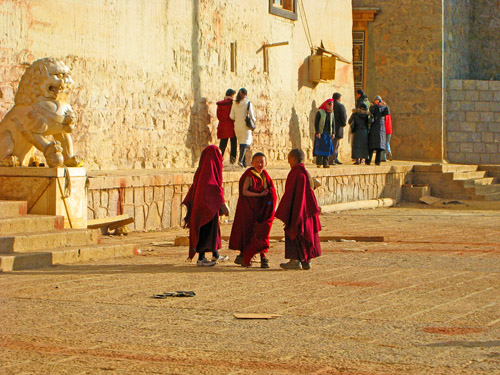
Young monks in Myanmar taking their daily meal

Young monks in Myanmar taking their daily meal.

Bookmark and Share

We appreciate it when our guests share their stories with us and allow us to post them on our blog. Last month Tessa Godfrey, from Hoddesdon, Hertfordshire, England, traveled with us on our Copper Canyon 10-day Independent Tour to the Bottom.

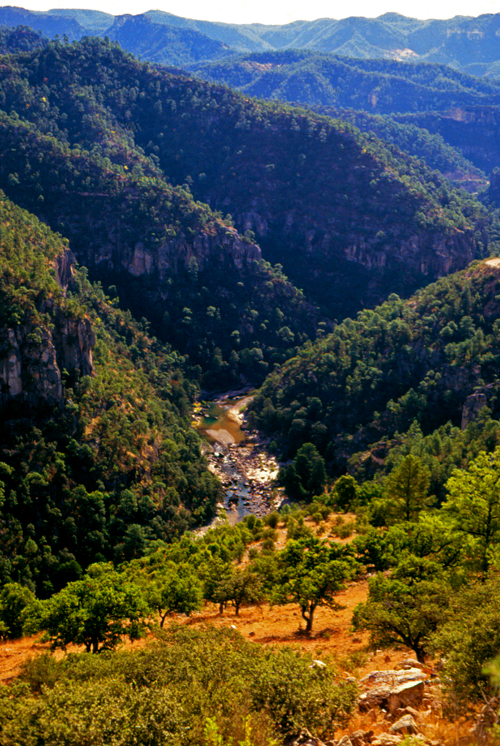
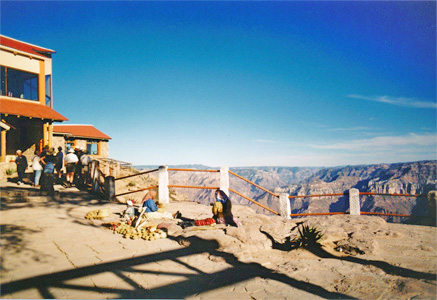
The journey down from Creel to Batopilas was both hair-raising and amazing. Lovely day exploring Batopilas and walking up and down-stream from the village. Glorious drive back up to Creel. The rock formations of the “Valley of the Monks” were a wonderful surprise. I also very much enjoyed the trip to Urique with Doug Rhodes, a very interesting man. The view of the canyon from the hotel [at Divisadero], including the bedrooms, was magnificent.

I liked the balance between your organization and our freedom. The scenery [on the trip] was incredible and your arrangements were excellent.

Many thanks,

Tessa Godfrey

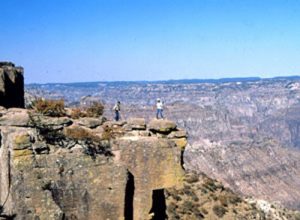
Copper Canyon Cave Dwellings

If you look carefully you can see many cave dwellings in the cliffs throughout Mexico's Copper Canyon. Many indigenous Tarahumara Indians still make their homes in these traditional lodgings.

Bookmark and Share

We appreciate it when our guests share their stories with us and allow us to post them on our blog. Last month Jo Rawlins Gilbert, from Menlo Park, California, traveled with us on our Copper Canyon 10-day Independent Tour to the Bottom and had this to report:

Jo Rawlings Gilbert reports on Mexico trip, December 2012

Jo Rawlings Gilbert reports on Mexico trip, December 2012

Mexico’s Copper Canyon was the third choice for this year’s Holiday trip. Rejected was Ethiopia’s Afar Region and the Balkans (too dangerous or too cold!), so I was left scrambling. In a stack of possible excursions was a clip from the National Geographic about The California Native and the Copper Canyon.

The California Native had a a ten day independent tour to the bottom of the canyon, including train ride and accommodations. We paid extra for two trips into the canyon—one with Don Diego. the colorful American operating a lodge near Cerocahui and another via cable car from the canyon’s rim at Posada Barrancas. A slippery drive on a wet, partially completed road for a two day stay at Batopilas, a colorful. remote mining town, was included in the tour.

It turned out to be an excellent choice: a combination of walking and sightseeing in some of the most beautiful country in the world.

There were four of us, two Brits and two Americans, who had traveled together in various combinations over some five years. All ladies of a certain age. Last year it was Rajasthan and the year before, Oman. Three of us did a four day pretour stay in Mexico City—one had been there before and the other was conversant in Spanish.

Read the rest of this entry »

We appreciate it when our guests share their stories with us and allow us to post them on our blog. Last month Jean Dook, from Felix, Almeria, Spain, traveled with us on our Copper Canyon 11-day Ultimate Tour and had this to report:

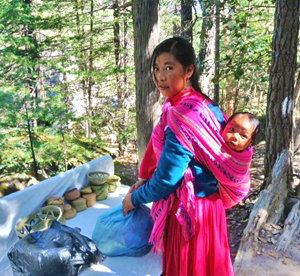
A young Tarahumara girl carries her little sister, in Mexico’s Copper Canyon.

A young Tarahumara girl carries her little sister, in Mexico’s Copper Canyon.

I had the trip of a lifetime. Will recommend your organization to everyone who stops to listen to all the wonderful stories I have to tell about the trip. I am trying to encourage some friends on the same trip so I can come again! If Rob [our California Native guide] had said on the last day lets turn round and start again I would have been the first in line to say YES!!!!! Lets do it.

I am now thinking about Costa Rica, it sounds wonderful too. But I may have fallen in love with Mexico.

Thank you so much I feel I have found a gem in the travel world.

Jean Dook

Bookmark and Share
Archery is the national sport of Bhutan

Archery is the national sport of Bhutan.

Dancing about and shouting sexual insults at the opposing team, Bhutanese sports fans enjoy their favorite pastime—archery!

Archery? It may seem counter intuitive for a devoutly Buddhist nation to choose a sport like archery since Buddhists have a profound reverence for all living things. Participating in a sport where the equipment is primarily designed for hunting or warfare seems a bit out of place. However, judging by the fact that nearly all villages in the Kingdom of Bhutan have an archery range, passion for the sport is not to be taken lightly.

Popularity of the sport can be traced all the way back to a 15th century legend. During this time, it is believed Lama Drukpa Kuenley, known affectionately as the “divine madman,” shot an arrow from Nangkartse in Tibet. Following the path of the arrow led him to Bhutan, land of the thunder dragon. Archery symbolism is present in Buddhist beliefs and often represents the offering of prayers.

Today the matches are a festival of brightly-costumed archers and spectators alike. In fact, the activity is centered as much around the pageantry of the festival as it is around the competition of hitting the bulls-eye. Archers go to great lengths to distract or demoralize their opponents—even going so far as to dance in front of the other’s target! This behavior is not just limited to the archers—the women in the crowd act as cheerleaders, shouting raucous and degrading comments about the other team’s heritage and sexual prowess. All of the hullabaloo is in jest, and no one is ruffled by it or takes much offense.

Nearly every village in Bhutan has an archery range.

Nearly every village in Bhutan has an archery range.

Wielding the traditional hand-carved bamboo bow (nowadays some use state-of-the-art compound bows), participants compete in teams of 15 players. Two points are given if the arrow hits any part of the target, three points for a bullseye, and if the arrow sticks in the ground within one arrow’s distance of the target, the team earns one point. The first team to score 25 points is declared the winner. To play, the archers are each given two shots during their turn. The field is set up like a horseshoe pitch, so team members shuttle between the targets in between shots. Not only is hitting the target difficult, but the walking back and forth across the pitch can be tiresome as well, because the small wooden targets are placed 140 meters apart! That’s nearly three times the distance of Olympic standards (a mere 50 meters) and probably why archers take the risk of taunting their rivals while standing in front of the target. The rival discouragement is a large part of the spectacle.

Read the rest of this entry »

This month, President Obama will become the first U.S. President to visit Myanmar (Burma). This historic visit will focus even more attention on this Southeast Asian country and its efforts to rejoin the international community.

For the last eight years, The California Native has been conducting tours in Myanmar. We invite you to join us before too many tourists discover the beauty and serenity of this destination.

The Shwedagon Pagoda is the most sacred Buddhist site in Myanmar.

The Shwedagon Pagoda, located in Yangon, is the most sacred Buddhist site in Myanmar. The pagoda, purported to be 2,500 years old, enshrines strands of Buddha's hair.

In Myanmar, a family celebrates a young boy's becoming a noviate monk.

In Myanmar, a family celebrates a young boy's becoming a noviate monk. Most young boys between the ages of 8 and 12 in Myanmar spend time wearing monk's robes and living in a monestery.

The U Bein Bridge, in Amarapura, Myanmar, is the world's longest teak bridge.

Built in the 1800's, The U Bein Bridge, in Amarapura, Myanmar, is the world's longest teak bridge at 1.2 km.

Bookmark and Share

A lady of the Long Neck Padaung tribe displays the neck rings she has worn since her youth.

In Myanmar (Burma), one group of indigenous people that really stands out are the Padaung women of the Karen people, sometimes known as “long-neck” tribe.

At first glance, it looks as if the women are wearing gold rings to elongate their necks, but actually, this is not physically possible. The long neck is really a visual illusion. The women wear metal rings, whose weight pushes down their collarbones and upper ribs to such an angle that the collarbone actually appears to be a part of the neck, giving the illusion of an unnaturally long neck.

The most common explanation for this practice is that the look of an extra-long neck is a sign of great beauty and wealth, which will help attract a good husband. Some also say the opposite; that it is done to make the women unattractive so they are less likely to be captured by slave traders. Padaung mythology says the reason for the neck rings is to prevent tigers from biting them. It is also said that adultery is punished by removal of the rings. If the rings are removed after years of wearing them, the woman must spend the rest of her life lying down since the neck muscles will have been severely weakened by years of lack of support for the neck. Luckily, the instances of divorce and adultery in the Karen tribe are very low.

Bookmark and Share
A little holiday snow in the high country of Mexico's Copper Canyon creates a perfect Christmas Card.

A little holiday snow in the high country of Mexico's Copper Canyon creates a perfect Christmas Card.

Please join us and celebrate this year’s holidays in Mexico’s Copper Canyon. We still have some spaces left on our Christmas/New Years Ultimate Copper Canyon tour where we will celebrate a special Christmas with the Tarahumara Indians at the Paraiso del Oso Lodge.

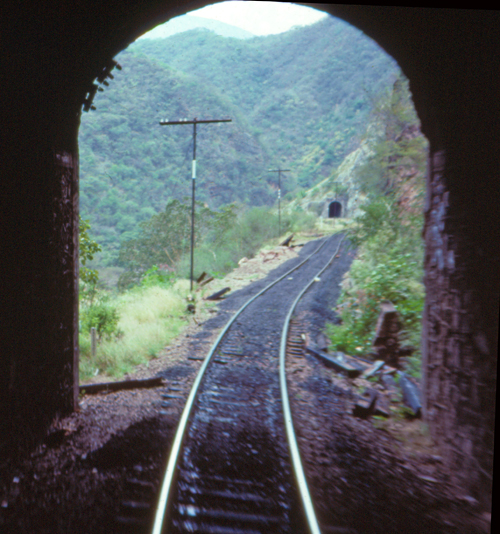
On December 23rd, our small group departs from Los Angeles and Phoenix airports for an exciting tour into Mexico’s Sierra Madre. The 11-day Ultimate tour spends nights in El Fuerte, Cerocahui, Divisadero, Creel, Batopilas, and Chihuahua. As with all of our Copper Canyon tours, we ride the Chihuahua al Pacifico Railroad for one of the most spectacular train rides in the Western Hemisphere.

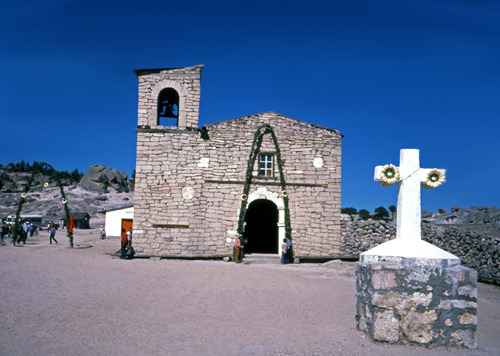
A Tarahumara church deep in Copper Canyon.

A Tarahumara church deep in Copper Canyon.

Participants will have the opportunity to enjoy a special Christmas Eve known as Noche-bueno (the Good Night), a delicious dinner at the Paraiso del Oso, and Ana Maria’s famous Christmas punch. Those wishing to join the Tarahumara Indians and mestizo community may attend the midnight mass, also known as La Misa del Gallo (Rooster’s Mass). Traditional Tarahumara dancing usually starts an hour or two before the mass, then recommences afterwards to make it an all-night celebration. As an old Spanish saying goes, “Esta noche es Noche-Buena, y no es noche de dormir” (Tonight is the Good Night, and it is not meant for sleeping).

A light snow paints Mexico's Copper Canyon in holiday colors.

A light snow paints Mexico's Copper Canyon in holiday colors.

As Christmas morning arrives, the celebration moves back to the Oso Lodge where local Tarahumara, who live in isolated ranchitos in the rugged mountains surrounding the lodge, join the hotel guests for the piñata party. The children take turns swinging at the Christmas piñata until it explodes, showering candy and small toys. The hotel is filled with laughter and glee as the children scramble to collect their treasures. Then gifts from under the Christmas tree are handed out. As the locals return to their mountain ranchitos, The California Native guests prepare for a beautiful day trip to the bottom of Urique Canyon. In the evening after the excursion, guests enjoy a special holiday dinner.

Read the rest of this entry »

Last week we returned from Morelia, Mexico where we attended the third annual Feria Mundial de Turismo Cultural, the World Cultural Tourism Fair and trade show. There, we met with Mexican tour operators and representatives from all of the states of Mexico as well as representatives of the federal government.

Looking for more unique destinations to offer our California Native guests, we visited several colonial cities which have been designated Pueblos Magicos, magic towns. These towns have been chosen for their natural beauty, cultural riches, and historical relevance and are said to offer visitors a “magical experience.” Among those we visited were Guanajuato, San Miguel de Allende, Pátzcuaro, Cuitzeo and Santa Clara del Cobre.

California Native's Ellen Klein strolls along the street in Guanajuato, Mexico.

California Native's Ellen Klein strolls along the street in Guanajuato, Mexico.


Don Quixote greets visitors at the Cervantes Museum in Guanajuato, Mexico.

Don Quixote greets visitors at the Cervantes Museum in Guanajuato, Mexico.


Mexico's president, Felipe Calderon, addresses attendees at World Travel Fair.

Mexico's president, Felipe Calderon, addresses attendees at World Travel Fair.


California Native president, Lee Klein, discusses travel with Mexico's Minister of Tourism, Gloria Guevara.

California Native president, Lee Klein, discusses travel with Mexico's Minister of Tourism Gloria Guevara at World Travel Fair in Morelia, Mexico.

Bookmark and Share

Last Christmas we attended a candelaria and bell-ringing event at the Centinella Adobe, an historical Spanish adobe located a few miles from The California Native. When we met the docent, Betty Keel, an attractive woman in her 80′s, she recalled having traveled on a back-packing trip with The California Native down to the bottom of Copper Canyon back in 1993. A few months later she came over to our office with her sister-in-law and hiking companion on the trip, Bee Jay Keel. They brought us a scrapbook with photos, made by the third guest on the trek, Barbara Boone.

We really enjoyed visiting with these delightful adventurous women and reminiscing about the many years we’ve been conducting tours in this wonderfully remote part of Mexico’s Sierra Madre mountains.

The "three caballeras" in the small town of Urique in the bottom of Copper Canyon.

The "three caballeras" in the small town of Urique in the bottom of Copper Canyon.


Loading up the burro for the day's journey.

Loading up the burro for the days journey.


Everything tastes better in camp.

Everything tastes better in camp.

Bookmark and Share

Last week I attended ATMEX, the Adventure Travel Event in the State of Veracruz, Mexico. It was a great opportunity to meet with adventure tour providers in Mexico and lay the groundwork for future partnerships to develop California Native tours to this beautiful region. We joined with Mexico Verde Expeditions and rafted down the Rio Antigua, zip-lined and mountain biked in the rainforest nearby the village of Jolcomulco. The State of Veracruz offers a plethora of historic and cultural destinations in addition to its wonderful opportunities for outdoor recreation. Please let me know if you are interested in joining us on future tours to the historic and wildly scenic State of Veracruz.

California Native President Lee Klein and Mexico's Minister of Tourism Gloria Guevara at ATMEX.

California Native President Lee Klein and Mexico's Minister of Tourism Gloria Guevara at ATMEX.


White water rafting on Mexico's Rio Antigua

White water rafting on Mexico's Rio Antigua with Mexico Verde Expeditions. California Native founder Lee Klein is the guy in front wearing sunglasses.

Bookmark and Share

Some people like to read about the places in the world that they are planning on visiting while other folks prefer to be armchair travelers and visit these places vicariously in the comfort of their homes. What ever is your preference here are our recommendations for good reading materials on one of our favorite destinations: Mexico’s Copper Canyon.

Topping off our list is The Copper Canyon Companion. (We’re probably a bit prejudiced when it comes to this book since we wrote it.)

The Copper Canyon Companion      The Copper Canyon Companion was written by the California Native staff as a reference for travelers to this unique destination. In its pages you will meet the Tarahumara Indians, who have lived in the remote mountain area for centuries. California Native’s guides share with you their personal memories and affection for these proud people who refused to be conquered by both the Spaniards and the modern world. The book takes you back in time and introduces you to the 17th-century conquistadors and priests who conquered and colonized the area, and the 19th-century Americans who left their mark in these rugged canyons. The book includes lots of useful information for travelers, including a sightseer’s log of the Railroad. Considering a trip to Copper Canyon? The Copper Canyon Companion will travel with you and give you an in-depth look into this unique region of Mexico’s Sierra Madres. Been there already? It’s a great souvenir.

There’s a lot of good reading about Copper Canyon and some of our other destinations. In the coming months we’ll highlight more books—stay tuned!

In the meantime, for more on Copper Canyon, take a look at our web store, from Amazon.com.

Bookmark and Share

Topolobampo Bay

Commander George Dewey sailed a U.S. sloop-of-war into Mexico's Topolobampo Bay (shown today) on a surveying mission in 1874.

In 1874, Commander George Dewey sailed the United States sloop-of-war Narragansett into Mexico’s Topolobampo Bay. This was the same George Dewey who, twenty-five years later, defeated the Spanish Navy at Manila Bay after giving his famous command, “You may fire when you are ready, Gridley.”

The mission into Topolobampo was a peaceful one; its goal was to survey the Pacific Coast of Mexico and Baja California. The survey was ordered by President Grant at the behest of Albert Kimsey Owen, a former railroad surveyor and city planner, who had grandiose plans to develop a great harbor at Topolobampo.

View of Topolobampo Bay.

Topolobampo, 15 miles west of Los Mochis, was the site of a 19th century utopian colony.

The harbor was only part of his plans. A railroad would be built from Topolobampo through Mexico and the United States to the Atlantic Ocean, facilitating trade between Europe, the United States, and the Far East. In addition, the area around Topolobampo would be populated with a utopian American colony.

Owen entered into an agreement to purchase 111,000 acres from a local hacienda owner and, with the help of Mexican president Porfirio Diaz, obtained concessions for the railroad and the colony. He then chartered a corporation, Credit Foncier, in New Jersey.

Albert Owen (far left) at Topolobampo.

Albert Kimsey Owen (far left) had grandiose plans to develop a great harbor and a utopian colony at Topolobampo.

People buying stock in Credit Foncier received the right to join the colony, which was to be run communally and without the use of money. Work was to be assigned according to each person’s ability, with credits awarded for labor. Individual accumulation of wealth was prohibited. Eight hours of work, eight hours of sleep and eight hours of culture or entertainment were to make up the daily routine. Colonists would build, own, and operate the railroad, telegraphs, banks, and water supply. Capital gained would be reinvested in the colony’s infrastructure.

Read the rest of this entry »

Statues of White Elephants

Statues of White elephants guard the entrance to a temple in Myanmar.

In Myanmar (Burma), the white elephant is highly respected as a symbol of power and prosperity and so it was only natural that a few months ago Myanmar’s government warmly welcomed two newly found white elephants. At the same time, the country was awarded chairmanship of the Association of Southeast Asian Nations for 2014, and U.S. Secretary of State Hillary Clinton’s visit ended 50 years of political isolation from the West. Coincidence? The people in Myanmar don’t think so.

The elephant has for centuries been a symbol of Southeast Asian countries. Maharajas sent them to battle like living tanks, and workmen used them as bulldozers. The rare “white” elephant, though, holds a special place in the lore of these countries.

A white elephant is unloaded

A white elephant is unloaded from a transport to take its place of honor near a temple in Myanmar.

While other elephants worked hard, white elephants were cherished by kings, kept in palaces, cared for by senior officials, and worried over constantly. Possession of these sacred beasts was very important. A king who had many white elephants would reign for a long time and his kingdom would prosper. If his white elephants died, it was an omen of disaster for the kingdom.

Burmese kings would hunt for these special beasts, and would present them to each other as marks of diplomacy. Sometimes they fought over them, but they always took great care of them—their rule depended on it.

As elephants were used less and less in warfare, elephant hunts became less common, and fewer white elephants were discovered. In Siam (now Thailand), the King decreed that any white elephant found must be given to him and he offered rewards for their discovery. Each time a white elephant was found, it was cause for public celebration.

Read the rest of this entry »

Last week, Lonesome George, considered the rarest creature on Earth because he was the last member of his species, died. George was a giant tortoise of a species found only on Pinta Island in the Galápagos. For the last forty years he has been living on Santa Cruz Island at the Darwin Research center. He was estimated to be around 100 years old, young for a Galápagos tortoise which sometimes live past the age of 200. Over the years attempts were made to breed him with females of closely related species but he never found a lady tortoise that interested him.

Lonesome George, the last of his species.

The California Native's Lee Klein (right) and guests visit Lonesome George.

The Galápagos Islands, home to the giant tortoises and many other unique species were first discovered in 1535 by Tomas de Berlanga, the bishop of Panama, when his ship drifted off course while on its way to Peru. He named the Islands Las Encantadas, “The Enchanted,” and marveled at the thousands of giant tortoises living there. Because of these tortoises, the Islands became known as the Galápagos—the Spanish word for tortoise.

Sailors—explorers, pirates and whalers, saw the huge tortoises, which weigh up to 550 pounds, as a convenient source of fresh meat, for the tortoises can survive long periods of time without food or water, and can live in the hold of a ship for up to a year. When British naturalist Charles Darwin visited the Galápagos in 1835, aboard the HMS Beagle, the islands’ residents showed him how to tell which island a tortoise belonged to by the shape of its shell. Pondering the causes for this localized diversity led Darwin to develop his Theory of Evolution.

At the time of his visit there were around a quarter of a million tortoises living on the islands. Today less than 15,000 remain. Of the original 15 subspecies, only eleven are left—three have become extinct and the fourth has only one individual left. Thousands of the animals were slaughtered by the crews of sailing ships and, when the islands were colonized in 1832, pigs, goats, rats and other animals also arrived, eating eggs and young tortoises and destroying nests and food supplies.

It is believed that the tortoises, who can float on the sea for several days, came to the Galapagos from the South American mainland. Once on the islands they encountered no enemies. Each of the islands presented its own unique environmental challenges, and the isolated tortoises evolved to take advantage of these differences—tortoises on islands with taller vegetation have longer necks.

Read the rest of this entry »

California Native founder, Lee Klein, and Peruvian pilot return from another flight over the ancient Nazca lines.

In the arid desert of Peru, California Native founder, Lee Klein, and Peruvian pilot return from another flight over the ancient Nazca lines. The giant figures and geometric patterns were unknown in the modern world until they were spotted by aircraft in the 1930's.

As our Cessna again circled over the giant figures on the ground I shot the final slide on my roll of film and, leaning at a 45 degree angle, attempted to reload my camera. Another pass over a monkey larger than a football field and we headed back to the dirt landing strip on Peru’s Nazca Desert. This was my first trip to Nazca, and the year was 1979.

The Nazca Desert is a high arid plateau which stretches 37 miles between the towns of Nazca and Palpa in southern Peru. Hundreds of square miles of this dry, rocky plain are marked with lines, triangles and other geometric shapes, some running for more than five miles in a straight line. There are also giant drawings including a monkey, a spider, birds, reptiles, and whales.

A giant spider on the Nazca Plain

A giant spider the size of half a football field sprawls on the Nazca Plain.

The desert markings, believed to have been made thousands of years ago, made little impression on occasional travelers who viewed them from ground level, but when they were spotted by aircraft in the 1930’s they caught the world’s attention. They have since been surveyed, mapped and studied. Only two questions remain—who made them, and why?

In his 1968 book, “Chariots of the Gods,” Swiss writer Eric von Daniken suggested that the lines were built by “ancient astronauts” as a landing field. Looking at the lines from the sky they do resemble an airport, but it doesn’t seem reasonable that advanced extraterrestrial spacecraft would require landing strips. Besides, Nazca’s soft, sandy soil is hardly suitable for an airport. Forgetting the “Twilight Zone” theories, we can imagine a more down to earth explanation. We know that the region has been inhabited for thousands of years—by the Paracas, 900–200 BC, by the Nazcas, 200 BC–600 AD, and by others. The figures are generally attributed to the Nazcas since they resemble those on Nazca pottery.

Read the rest of this entry »

We appreciate it when our guests share their stories with us and allow us to post them on our blog. Jim Whilden, from Bethleham, Pennsylvania, just returned from his Yucatan Adventure and had this to report:

Everything worked exactly as it should have. It is always great to be met at the airport by someone who is expecting you and can speak your language! When that occurs the trip is always great. Our guide even seemed glad to see us.

Guillermo, the guide, was superb! He not only explained the tourist sites but answered every question about Mexico’s government, areas, culture, language, etc. He helped us find things we read about in our guide books.

Uxmal, Valladolid, Campeche were wonderful. I loved clinbing the pyramid steps.

The trip really included everything—even specialty shops (ice cream in Merida). The hotels were wonderful and the food was great, especially in the small restaurants and cafes.

Where else can I travel with The California Native?

James G. Whildin, Jr.

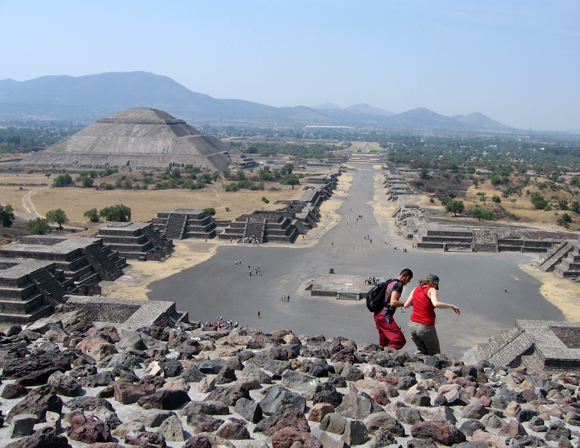
It's a long way down from the top of a Mayan pyramid

It's a long way down from the top of a Mayan pyramid on a California Native adventure in Mexico's Yucatan Peninsula.

Read the rest of this entry »

A Peruvian guide stands on a rock overlooking Machu Picchu.

A Peruvian guide stands on a rock overlooking Machu Picchu at the end of the Inca Trail.


We appreciate it when our guests share their stories with us and allow us to post them on our blog. Tom Thiss, from Excelsior, Minnesota, had this to say about his Adventure in Peru and Hiking the Inca Trail:

Machu Picchu cannot be adequately described. One has to experience it, and trekking the trail heightens the anticipation like a good story. The Sun Gate sunrise experience was shrouded in clouds yet for me, it did not matter. What mattered to me at that moment was the euphoria of restored health and energy and the sense of real accomplishment. Machu Picchu’s capacity to evoke the power of imagination not only offsets the “Inca Travail” it supercedes it. This to me is the true testimony of its potency.

Tom Thiss

Foot bridge over the Urubamba River is the start of the Inca Trail.

This footbridge over the Urubamba River is the start of the four-day trek on the Inca Trail to Machu Picchu.

Hikers run into a little rain at "Dead Woman's Pass."
Read the rest of this entry »

Lee at a Mayan ruin in Mexico's Yucatan.

California native founder, Lee Klein, at a Mayan ruin in Mexico's Yucatan. What a way to make a living.

This June we are celebrating our 30th Anniversary—30 years of leading fantastic trips to exotic destinations around the world.

This anniversary comes as a proud moment for our company’s founder, Lee Klein, who continues to scout new locations world-wide in search of new destinations for the active traveler. Klein, who holds an MBA in Management and a BS in International Marketing, spent more than two decades as a corporate manager and college professor until, in 1983, while climbing Ayer’s Rock in the Australian Outback, he decided to drop out of the corporate world, take off his suit and tie, and create an adventure travel company based on the lessons he taught his students on how to succeed in business: “keep the quality high, keep it affordable, and treat people the way you would like to be treated.”

Lee and Ellen on Patagonia's Perito Moreno Glacier.

Lee and Ellen Klein hiking on Patagonia's Perito Moreno Glacier.

The initial offering from The California Native was a tour billed as “The Other Los Angeles.” This day-long excursion traced the route of the San Andreas Fault from the Mojave Desert to the San Gabriel Mountains without ever leaving Los Angeles County. The tours became so popular that colleges in three California counties offered them as part of their community-education programs. From this, the company expanded its offerings to include tours to the Channel Islands, Death Valley, Yosemite, and other uniquely California destinations, as well as white-water rafting, ballooning, spelunking (caving), sailplane gliding, and other outdoor adventures. “My family has lived in Los Angeles for generations,” writes Klein in the company newsletter, “hence the name The California Native.”

California Native founder, Lee Klein, rappelling in Argentina

Lee rappelling in Argentina. Hey, this is research.

Satisfying the growing client base led to the development of The California Native’s most popular destination—Mexico’s Copper Canyon. These escorted and independent tours feature the Chihuahua al Pacifico Railroad (labeled as one of the most spectacular train rides in the western hemisphere) and highlight one of the most primitive indigenous cultures still subsisting in North America—the Tarahumara Indians. The California Native has become a leading source of information on this remote area and the company and it’s guides are known throughout the area for their work with the Tarahumara.

Read the rest of this entry »

We appreciate it when our guests share their stories with us and allow us to post them on our blog. This last February David & Stephani White, from Wilsonville, Oregon, traveled with us on our Copper Canyon 8-day Independent Trip to the Canyon Bottom.

A Young Tarahumara Lady Weaves a Basket

A young Tarahumara lady weaves a basket in Mexico's Copper Canyon.

My wife and I took the 8-day to the bottom trip in February of this year. I have been meaning to write , but ….

We had a wonderful time. The hotel in El Fuerte was terrific. The train trip was fascinating and beautiful. We really enjoyed Batopilas. Julio, our guide, was very knowledgeable, helpful, and fun to be with. We had a special treat: government aid distribution took place in Batopilas while we were there. The town square filled with over 200 Tarahumara people in their colorful clothing to receive drought-assistance. The hotel at Divisidero is stunning.

Read the rest of this entry »

« Older entries