
The “Ancient Musicians” of the Naxi (pronounced “Na-shee”) Orchestra are tuning up as Xuan Ke takes his place at the podium. He is younger than many of the musicians, being only in his seventy-seventh year. The standing-room only crowd gives him a thunderous applause. He addresses them in three languages: English, Mandarin, and Naxi—the ethnic dialect of the area. He has been ill, he tells them, so tonight he will conduct only the first part of the concert, then an apprentice will take over. He introduces the musicians, describes their instruments, and acquaints the audience with the history of the ancient music. Then the concert begins.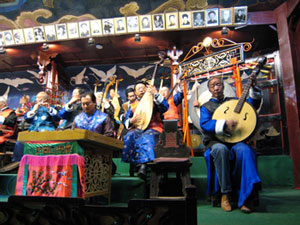
The concert hall is unheated and cold, but the music is warm, beautiful and haunting. We are seated in one of the front rows of the hall, a beautiful building in the old town of Lijiang, located in a picturesque valley in China’s Yunnan province. Though it is January, there are plenty of tourists, most of whom are Chinese.
The Naxi Orchestra is made up of 20-24 members, many in their 80’s and 90’s, dressed in bright traditional costumes. Tonight, because of the cold, we catch glimpses of jeans and warm Western clothing beneath their silk brocaded Chinese gowns. They are playing traditional Chinese stringed instruments like the guzheng, guqin and erhu, accompanied by the dizi—the Chinese bamboo flute. Although they play some traditional Han music (Han are China’s largest ethnic group accounting for 90% of the country’s population), they specialize in dongjing, a type of Taoist temple music that has been lost elsewhere in China. The melodies evoke waterfalls, birdsong, and other sounds from nature.
Xuan Ke, the venerable Conductor, popular in China and worldwide, has a shock of dark hair and dark skin. Born in 1930, the musicologist and former village school teacher first learned about music from American Pentecostal missionaries. At the urging of his merchant father, he studied Western music at the Kunming Academy. He became passionate about exploring the instrumental music, chants and folk songs of the remote mountain villages in the foothills of the Himalayas.
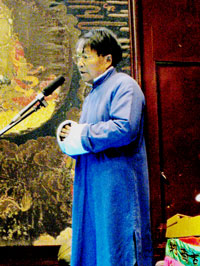
After Chairman Mao Tse-tung’s victory in 1949, Xuan Ke became a conductor in Kunming. When the Red Army entered the city, his orchestra played Schubert’s Marche Militaire. In 1958, when Mao decided that artists and intellectuals could be a threat to him, Xuan Ke, who played western music and was fluent in English, was sent for “re-education” to a forced labor camp. He spent the next twenty years working in a tin mine. There he endured constant work and was tortured. Once the guards strung him to the roof beams by his hands, his arms extended in the manner of an orchestra conductor—or the curcified Christ. He still bears the scars and disfigurement on his hands and wrists. Many of the musicians in the orchestra suffered as well, but a good number were able to save their precious antique instruments from the Red Army by embedding them in walls or burying them in the ground.
After his release, Xuan Ke taught English and at the same time put his orchestra back together. Many of his friends had died, but some remained and the orchestra today is made up of white-bearded veterans and the young apprentices to whom they are imparting their unique knowledge of the ancient music. The orchestra has performed in more than twenty countries. At home, it plays every evening and the room is always packed.
After an earthquake struck Lijiang in 1996, the old town survived almost intact but the new town suffered a large amount of damage. It was then decided that all future building should be done in the same manner as the old town. In 1997, Lijiang, the only ancient Chinese city constructed without walls, was designated a UNESCO World Heritage Site.
The California Native invites you to visit this fascinating area of China and attend a performance of the Naxi Orchestra.

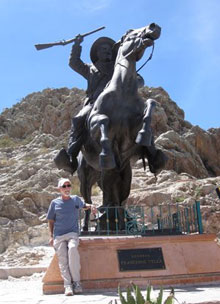 Pancho Villa, so the saying goes, was “hated by thousands and loved by millions.” He was a Robin Hood to many and a cruel, cold-blooded killer to others. But who was this colorful controversial hero of the Mexican Revolution and where did he come from?
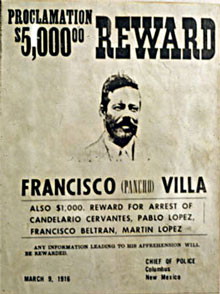 Pancho Villa was a natural leader and was very successful as a bandit, leading raids on towns, killing, and looting. He was also involved in more legitimate ventures, including being a contractor on the Copper Canyon railroad.
 On our very first day in Buenos Aires, exhausted from jet lag and very hungry, we stopped at an empanada stand. Empanadas are a staple of Argentinian food. Basically, they are dough folded around a filling and baked. The name comes from the Spanish verb empanar, meaning to wrap or coat in bread. The available fillings were meat, onions and cheese, or ham and cheese. We opted for the latter. Delicious! OK, it was the first day, but we found a great lunch. Along the way, in other towns, we stopped in grocery stores, bakeries, etc. and ham and cheese was the filling we could consistently count on for empanadas.
 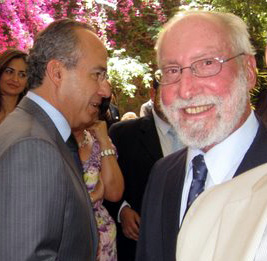 On May 21, 2010, California Native owners Lee and Ellen Klein were guests of Mexico’s President Felipe Calderón at a luncheon he held in Mexico City at Los Pinos, Mexico’s official presidential residence.
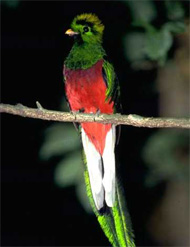 Let’s catch a quetzal—on camera that is. We can begin our hunt by hiking through the Monteverde cloud forest, on a California Native
  Most Americans think that Cinco de Mayo (the 5th of May) celebrates Mexican Independence Day. Not so. Mexican Independence Day is September 16. Then what is Cinco de Mayo?
 Napoleon enlisted England and Spain to join him in a mission to encourage Mexico to pay off its foreign debts. The mission began with the landing of French, English and Spanish troops at Vera Cruz. The French minister then demanded that Mexico pay 12 million pesos to France, an impossible amount, given the state of the Mexican treasury.
 Thanks to you and
  In the winter (our summer), when the snows fall, South Americans flock to the city to take advantage of the many winter sports. In the summer and fall (our winter and spring), people come to hike, raft, kayak, fish, enjoy lakeside beaches, and much more. On our recent scouting trip to Argentina, we sampled some of the abundance of activities Bariloche has to offer. We hiked beautiful mountain trails, stopping for lunch at overlooks above clear blue lakes while giant condors flew to and from their nests on adjacent peaks. We river-rafted down the scenic Rio Manso all the way to the Chilean border. And we enjoyed sumptuous meals of pasta, lamb and steak—to re-energize ourselves after all that exercise.
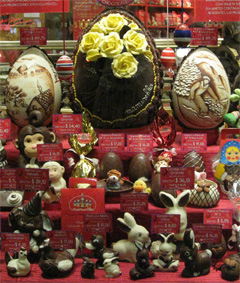 Oh, did I mention chocolate? Bariloche is famous for it’s chocolate shops. Strolling from the quaint main square, with its wooden and stone alpine-look municipal buildings, down the main street, you are confronted on every block by at least two or three chocolate shops. We’re not talking about little shops—we are talking about big stores with cases and cases of chocolates by the pound, café sections for sampling decadent desserts, and aisles of every size box of chocolates you can imagine. Visit just before Easter as we did, and you can see some of the most beautifully decorated confections you can imagine. The store windows are like museums of chocolate. And, ALL of it is delicious! I know! I tasted! More than once!