The Real Treasure of the Sierra Madre

The beauty of Mexico’s Copper Canyon and the simple life-style of its Tarahumara residents is the real “Treasure of the Sierra Madre,” but this remote region of rugged mountains and deep canyons may also hold more traditional treasure—gold and silver buried in undiscovered troves.
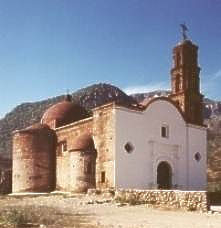
Treasure may be buried near the Satevo Mission

In February, 1767, King Charles III of Spain decreed that all Jesuits be expelled from the New World and that their properties be confiscated. His counselors had advised him that the Jesuits held a special allegiance to the pope and opposed the supremacy of the monarchy. In addition, there were suspicions that the Jesuits were involved in political intrigues in Madrid. Some of this came about because the Jesuits, known as the “Black Robes,” had acquired much wealth and power throughout the empire, causing enmity among clergy of other orders.

To prevent the Jesuits from hiding their wealth, it became imperative that the expulsion be carried out simultaneously and without warning throughout the empire. Messages under seal of the king were sent to all military commanders and were not to be opened until June 25. On that day the officers were ordered to arrest and deport the Jesuits and confiscate all the church’s property for the crown.

Despite the best efforts at secrecy, the Jesuits in Mexico became aware of the plan and began conveying their treasure out of the country by secret channels. Because of the short notice, they could not transport all of the gold and silver and were forced to bury large quantities of it.

In the bottom of Copper Canyon, four miles beyond the town of Batopilas, is Satevo, a small settlement with a beautiful old church, Iglesias San Miguel de Satevo. The church, with its three-tiered bell tower and its three domes, is all that remains of the mission of Santo Angel Custodio de Satevo, built by the Jesuits around 1760 and destroyed by a fire in the late 1800’s. All of the mission’s records were lost in the fire and the church has become fancifully known as the “Lost Cathedral of Satevo.”

In the 1800’s, vandals looking for wealth hidden by the Jesuits, ransacked the church and its crypts, but there is no evidence that they found anything. Some people believe that treasure is still hidden in the vicinity of the old church and, indeed, throughout the Sierra Madre mountains.

Many of our Copper Canyon trips visit Satevo and the old church of San Miguel de Satevo. On these journeys to the bottom of the canyon you probably won’t uncover the gold and silver allegedly buried by the Jesuits, but among the beauty, tranquility, and the always-present history of the region, you’re sure to discover your own “Treasure of the Sierra Madre.”
Fruit: Fresh and Fancy in Costa Rica

Costa Rica has always been known as an excellent destination for the outdoor adventurer or bird watcher. Another attraction to this peaceful, central American country is the fact that Costa Rica is a fruit-lover’s paradise. Having a warm tropical climate year round makes Costa Rica a perfect place for growing a wide variety of fruits. Fresh pineapples, tree-ripe bananas, and delicious coconuts are just a few of the delicacies to be enjoyed there. Add buttery papayas and juicy mangoes to the list and you’ve got a true Costa Rican fruit cocktail. Many of these fruits you can readily find in supermarkets across the U. S. (and there is a good chance that many of them come from Costa Rica) but some of the more exotic fruits require a passport to taste.

Included among these exotic fruits are Mamones, Tamarindo, and Pejibayes. Curious names for equally curious tastes, these gems highlight the diversity of fruit-filled Costa Rica.

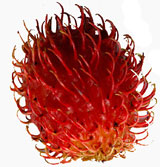
Mamones Chinos (mem-MO-nays), or Chinese Suckers, are pit fruits whose skins are covered with soft red spines. You may have heard them called by the name lychee. Lychees or Mamones Chinos are slightly sweet, not very acidic, and have a chewy texture similar to that of a peeled grape. Their subtle flavor is addictive. The spiny skins are fun to peel into and resemble the seed pod of a Gum tree. Sold in big bags by street vendors, Mamones have unique taste that is not soon forgotten.

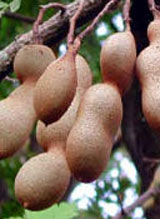
Another Costa Rican delicacy comes from the seed pod of the Tamarind tree. Tamarindo looks like a pea pod that you might find in a salad or a stir fry, except they are fuzzy on the outside like a Kiwi or a the skin of a fuzzy peach. Inside the pod, the seeds are sticky and pasty and too bitter to eat. However, if you soak the seeds in hot water you can extract the flavor.  Even then, the mixture may have too strong a flavor, but if a simple syrup is added to sweeten the mixture and then the beverage is poured over ice, the fresh tamarindo drink becomes a refreshing treat similar in flavor and texture to apple juice.

The Pejibaye is probably one of the strangest fruits to be tasted in Costa Rica. Pronounced pay hee bah jay, this palm fruit tastes like a cross between potato and coconut. The Pejibaye is similar in size to a pecan and contains a hard pit that needs to be removed before eating. Like the tamarindo, the pejibaye is prepared by boiling the fruit in water.  Locals often serve the fruit with a dollop of mayonnaise and a cup of hot coffee. This exotic flavor is hearty.

Join us on a vacation in Costa Rica: adventure, fun, good food, and last but not least, fruit as fine as any in the world.

The Desktop Traveler

The California Native is happy to announce our new email newsletter, “The Desktop Traveler.”

We like to keep in touch with our many friends and fellow travelers and so, way back in 1984, we began publishing our California Native Newsletter. Now the newsletter has more than 10,000 readers and we receive many cards and letters from our readers telling us how much they enjoy the publication. We have even had several people sending notes saying “Although I can no longer travel, I would like to continue receiving your newsletter and I am sending this to help cover the postage.” We very much appreciate these gestures and we donate any money we receive to charities supporting the Tarahumara people in Mexico’s Copper Canyon. You can subscribe to the newsletter here.

With the advent of the internet we added our California Native website. In addition to listing all of our current trips and prices, it is filled with useful information on all of our destinations including an archive of the hundreds of stories we have published over the years, charts to compare our various trips, and many other features.

Last year we introduced our Blog, Facebook and Twitter pages, to make it even easier to communicate with us.

Now we have added another way to keep in contact with our many friends, our email newsletter, “The Desktop Traveler.” This short little newsletter will be published once every few weeks and features stories which are fun and interesting to read.

If you are already a subscriber to The California Native Newsletter (and we have your current email address on file) you will automatically receive the Traveler. If you are not receiving it and would like to, please call or send us your email address. We don’t want this to be looked at as being “junk” mail, so you can always opt out by clicking the “unsubscribe” link at the bottom.

Here is a sample of the publication:


The Desktop Traveler from The California Native
The Silver King of BatopilasAlexander Robey “Boss” Shepherd, the last territorial governor of Washington D.C., developed the remote Copper Canyon village of Batopilas into one of the richest silver mining towns in the world.  Read the full story.


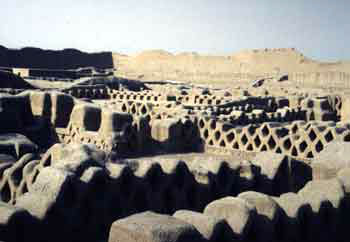
The Legacy of Chan Chan

The capital of the Chimus, Chan Chan dominated over 600 miles of Peru’s Pacific coastline before the Inca empire. The Chimu civilization lasted for almost 500 years.  Read the full story. 


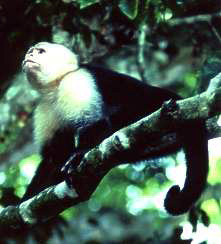
Monkeying Around in Costa Rica

Costa Rica is a great place for “monkey watching.” On our California Native trips we watch howler monkeys, spider monkeys, squirrel monkeys and capuchin monkeys, while they in turn watch us.  Read the full story.


With Wine Comes Revolution

When you think about the history of wine, it’s easy to picture France, Italy, and Spain as popular destinations for the grape lover. Read MEXICO and WINE in the same sentence and you’re likely to think Tequila?, and rightly so, but did you know that a number of award-winning wines come out of the country as well?Wine in Mexico

Winemaking in Mexico has its own history and can be traced back to the arrival of the Spanish. Early settlers predicted that Mexico’s tropical climate would not be suitable for growing grapes, but that did not stop the explorer Hernando Cortes who enacted legislation calling for landholders to plant new vines every year. The Catholic Church was on board with this plan as they brought the Mission grape to be grown on land owned by the church. The vines prospered in the hot, dry climate and helped support the economic health of the colony. In fact, it could be said that in some ways, Mexico owes its independence to the grape. One man in particular, Miguel Hidalgo, was instrumental in planting the vines of revolution.

Miguel Hidalgo was born in 1753 and is credited with cultivating the spirit of rebellion against Spanish oppression. Because of his patriotism, his championing of human rights and his personal courage, he is considered by Mexicans to be the father of their nation and a symbol of Mexican independence. At twenty years of age Hidalgo received his Bachelor of Theology degree and lectured in philosophy and theology at San Nicolás Obispo and, after being ordained as a priest, became rector of the school. Hidalgo worked hard to improve the lives of his parishioners, mastering their native languages and teaching them crafts and skills to improve their economic condition. In his parish at Dolores and throughout Mexico, he promoted winemaking and silk culture.

Wine production continued robustly until the mid-to-late 17th century when the Spanish Monarchy saw the New World competition too great a risk to their profits. The cottage industry of winemaking was declared illegal in the colonies. The Spanish crown called for the eradication of vineyards and deployed Franciscan missionaries to ensure that only wine imported from Spain was used in the sacrament. However, this did not stop the Jesuits, who continued fermenting grapes on the sly. Father Hidalgo was a staunch supporter of this rebellious activity because he wanted self sufficiency for the people in his parish and was intolerant to the subjugation of those in a lower economic situation by those acting on behalf of the king. The ceasing of wine production along with other economic hardships imposed by the king led Hidalgo to organize protest and then revolt.

Today, Mexico is gaining recognition as a player on the world wine market. And, rightly so, with Baja wineries such as Monte Xanic earning acclaim with it’s award winning Chardonnay and Cabernet Sauvignon; and Bodegas Santo Tomas, in operation for 120 years, regarded as the oldest continuously producing commercial winery in Mexico, there’s no doubt that Mexican wine is a force to be reckoned with.