tarahumara

You are currently browsing articles tagged tarahumara.

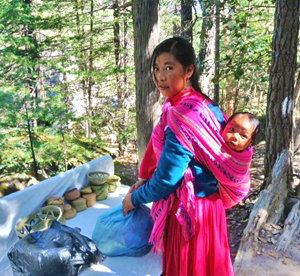
In Mexico's Copper Canyon, a Tarahumara man helps his wife with her chores.

In the village of Kirare, in Mexico's Copper Canyon, a Tarahumara man helps his wife with her chores. The California Native has been a leader in tours to Copper Canyon for almost 30 years.

Anthropologist Carl Lumholtz predicted that the Tarahumara Indians would disappear within a century. A hundred years later, these gentle people, who inhabit Mexico’s Copper Canyon, continue to be the most populous indigenous group in northern Mexico.

Spanish explorers had entered the Sierra Madre Mountains by the mid-16th century. Gold and silver were soon discovered and mines began operating. The Indians were pressed into the labor force, often enduring the harshest conditions.

The Jesuits established their first mission pueblo in 1611. Although many attempted to ease the burden of the Indians, a great deal of prejudice existed. An early Jesuit wrote, “They are inclined to idleness, drunkenness and other vices. They are ungrateful, dull and stupid…very cunning and alert in evil things…They have no sense of personal honor nor the honor of their daughters.”

Forced to live in artificially-created communities, the Indians were susceptible to a variety of diseases, and epidemics swept the area. As the demand for labor increased, the Spanish raided the mission pueblos. The Jesuits managed to protect some of their charges, but many Tarahumara fled, hiding deep in Copper Canyon. The expulsion of the Jesuits from the Americas, in 1767, ended their efforts to protect the Indians, and the Franciscans, who succeeded them, were not as effective.

Mexico attained independence in 1821 and soon established huge land grants in Tarahumara country. The Indians were uprooted again, and fled, often onto lands of other indigenous people. Fighting often resulted.

The Revolution of 1910-21 resulted in the re-creation of the pre-hispanic communal landholding system known as the ejido. The Tarahumara received some benefits from this, as much of this land has economic potential for lumbering, agriculture, and tourism. Around 60,000 Tarahumara still inhabit caves and simple dwellings in Copper Canyon.

The California Native has for many years assisted these people, donating clothing, school supplies and money. Some of our travelers have returned to volunteer in local clinics. Tourism is a positive factor, and visitors gain a new appreciation for these noble people who have survived and thrived despite Lumholtz’ dire predictions.

Bookmark and Share

Tags: , , , , ,

Since 2003,  runners have traveled to the depths of Mexico’s Copper Canyon to participate in a 50-mile foot race. This has now become an annual March event, known as the Copper Canyon Ultra Marathon (an ultra is longer than the usual 26.2 miles of a regular marathon).

The races are organized by “Caballo Blanco,” a gringo who has for years lived among the Tarahumara, or Raramuri (the running people), of Copper Canyon. The race begins in the canyon-bottom town of Urique. The participants are  taken on hikes along the trails that will be the race course days later. On race day, almost the whole town gathers to cheer on the racers—both the gringos (a group that gets larger every year) and the local Tarahumara, wearing their very “technical” footware—thin sandals made from old tires. The course features three loops of 18, 22 and 10 miles of difficult terrain that begin and end in the town. In this year’s race, which was held on March 6, only two gringos finished in the top 10.

While the Raramuri run from their homes and caves in the mountains to Urique, many make their way to the race by way of Paraiso del Oso near Cerocahui, also a stop on California Native’s popular trips to Copper Canyon.

Bookmark and Share

Tags: , , , , , , ,

Tarahumara Indian lady and children in Copper CanyonDeep in the heart of Mexico’s Sierra Madres, in the town of Creel, the center of Copper Canyon country, is the clinic of Santa Teresita. The lives of thousands of Tarahumara Indian children have been saved here because of the dreams and dedication of one man, Father Luis Verplancken.

Father Verplancken was a Jesuit priest who first visited the Tarahumaras in the late 1950s. He saw a great need for health care for these Indians who inhabit this remote area of mountains and canyons. At the time their children had an alarmingly high mortality rate.

Verplancken put his ideas into action by starting a traveling health care facility, housed in a 4-wheel drive station wagon. He quickly discovered that a little help went a long way—one dollar’s worth of penicillin, for example, could treat hundreds of children.

The word spread and by 1964, Verplancken and his volunteers received enough donations to establish a small hospital in an old railroad warehouse. The demand for medical care was so great that some Tarahumaras walked three days from their remote villages to reach the hospital.

A major obstacle that both the town and the hospital faced was the lack of a dependable water supply. With the help of more donations, a pipeline was built from the nearest fresh water source, which was four miles away over extremely harsh terrain. Three handcrafted pumping stations had to be constructed to lift the water 600 feet up to the level of the town. For the first time, Creel and the hospital had a dependable supply of fresh water.

In the mid-1970s, plans were drawn for a more modern hospital. With the help of his nephew, who was studying architecture at the time, Verplancken designed what today is known as the clinic of Santa Teresita. This clinic was literally “hand-made.” Along with a dedicated group of volunteers, Father Verplancken quarried the stone, crafted the brick and cut the trees.

The clinic opened in 1979, and houses a seventy-bed hospital with x-ray and laboratory facilities, a pharmacy, dental facilities and an outpatient clinic.

After 52 years of service to the Tarahumara community, Father Verplanken died of cancer, but the clinic lives on.

Today, the clinic still depends on volunteers and donors. Over 90% of the services and medications are provided free of cost, and the remainder are provided to the local residents at a token fee.

Many guests on California Native Copper Canyon tours have visited the clinic and donated money, medicines and supplies. One woman, after returning from a recent trip, sent four sets of crutches that she purchased at a garage sale in the United States.

Bookmark and Share

Tags: , , , , ,

Tarahumara Indians celebrate Easter in Copper Canyon, Mexico.Now is the time to book your trip for Easter in Mexico’s Copper Canyon. The Easter, or Semana Santa, celebrations of the Tarahumara Indians make this time the high season of the year. Small towns which are sleepy most of the year are now alive with celebrations, 24-hours a day. The Tarahumara, who call themselves the Raramuri, celebrate for a week, with dancing, parades, bon fires, ceremonies in the churches and much drinking of tesguino, the Indians traditional corn liquor.

To begin to understand the Tarahumara ceremonies, one has to have a basic understanding of the Indians’ religion. Read our story about this unusual version of Catholicism practiced by these colorful cave-dwelling people.

Bookmark and Share

Tags: , , , , ,

California Native guest purchases crafts in Mexico's Copper Canyon

A California Native guest purchases crafts from a Tarahumara weaver in Mexico

Visitors to the Copper Canyon area are always pleasantly surprised by the wide variety of craftsware and folk art available for purchase. The remote life and character of the Tarahumara Indians has fostered a tradition of crafts making as a part of their life-style.

While traveling through the region you will find very inexpensively priced baskets, belts, dolls, pottery and musical instruments.

The baskets are made out of the leaves of the agave as well as pine needles and range in size from tiny to large. Visitors purchasing baskets find that they can pack them one inside the other to conserve space during their trip. Once at home, the baskets of pine needles hold their scent of pine forests and become a wonderful reminder of the trip, and they are utilitarian as well as beautiful. The Tarahumara pottery is quite sturdy and is designed to be more functional then decorative.

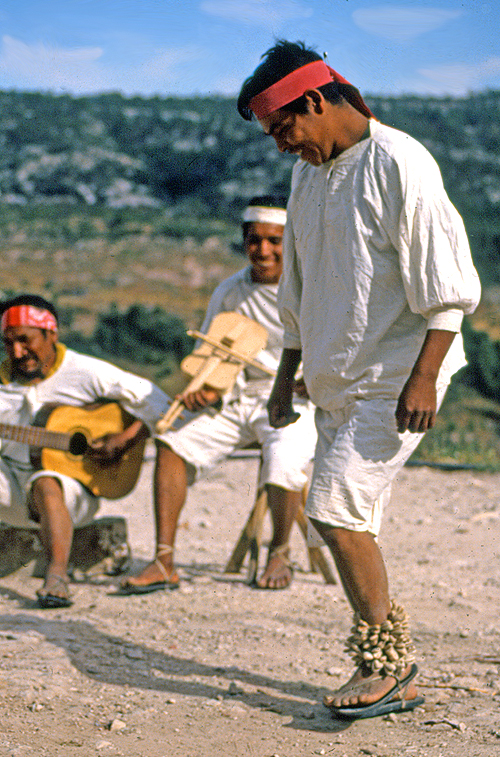
Music is an important part of the Indians daily living and also plays an important roll in their ceremonies and festivals. Their musical instruments include violins, drums and wooden flutes. They learned the art of violin making from the Spaniards in the 18th century.

Carved wooden dolls dressed in typical Tarahumara fashion are for sale in a variety of sizes and portray the various activities of Tarahumara life—mothers wearing shawls while carrying babies on their backs, ladies weaving on hand-looms, and men carrying tools or musical instruments and wearing their traditional headgear.

Crafts can be purchased from the Indians who set up their merchandise on rocks along the trails and in all sorts of unlikely nooks and crannies. Crafts are also available in stores, and one that we recommend is the Mission Store in Creel, located right on the town square. Profits go to the hospital which serves the Tarahumara Indians.

Bookmark and Share

Tags: , , , , ,

California Native founder, Lee Klein, aboard the Copper Canyon train.

California Native founder, Lee Klein, invites guests to join us for the spectacular ride on the Copper Canyon train.

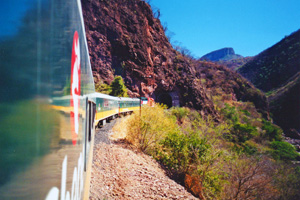
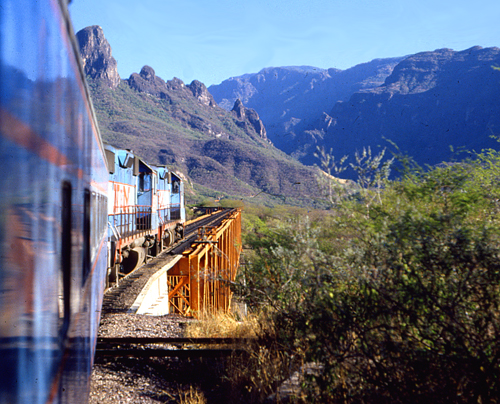
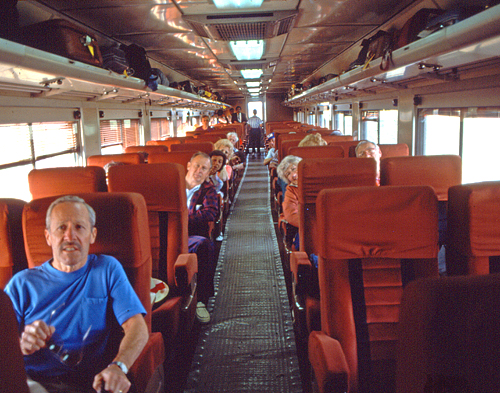
A whistle blows, and a conductor shouts the Spanish equivalent of “All aboard.” The diesel engines rev up, people relax in their seats, and off they go on one of the most famous and spectacular rail trips in the Western Hemisphere—the Copper Canyon train trip.

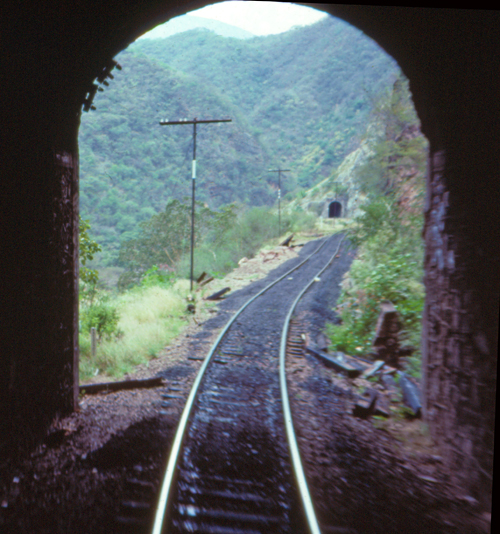
Officially called the Chihuahua al Pacifico Railroad, the rail line runs 406 miles from Los Mochis, on the Gulf of California, to the inland City of Chihuahua. Enroute, the train passes through the incredibly scenic area of rugged mountains and deep canyons in Northern Mexico’s Sierra Madre Occidental.

The rail line was first conceived in 1872 as the Kansas City Topolobampo Railroad by an American entrepreneur named Albert Kinsey Owen. By building a railroad from Kansas City across Mexico to the Pacific Coast, he could shorten the distance of the existing route by half, saving over 400 miles. Agricultural products from the interior of the United States could be transported over this shorter route to Topolobampo Bay, a natural seaport, and then carried on by ship to the Orient and western South America.

Construction of the railroad began in 1885. The project faced numerous difficulties, including lack of funds, poor management, some of the most rugged country in North America, the Mexican Revolution, and the building of the Panama Canal.

The rail line was finally completed in November of 1961, almost 90 years from its conception. The trains never did make it all the way to Kansas, but by this time improvements in U.S. domestic transportation had eliminated the need. It did, however, open up one of the most remote areas of Mexico and is still the only method of reliable transportation through the western Sierra Madres.

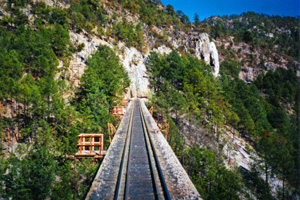
In order to complete the route, 86 tunnels and 37 bridges were constructed, totaling almost eleven miles of tunnels and 2¼ miles of bridges. The train climbs 8000 feet, plunges into a series of canyons and clings to sheer rock walls. At one point along the route it makes a 360 degree loop. At another point it enters a tunnel, makes a 180 degree turn, and exits the tunnel with the canyon now on the opposite side of the train. The views made possible by this masterful engineering feat, considered to be one of the most outstanding achievements of railway engineering in the world, are truly spectacular.

Pack your bags and join us on this remarkable journey. Along with experiencing this spectacular train ride, you will meet the people who make this area of Northern Mexico their home, including the cave-dwelling Tarahumara Indians, who have managed to preserve their traditional life-style despite the encroachment of Spain, Mexico, and the coming of the railroad.

Bookmark and Share

Tags: , , , , , ,

Easter in Copper Canyon is the most colorful time of year. Small towns which are sleepy most of the year now are full of tourists—both Mexican and foreign—who have come to see the Easter celebrations of the Tarahumara Indians. The tourists cluster with their cameras in the Indian villages, but most of them have little idea of what is going on.

Easter (or Semana Santa) is the major holiday of the year for Copper Canyon's Tarahumara IndiansTo begin to understand the Tarahumara ceremonies, one has to have a basic understanding of the Indians’ religion. The Tarahumara are outwardly Catholic, but their version of Catholicism is unlike any form we are familiar with.

In 1602, the Jesuits brought Christianity to the Indians, who adopted it, but interpreted and modified it to conform to their own customs and ideas. In 1767, King Charles III of Spain expelled the Jesuits from the New World, and the Tarahumara, on their own now, continued to develop their religious beliefs and rituals. Their resulting theology is as follows:

God is the father of the Tarahumara and is associated with the sun. His wife, the Virgin Mary, is their mother and is associated with the moon. God has an elder brother, the Devil, who is the uncle of the Indians. The Devil is the father of all non-Indians, whom the Tarahumara call chabóchi, “whiskered ones.” At death, the souls of the Tarahumara ascend to heaven while those of the chabóchi go to the bottommost level of the universe.

The well-being of the Tarahumara depends on their ability to maintain the proper relationship with God and the Devil. God is benevolent, but they must not fail to reward His attentions adequately. The Devil is the opposite, and will cause the Indians illness and misfortune unless they propitiate him with food. God is pleased by the dancing, chanting, feasting, and offerings of food and corn beer, that are a part of all Tarahumara religious festivals. The Devil is also pleased because the Indians bury food for him at these fiestas.

Of all the religious ceremonies throughout the year, The Easter celebrations are the most important. Hundreds of men, women, and children converge on the local church from villages as far away as fifteen miles. These celebrations are for socializing and having a good time, but the Indians also expect their efforts to please God so that He will give them long lives, abundant crops, and healthy children.

The Easter rituals concern the relationship between God and the Devil. Although God and the Devil are brothers, and occasionally get along, the Devil is usually bent on destroying God. Most of the time God fends the Devil off.

But each year, immediately prior to Holy Week, the Devil succeeds by trick or force in rendering God dangerously vulnerable. The Easter ceremonies are intended to protect and strengthen God so that He can prevent the Devil from destroying the world.

Each of the men and boys of the community takes part in the ceremonies as a member of one of two groups. The first group, the Pharisees, are the Devil’s allies, and carry wooden swords, painted white with ochre designs. The second group, the Soldados, the Soldiers, are allied with God, and carry bows and arrows.

The celebrations begin on the Saturday prior to Palm Sunday, with speeches and ritualized dances. The Pharisees, their bodies smeared with white earth, and the Soldados dance to the beating of drums and the melody of reed whistles. About midnight, a mass is held in the church. Shortly after sunrise, bowls of beef stew, stacks of tortillas and tamales and bundles of ground, parched maize, are lifted to the cardinal directions, allowing the aroma to waft heavenward to be consumed by God. The food is then distributed among the people. At mid-morning the Soldados and Pharisees set up wooden crosses marking the stations of the cross, a mass is held, and the priest leads a procession around the churchyard, with the participants carrying palm branches.

Three days later, on Holy Wednesday, the ceremonies resume, and for the next three days there are processions around the church. The point of the processions is to protect the church and, by extension, God and God’s wife.

On the afternoon of Good Friday, the Pharisees appear with three figures made of wood and long grasses representing Judas, Judas’s wife, and their dog. To the Indians, Judas is one of the Devil’s relatives, and they call him Grandfather and his wife Grandmother. Judas and his wife wear Mexican-style clothing and display their oversized genitalia prominently. The Pharisees and Soldados parade the figures around the church, dancing before them. The Pharisees then hide the figures away for the night.

On Saturday morning, the Soldados and Pharisees engage in wrestling matches, battling symbolically for control of Judas. The Soldados then take possession, shoot arrows into the three figures and set them afire. The people retire to continue the celebrations at the many tesguino drinking parties.

Bookmark and Share

Tags: , , , , ,

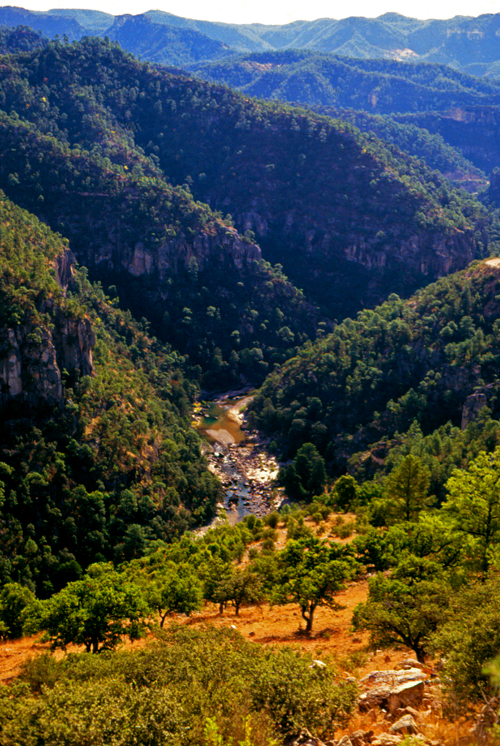
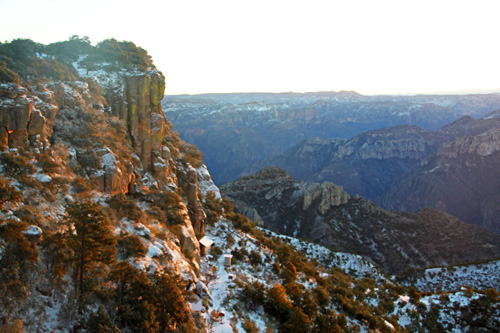
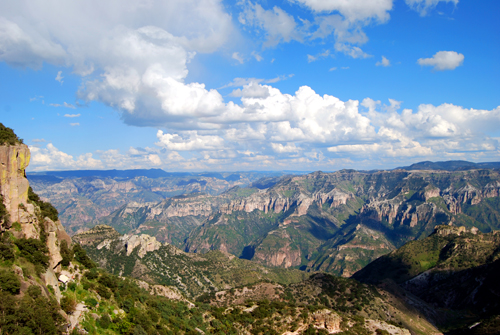
Long ago, about a hundred million years, a huge plateau arose in an area that is now part of northern Mexico. Seventy million years passed before volcanoes erupted and flooded the plateau with molten rock. Rivers then sliced this lava-covered plateau into deep twisting canyons—the largest area of canyons in North America.
View of Copper Canyon's Balancing Rock
At the interface between the volcanic layers and the old plateau are rich mineral deposits. The depth of the canyons exposes this interface, making the gold, silver, and copper accessible for mining. It is from the abundant copper ore, previously mined here, that the area derives its name—Copper Canyon.

The first people to mine the ore were the Spaniards, in 1632. Over the centuries, hundreds of mines were worked, peaking at the end of the 19th century when 20 million ounces of silver were extracted from the mines at Batopilas, making Copper Canyon one of the richest silver mining areas in the world.

The longest term residents of the canyon are the Tarahumara Indians. No one knows how long they have lived here, but archaeologists have found artifacts of people living in the area around 3000 years ago.

Francisco Vasquez de Coronado’s expedition, which passed through the Sierra Madres in 1540, in search of the legendary Seven Golden Cities of Cibola, may have been the first contact between the Tarahumara and Europeans.

Then, in 1607, the Jesuits established the first of their 29 missions to be built in the canyons and introduced the Tarahumara to Catholicism, domestic animals and the plow. When the Spaniards discovered the rich mineral wealth in the canyons, they forced the Indians to work as slaves in the mines. This led to many bloody revolts throughout the 17th century.

The influence of the Jesuits came to a halt in 1767 when the King of Spain expelled their order from the New World. The Franciscans took over from the Jesuits, but the Indians were pretty much left alone until the Jesuits returned in 1900.

Today the Tarahumara number around 50,000. They live in caves and small cabins and practice subsistence farming. The majority practice a form of Catholicism liberally intermixed with their traditional beliefs and ceremonies. Among the peoples of North America, they are considered to be the least touched by modern civilization and the most unmixed of any of the Indian tribes of Mexico.

I first became aware of Copper Canyon about twenty-five years ago when a travel writer friend of mine returned from a journey to Northern Mexico.

“Lee, you have to go to Copper Canyon,” he insisted. “It’s magnificent!!” After seeing his slides I became excited and put together our first Copper Canyon trip. Since then, we have introduced thousands of people to this beautiful area of mountains, rivers and canyons, and the unique people who make it their home.

Bookmark and Share

Tags: , , , , , ,

As our California Native group saunters up to the door of the Paraiso del Oso Lodge, we are greeted by three dogs, a cat, and a large white goose known as “Pancho.” The lodge is located in a secluded valley in Mexico’s Sierra Madre mountains, surrounded by large, volcanically formed spires, one of which resembles Yogi Bear wearing his hat—hence the name Paraiso del Oso, Spanish for “Bear’s Paradise.”

Rock formations above Paraiso del Oso Lodge
We are met by Doug Rhodes, a smiling cowboy who boldly exclaims, “I’m glad y’all made it. Welcome to the Paraiso Del Oso.”

Doug is the owner and founder of the lodge, located halfway between the town of Bahuichivo and the farming village of Cerocahui. Established in 1679, Cerocahui now has around 600 inhabitants, mostly Tarahumara Indians and mestizos.

Doug, or “Diego” as he is referred to in Mexico, was once a tour guide in Copper Canyon. As he tells it, he became so frustrated by the region’s lack of reliable hotels, that he searched until he found a remote spot ideal for exploring the area’s rich flora, fauna, and natural history. Here he built his lodge and ranch.

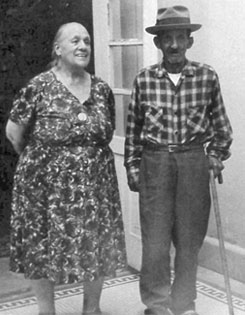
Doug Rhodes with wife, Ana Maria, and their grandson, below the 'Yogi Bear' rock formationBorn in a rural Ohio farming community, Doug has followed many diverse paths. He was an army sergeant, a NASA electrical technician, an editor, a deputy sheriff, a bodyguard, and now an inn keeper. His greatest passion is horses—he owns at least a dozen, and he brags that they are the best trained and equipped in Northern Mexico.

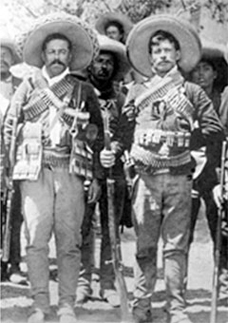
Diego is married to Ana Maria Chavez Gutierrez, a native Cerocahuian, whose family has a long and rich history in the area. Her grandfather was a famous miner who fought alongside Pancho Villa in the Mexican Revolution.

Diego and Ana contribute much to the area, furnishing outreach services to local Tarahumara families, and other community services including an annual Christmas party for local children.

At the Paraiso, guests can hike, ride horses, bike, explore historical towns, go birding, or just settle down with a good book in front of the large fireplace, sip a margarita, and relax.

Bookmark and Share

Tags: , , , , , ,

Down in the little town of Batopilas, tucked deep within the folds of Mexico’s Copper Canyon, I am witnessing something that is typically missing in this day and age: a craftsman in the process of creating a custom product. In this case the craftsman, José “Che” Rentería, is creating a unique pair of huaraches, sandals, for me.

I arrive in Batopilas after an exhilarating drive down the winding dirt road from the mountain town of Creel and make my way over to the Plaza de la Constitución to find the sandal maker. His door is closed and the tools covering the two wooden workbenches in front of his house lie dormant. As with many things in Mexico, I must wait.

After dinner I return to find Che working under the harsh light of a bare incandescent bulb. He wears a white shirt with the words “Austin, TX” embroidered on the breast. The lines etched in his face reflect the rugged contours of the canyon in which he lives. I tell him that I want to buy a pair of his sandals. He measures my feet with a trained eye and says definitively, “Ocho.” He asks if I can come back tomorrow. I tell him I will return around noon, and he nods his assent. With that, I am off. No deposit, no order form…he doesn’t even know my name. It is comforting to know some people still operate on trust. Perhaps it is the result of living in a place where time moves very slowly.

Che was born in Batopilas in 1934 and has lived in the same house for all of his 72 years. He makes his living as a leatherworker and is a master of the craft. Fifteen years ago he started making the unique Tarahumaran huaraches, and he is the only person in Batopilas who makes them.

The huaraches worn by the Tarahumara Indians, a sturdy people native to the Copper Canyon area, are rather simple sandals. The soles are made of old tires; the pair made for me still includes some white letters indicating that they are “All Terrain” sandals. A leather footbed is glued to the rubber with what looks like Che’s own homemade glue. What makes the Tarahumaran huaraches so distinct from other sandals is a very clever lacing system. A single leather strap per sandal, originating between the big and index toes, is threaded through two holes cut into the sole to create support for the heel. The strap is then wrapped around the ankle three times before being tied to itself by the heel. The result is a very comfortable, stable sandal. In fact, the Tarahumara, considered to be the greatest long-distance runners in the world, chose their traditional huaraches over high-tech running shoes as they ran to first, second and fifth place finishes at the Leadville Trail 100, a high-altitude ultra-marathon in the Colorado Rockies. These are simple, sturdy and functional footwear.

I return the following day at noon and find Che playing with his grandchildren outside of his house. He retrieves the bottoms of my sandals and asks me to wait while he assembles the straps. Using an old blade, he removes the hard surface from the straps with an assured steadiness acquired from years of working in this medium. The trimming ensures that the leather against the feet will be soft and comfortable. As he works, he asks me where I am from. When I say Los Angeles, he asks, “Hollywood?” I tell him that I live very close to Hollywood, and he disappears into his house, returning with a stack of photos showing him at, of all places, Universal Studios Hollywood. A few years ago he went to California to visit his daughter who lives there, and I wonder if he felt as far from home as I do here in the bottom of a canyon in Mexico.

Che finishes his work and begins the tutorial. He ties my right sandal for me, going through the motions very slowly to ensure that I understand how it’s done. I find them to be much more comfortable than I had anticipated, and they fit perfectly. “¿Bueno?” he asks. “Muy bueno,” I respond. We shake hands, his skin almost as tough as the leather with which he works, and I stride off in my new huaraches. With every step, they will serve as reminders of this old-fashioned craftsman plying his trade in this beautiful village in the bottom of the Copper Canyon.

Kevin Maddaford

Bookmark and Share

Tags: , , , , ,

In the summer of 1993, two of our California Native guides, Doug Stewart and Tarahumara woman Lynn Reineke, escorted a small group of Indians from the depths of Mexico’s Copper Canyon to Leadville, Colorado, where they astounded the world of marathon racing by coming in first, second and fourth place in a 100 mile ultra-marathon race, wearing their native garb and sandals made out of discarded tires.

Tarahumara Indian Lady in Mexico's Copper CanyonWho were these strangely-dressed people, who came from obscurity to outpace hundreds of experienced runners?

They call themselves the Rarámuri, the Runners, and they inhabit the rugged and remote area of mountains and canyons in Mexico known as the Barrancas del Cobre or Copper Canyon. They are known to the outside world as the Tarahumara.

No one knows how long the Tarahumara have lived in their rugged homeland. Archaeologists have found artifacts of people living in the area three thousand years ago, but it is not known if they were the ancestors of the present day Indians.

There is no recorded history of the Tarahumara prior to the coming of the Spaniards in the sixteenth century. Their first European contact may have been with Coronado’s expedition as it passed through the Sierra Madres searching for the legendary Seven Golden Cities of Cibola. In 1607 the Jesuit missionary Father Juan Fonte established the first Jesuit mission in their territory.

During the next one hundred and fifty years, the Jesuits built twenty-nine missions and introduced the Indians to Catholicism, domestic animals, the plow and the axe. Their influence came to an abrupt halt in 1767 when the King of Spain expelled their order from the New World. The Franciscans took over from the Jesuits, but their influence on the Tarahumara was minimal and the Indians were pretty much left alone until the Jesuits returned in 1900.

The Tarahumara have traditionally lived in isolated family units and small settlements. The Spaniards tried to bring them into more concentrated communities but the strong-willed Tarahumara managed to resist these efforts, and today a large number still live in small, isolated groups. During the time of the Jesuits, mineral wealth was discovered in the region and many Indians were forced to work as slaves in the mines. This and the encroachment of the Spaniards upon their lands, led to many bloody revolts throughout the seventeenth century.

Today the Tarahumara number around 50,000. They still inhabit the same region they have for centuries—the rugged Sierra Madre Occidental of northern Mexico. They live in caves and small wood or stone cabins and practice subsistence farming. The majority practice a form of Catholicism liberally inter-mixed with their traditional beliefs and ceremonies.

Among the peoples of North America, the Tarahumara are considered to be the most primitive, the least touched by modern civilization. They are also the most unmixed of any of the Indian tribes of Mexico.

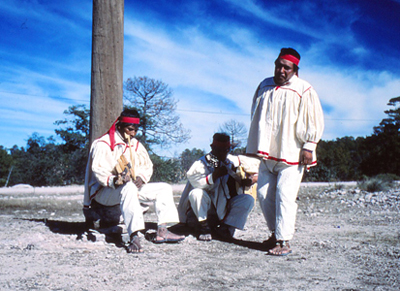
Many of the men and most of the women still dress in their traditional styles. The ladies wear wide multiple skirts, full sleeved blouses, a head band or bandana, and a shawl for carrying a child or other objects on their backs. The little girls dress the same as their mothers and often carry a little brother or sister on their backs. The men wear a breech-cloth held together by a wool girdle wrapped around the waist, a cloth head band, and a loose cotton shirt.

Running up and down the steep canyons is an important part of the Tarahumara culture, not only as a means of transportation and communication in this rugged area, but as a sport in which villages compete against each other. From the time they are small children the Tarahumara take great pride in their running skills.

In the Rarámuri philosophy, respect for others is of prime importance. They give greater value to persons than to objects, and business matters take second place to respect for human beings. On our trips through Copper Canyon we also learn to respect other people, especially the Rarámuri, as we meet them, discover their unique culture and perhaps adopt some of their philosophy into our own lives.

Bookmark and Share

Tags: , , , , ,

Saying Goodbye to Copper Canyon

The following story was submitted to us by Kay Gilliland who describes her experience traveling with friends through Mexico’s Copper Canyon during the Christmas holidays. Today, Kay and her friends travel from Chihuahua City to El Paso for their flights home.

The California Native is always thrilled to have groups of friends join our trips to this charming region of Mexico. We appreciate it when our guests share their stories with us and we like to add them to our blog for everyone to see. We hope you have enjoyed reading about Kay’s 11-day Copper Canyon Adventure.

January 2, Friday

We were up early the next day for cereal and huevos rancheros, then off to the border. We stopped twice, once at Ahumada and again farther on. Jenny bought dolce de leche and shared it with us. It had a good, sweet taste. We drove about 230 miles to Ciudad Juarez and waited in line for an hour and a half before we were able to cross the Ysleta Bridge into El Paso. During the wait, people were in the middle of the street with carts selling food, baskets, trinkets, copper goods, watches, hats, everything they could think of and carry. We had a bit of time at the airport together.

We said goodbye to Jessica and then to Sally and Bill. Jenny, Laurie and I boarded the plane, straight through with a stop in Las Vegas. Lori and Rhea picked us up at the Oakland Airport and we were soon at home with dreams of our experiences in the Copper Canyon.

Bookmark and Share

Tags: , , , , , , ,

Arriving at Chihuahua City


The following story was submitted to us by Kay Gilliland who describes her experience traveling with friends through Mexico’s Copper Canyon during the Christmas holidays. Today, Kay and her friends journey from Creel to Chihuahua City and learn more about the birthplace of the Mexican Revolution.

The California Native is always thrilled to have groups of friends join our trips to this charming region of Mexico. We appreciate it when our guests share their stories with us and we like to add them to our blog for everyone to enjoy. Excerpts from her journal will be posted regularly, so check back often to learn more about Kay’s 11-day Copper Canyon Adventure.

January 1, 2009, Thursday, New Year’s Day

Breakfast was delicious with juice, fruit (papaya, watermelon and, for the first time, apple), eggs, beans and a cinnamon drink called “café.”

We said goodbye to Sol and climbed into our vehicle. Antonio headed out onto “Ruta 2010” named in honor of the succeeding hundred-year events in Mexican history. Jessica pointed out the major change in our surroundings; we were traversing the chaparo: wheat fields, cattle, large land holdings. We stopped at Ahumada and again at La Posta for snacks and el baño. Jenny bought dolce de leche to share with us. We passed a place where lead and zinc ore from Urique is processed. We drove into a Mennonite town looking for “Campo 2B, Casa 46.” The houses were well-built and prosperous-looking but drab in color by comparison to houses we had been seeing in Batopilas, Creel and San Juanito. Jessica described the Mennonites as industrious and homespun, who made everything themselves, especially foods—cheese, butter, bread, jam—and clothing, potholders, and tablecloths. We stopped at the home of Lisa (I asked for her last name but never got it), who had prepared coffee/tea, cookies, meat, cheese, jams and home-baked bread for us. Her sister Emma had just had a baby and Lisa showed us the camera with a picture. Everything tasted really good and Jessica noticed a type of cookie she had not seen before, so she commented that it was new and asked how Lisa made it. Lisa went into the kitchen and brought out a package of Duncan Hines mix to show us.

We walked around the Mennonite farm looking at the Chihuahua puppies, the goats, cows, pigs, geese and farm machinery. Lisa belongs to a family of Old Colony Mennonites who live in a more conservative way than some others of their group.

Back on the road we passed ocotillo, but not in bloom, and lots of apple orchards. We saw smudge pots and furled nets ready to combat frost and save the apple crops. The apple boxes we had seen at the lumberyard were also in readiness for this vast apple-growing operation. Even the local baseball team gets a piece of the action; they are the Manzaneros. Spring will bring a fragrant show of blossoms and fall will be bright with red apples, but we were driving through in winter.

Jessica gave us maps and told us the name Chihuahua is translated as “Sandy Place” or “Place Between Two Rivers.” The city of Chihuahua is the state capital of the Mexican state of Chihuahua. Here, our local guide, Jesus, spoke Spanish and Jessica did an admirable job of translating. For two hundred years Chihuahua was a place of wars between the Apaches and the Comanches. It was the place where Hidalgo, hero of the Mexican Revolution was imprisoned and executed in 1811. We stopped to see a palacial home, Quinta Manuel Gameros, built 1907-1910. The “Quinta” refers to the size of the property: 1/5 of a hectare. A hectare is almost 2.5 acres, so these homes were well situated.

We toured the Pancho Villa Museum and were especially interested in a powerful mural by Felipe Castellanos Centurión.  Afterward we went into the Cathedral and then walked around the Plaza de Armas to the various booths set up to sell food and gifts. At one I finally saw the tire sandals for sale.  Jessica bought Natas to share with us; they were delicious. Jesus pointed out the Dancing Fountains near the Palacio de Gobierno  and we drove back to the Chihuahua City Holiday Inn Suites. California Native provided free Margaritas for us and we were given a ride to a delightful dinner in a very quiet newly-opened restaurant.  Back at our lodging we were soon asleep.

Bookmark and Share

Tags: , , , , , , , , ,

A Place in the Clouds

The following story was submitted to us by Kay Gilliland who describes her experience traveling with friends through Mexico’s Copper Canyon during the Christmas holidays. Today, the group reaches the cabins at Noritari and explore the forest and nearby lake before attending Mass to celebrate the new year.

The California Native is always thrilled to have groups of friends join our trips to this charming region of Mexico. We appreciate it when our guests share their stories with us and we like to add them to our blog for everyone to enjoy. Excerpts from her journal will be posted regularly, so check back often to learn more about Kay’s 11-day Copper Canyon Adventure.

December 31, Wednesday, New Year’s Eve

I enjoyed the breakfast: cereal, huevos rancheros and beans. We left Creel to make our way to San Juanito.  Just past San Juanito was our lodging, Cabañas en el Bosque Noritari. Our hostess, Señora Sol, greeted us warmly and served hot “ponche” or “punch.”

We checked into our respective cabañas and tried to decide how to use our time. Jessica said we could drive two hours to the Cascada Basaseachi, the highest waterfall in all of Mexico, or drive only 39 minutes to a lake and have more time to walk around. Bill decided to go to neither place so someone came to light the wood in the fireplace for him.  The rest of us opted for the lago.

Jessica explained that Noritari means “Place Among the Clouds,” and we certainly have the perfect day for it—big billowy clouds scud across the bright blue sky, sometimes obscuring the sun and reminding us of the light cool breeze.

We tried a route recommended by Señora Sol, passed a big lumber operation making apple boxes, drove between to trees with about an inch on either side of the vehicle. Finally Antonio  said we could not make it going this way—the ditches were too deep. (Later we saw a big bridge that had been destroyed in the last storm).  Antonio turned around, went back between the two trees and back along the rutted road to the main highway.

On our way again, Antonio turned at a sign: Mirado de la Prensa Situriachi. We parked at an overlook of the lake and ate our lunch. Jenny, Jessica and I went for a walk while the others drove to see the dam. It was a beautiful walk down through Manzanita to the stream, across along the lake and up to the swaying footbridges. We climbed a tower for views of the lake, then walked back and rode with the others back to the paved road. I asked Jessica about the big load of Tecate beer cans we had seen dumped in the road at Batopilas. She confirmed that they were there for cars to run over and flatten. She had talked with the man and he said he picked up cans from all the small villages and towns, then took them to a central point where he sold them to someone who shipped them to the United States for processing into new cans.

We returned to our cabaña in the Bosque Noritari to find that no fire had been lit. The cabin was quite cold and Jenny went to the office for help. They said they would take care of it, so Laurie, Jennie and I went off for a walk to find the “sweat lodge” that had been described to us. We followed a path labeled “Lago” but soon realized it was not going in the direction we wanted to go. There was a barbed-wire fence between us and our destination, so we walked along it trying to find an opening. Jenny went ahead and found a place where the barbed wire was loose. We could hold the wires apart and climb through. The sweat lodge was shaped like an igloo and appeared very new. We soon left because it was growing dark and we still needed to make our way back to the lodge for supper.

It was New Year’s Eve and we were invited to a Catholic Mass in the main room, the dining room, of the lodge. We were seated at the front round table, the two priests came into the room and celebrated a mass. It was very beautiful and full of tradition. When the mass was over we were served dinner. Sol did much of the serving, spreading joy wherever she went. At the end she put a bottle of wine on each table and proposed a toast to the New Year. We all clinked glasses many, many times, and Jenny and I talked past midnight in celebration of the New Year.

Bookmark and Share

Tags: , , , , , , ,

Leaving Batopilas in Search of Cusarare Falls

The following story was submitted to us by Kay Gilliland who describes her experience traveling with friends through Mexico’s Copper Canyon during the Christmas holidays. Today, the group leaves Batopilas and makes a stop at the majestic Cusarare Falls before returning to Creel.

The California Native is always thrilled to have groups of friends join our trips to this charming region of Mexico. We appreciate it when our guests share their stories with us and we like to add them to our blog for everyone to enjoy. Excerpts from her journal will be posted regularly, so check back often to learn more about Kay’s 11-day Copper Canyon Adventure.

December 30, Tuesday

Bags out early. Seven-thirty at Carolina’s for breakfast. There was good bread made by the proprietor of the General Store, eggs, freshly squeezed orange juice, and great fruit. We returned to Juanita’s Place, said goodbye, before Jenny and I started walking. We went into the church and a store and took pictures of people on the street.

Jessica caught up with us and we continued to the bridge.  It was decided the tire needed air so Antonio took care of the vehicle in Batopilas while we walked on along the road. Antonio picked us up after having to take the tire off to check for leaks. It is 20 kilometers (more than 12 miles) uphill to La Buta and Jessica did that with a bicycle recently. Along that rutted, desolate-looking road, a man stood with his dog selling oranges.

We stopped at La Bufa and ate some of the oranges Jessica had purchased from the man at the side of the road.

We drove past the “U” in the road where I had walked on Sunday, gazed out at the curtain of rock and the “yurt” rock. We looked down to see the dirt road winding its way back to Batopilas.

We crossed a bridge where we looked down to see burros resting in the warm sand by the river. Next came Humira Point where we looked out at the canyon and bought things from local vendors. Much later we came to the paved road and clapped happily for Antonio who had maneuvered the long dirt road so capably.  Little did we know there was more rough road to come.

Antonio soon turned onto on a dirt road and we were headed for Cascada Cusarare. Antonio crossed the boulder-filled stream five times. Jenny, Jessica and I got out to walk along the pine needle strewn trail, finally joining the others along the last half-mile of the trail to the cascade. We are such a disparate group that Jessica was running back and forth making sure each of us was okay, happy, and on the right path. All along the trail were Tarahumara families in beautiful, bright traditional clothing selling baskets, figurines, shawls, and other lovely things they had made. At the top of Cascada Cusarare the water fell in ribbons down to the stream far below.

When we reached the top Jenny had already hiked to the bottom of the falls 98 feet below so we took pictures of her down there. After walking back down the trail and buying a “snake” made from a root, I rode back out with Sally, Bill, Laurie, and Antonio.

Jenny and Jessica walked and we met them back at the paved road; they made it before we did. Soon we were back in Creel. Both museums were closed but the mission store was open, so, of course, we bought more mementos. I bought an offprint from the Annals of Sports Medicine entitled Rarajipari: The Kick-Ball Race of the Tarahumara Indians. At first I thought everything was very expensive, then I realized the prices were in pesos. Jessica explained that a share of the profits from the mission store goes to the Clinic of Santa Teresita, started by Jesuit priest Luis Verplancken in the 1950’s in an effort to improve the health the Tarahumara children.  The clinic depends upon volunteers and provides services and medicines free to the Tarahumara and other people who need them. We walked across the street to supper—another delicious Mexican meal with Hibiscus juice and rice pudding for dessert. Back at The Lodge at Creel we were soon asleep.

Bookmark and Share

Tags: , , , , , , , ,

On a Stroll to Satevo


The following story was submitted to us by Kay Gilliland who describes her experience traveling with friends through Mexico’s Copper Canyon during the Christmas holidays.  Here, Kay and her traveling companions explore the village of Batopilas and the mysterious “Lost Cathedral” at Satevo.

The California Native is always thrilled to have groups of friends join our trips to this charming region of Mexico. We appreciate it when our guests share their stories with us and we like to add them to our blog for everyone to enjoy. Excerpts from her journal will be posted regularly, so check back often to learn more about Kay’s 11-day Copper Canyon Adventure.

December 29, Monday

In the morning, we walked to Carolina’s Restaurant in the Plaza Constitución for breakfast. We saw the sandal maker’s shop and his stack of tires. We enjoyed a wonderful breakfast, then got ready for the walk to Satevo. One of the local dogs, Perucho, joined us for the whole walk. Along the way Jenny found a sack of cheese and Perucho devoured it. I stopped to tie my boot lace and Perucho stayed with me. All of a sudden he looked up to find Jenny far ahead. Perucho ran as fast as his legs would carry him and caught up with her.

Up ahead, we heard a lot of animal snufflings which proved to be coming from one tiny piglet. I couldn’t believe that little thing was making all that noise.

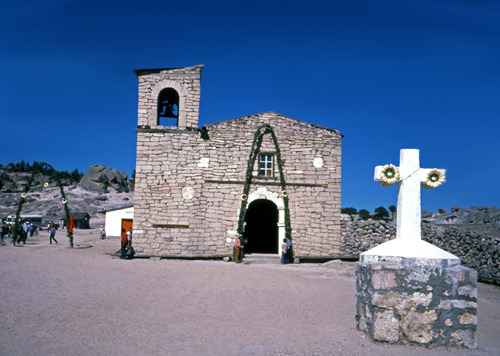
We arrived at the “Lost Cathedral” of Satevo. A woman sitting in the gazebo of the plaza was making embroidered napkins. We sat down while Jessica told us about the Cathedral. It was built in the early 1600s or maybe the 1760s but the records were lost through fire. Another name for it is “Iglesias San Miguel de Satevo” but so little is known about who built it that the name “Lost Cathedral” has stayed with it. Piled around inside the cathedral were statues, basins, and other church paraphernalia.  The walls are being restored (with government money) as near to the original as possible. The Christmas manger had many additions including a giraffe. Jenny climbed the ladder into the tower of the church and out onto the roof while we took pictures.

Jessica, Jenny, Sally, Laurie and I climbed into the truck for a ride back from Satevo. At the top of the hill Jessica and Jenny got out to walk, expecting Perucho to accompany them. Perucho would have none of it. He wanted to ride all the way back. He was finally pulled out of the truck and walked the rest of the way with Jenny and Jessica.

After a shower we walked over to Doña Mica’s for lunch. This restaurant is built onto her home and she cooks everything on an old-fashioned wood-fire stove.

A young woman came to the door of the restaurant with a basket full of something in red cellophane wrappers. Jessica bought some and introduced us to a sweet candy made of Cameron. After a refreshing lunch we walked to the General Store for chocolate covered frozen bananas and cups of frozen mango.

Back at Juanita’s Place I watched life on the Rio Batopilas: women washing clothes, children playing, teens swimming and teasing each other, cattle coming for a drink, and a truck driving down through the middle of it all. Sally crossed the swaying footbridge and returned saying there were many missing and broken slats. Bill pointed out the enormous bougainvillea tree and we talked about how it could exist when we knew the plant only as a slender vine.

We walked toward the Hacienda de San Miguel. I went the long way, getting a ride from Antonio for part of it, but everyone else crossed the river on a very narrow makeshift “bridge” with lots of help from Jessica. When asked if she felt like turning back, Sally said she was determined to make it because Laurie was making it. They did make it, but it was a “one-way bridge” because Jessica did not offer to take us back that way.

The ruins were quite impressive. Jessica explained that Alexander Shepherd administered his silver empire from this site.  He decided the silver mines could be profitable if the silver was processed into ingots rather than trying to ship raw ore out of remote Batopilas, and those mines made him very rich. We walked around the ruins of stamp mills, an assay office, refectory, boardinghouse, corral and stables, machine shop, iron foundry, ingot mill, and other buildings and sheds.  At one time an aerial tram linked canyon slopes on both sides of the river. Several large fig trees grow on the compound walls and the tallest building is overgrown with a huge bougainvillea; Jessica said the bougainvillea is considered the largest in the world.

We came back from our walk to find the museum as well as the craft store closed. We hung out in the Main Plaza watching the kids play ball. As we walked to supper Jessica saw Señora Montes and asked her to open the store after we had dinner. She said she would be there. We ate a wonderful supper at Patio Cinco Restaurante. The tostadas of avocado and of chicken tasted especially good. Jessica took glasses from the restaurant and walked across the street to get them filled at a place with a license. When we walked back the light was on in Señora Montes’ store and she greeted us at the door. We bought butterfly rattles, drums, baskets. Jennie bought a magnificent big drum for Lori.

We returned to Hotel Juanita’s and went star gazing on the roof. We found Orion, Auriga, Canis Major with Sirius the Dog Star, the Pleiades, the Great Square of Pegasus, Cassiopea, and the Milky Way but we never saw the Big Dipper, North Star or the Little Dipper.  We went back down to our room and were soon asleep.

Bookmark and Share

Tags: , , , , , , , ,

Next Stop: Divisadero

The following story was submitted to us by Kay Gilliland who describes her experience traveling with friends through Mexico’s Copper Canyon during the Christmas holidays. Breathtaking is the word quite often associated with someone’s first view of the Copper Canyon at the area around Divisadero. Below Kay offers us a similar response.

The California Native is always thrilled to have groups of friends join our trips to this charming region of Mexico. We appreciate it when our guests share their stories with us and we like to add them to our blog for everyone to enjoy. Excerpts from her journal will be posted regularly, so check back often to learn more about Kay’s 11-day Copper Canyon Adventure.

December 26, Friday

Jenny made a fire in the neat little stove. We took pictures of the room and the rock high on the cliffs that resembled Yogi Bear.

Breakfast included eggs, cheese and mild chili sauce, all on a taco.  We watched our cook make tortillas de aveno, then packed and thanked our hosts. Sally, Laurie and I went off for a hike with Jessica while Jenny went horseback riding. The hikers crossed an open area near lava- and tuff-layered cliffs, then up the arroyo to a small dam. Laurie decided to sit on a rock by the water. Sally and I followed Jessica upstream where she showed us an arrowhead. I asked if I could keep it and she said, “Oh, no. I always place it back under this leaf and rock so I can find it again for the next group. It is not considered to be of local origin, probably obtained in trade.” We continued upstream to the Cave of the Crosses. Fifty-three white crosses were painted on the black wall of the cave and there were human bones on the rocks. It is believed that the people died here of disease sometime around 1890 to 1900. There was possibly a storage area against the wall and there were several examples of the mano metate used for grinding corn. We hiked back down passing many kinds of oak and pine. Jessica pointed out the Alligator Juniper—it gets its name from the bark. I had seen a flock of little birds and a large bird like a woodpecker, but we did not see them again. We continued on to where Laurie was waiting and all four of us returned to the lodge in time to see Jenny coming in on her horse.

Jessica helped hoist our bags into the van and we all piled in for a ride to the train station. We talked with various people at the station. I rode between the cars in the open window. The canyons are very deep, 6135 feet in the case of the Urique (compare that to 6030 for the deepest part of the Grand Canyon in the United States). We passed the place where three canyons came together: Tararequa, Urique, and Copper. As before, many tunnels and bridges. The train stopped at San Rafael, a very colorful spot, where I bought my fourth basket.

Jessica explained that the pink-flowered trees were called Amapa and those trees came in yellow also. The beautiful fig type trees with yellow trunks and branches were Tescalame, one of the fig tree types. We got off at Divisidero for a van ride to the Mirador Hotel. We had a little porch outside our room with a fantastic view. Every room has a similar opportunity for its occupants to marvel at the canyon.

I saw a woman weaving a beautiful basket and wanted a picture. I bought my fifth basket so I could take a picture of her working on the basket.

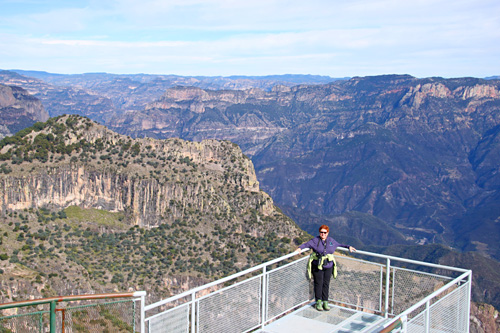
The Mirador Hotel knows how to take full advantage of the reason for being on the rim of the Copper Canyon area. Jessica pointed out the place where the three canyons converge, only one of which is the Copper Canyon proper. Jenny’s and I sat on our porch filling our souls with the magnificence around us.

As we entered the lodge, Felipe gave us sombreros and began to play his guitar—lots of great songs. The Hat Dance brought a few people up to dance and more joined in as other tunes were played. Dinner of chicken, mashed potatoes and carrots (standing up like sentinels in the mashed potatoes) was followed by tea and cheesecake. Another wonderful day and off to bed.

Bookmark and Share

Tags: , , , , , , , , , , , , ,

Cerocahui Christmas Morning, Urique Canyon Christmas Day


The following story was submitted to us by Kay Gililand who describes her experience traveling with friends through Mexico’s Copper Canyon during the Christmas holidays. In this entry, Kay learns how Christmas cheer spreads from the lodge in  Cerocahui to the village of Urique, deep in the valley below.

The California Native is always thrilled to have groups of friends join our trips to this charming region of Mexico. We appreciate it when our guests share their stories with us and we like to add them to our blog for everyone to enjoy. Excerpts from her journal will be posted regularly, so check back often to learn more about Kay’s 11-day Copper Canyon Adventure.

December 25, Thursday, Christmas Day

Jenny brought coffee from the lodge and made a fire. I wrote in my journal. The shower was nice and hot, breakfast was delicious including the bañuelos.  I turned them over and filled all the little spaces with cinnamon and sugar: delicious.  Laurie and Jenny helped stuff candy into a piñata. Children and parents began arriving and soon the piñata was swinging from a rope held by a boy on the roof. Diego started each child off and soon the piñata was broken and candy scattered out over a pile of children diving for it. Afterward Anna María handed out toys and toothbrushes and the children were delighted. The stuffed toys became prized possessions for each child and especially among the older girls.

We had a few minutes to get ready for a van ride to Urique Canyon. Along the way Diego picked up a man walking. We stopped at lookouts and then at a cave along the road. Diego Rhodes said at one time a family lived there, two parents and ten children. Now it is their shop and we bought baskets from a young girl inside the cave. It was my first basket purchase. The basket is made from the leaves of an agave plant and pine needles. We stopped at Mirador Cerro de Gallego, bought baskets, my second, and watched a family preparing and cooking goat meat. Later we visited that family in their home. From the lookout we could see our dirt road far below us with winding switchbacks clear to the bottom of the Urique Canyon.

As we approached the town we stopped to see a cemetery and then walked to Tortillerî Paulina Restaurant Plaza for a delicious lunch in an outdoor patio surrounded by flowers, other plants, and joyfully drunk people. We walked down the main street of town where trucks full of families lumbered toward an area near the Urique River. We turned back because of the dust and walked back up the main street. Young boys were driving four-wheelers up and down the street. By the time we got back toward town, people had cordoned off the central part of the street for a celebration. Diego drove back up the dirt road picking up those who were walking—a man, a family, some children—and dropping them off wherever they wanted at seemingly desolate places with no building in sight.

We stopped at the house of a Tarahumara family whom we had met at the lookout, Paula and Fabian. We saw their grain storage, the house, the fields of corn, some beans and melon, some apple trees, and the new room they had just built.

Back at the lodge, we had time to rest and write until 7:00 P. M. The five of us had a margarita together and then dinner: turkey and apple dressing. Off to bed afterwards, Jenny and I talked until late that night.

Bookmark and Share

Tags: , , , , , , , , ,

Christmas in Copper Canyon

The following story was submitted to us by Kay Gililand who describes her experience traveling with friends through Mexico’s Copper Canyon during the Christmas holidays. On this day, Kay recalls her experience riding the train into the Sierra Tarahumara and spending Christmas Eve at the Paraiso del Oso Lodge in Cerocahui. The holidays are a fascinating time to visit Copper Canyon.

The California Native is always thrilled to have groups of friends join our trips to this charming region of Mexico. We appreciate it when our guests share their stories with us and we like to add them to our blog for everyone to enjoy. Excerpts from her journal will be posted regularly, so check back often to learn more about Kay’s 11-day Copper Canyon Adventure.
December 24, Wednesday,  Christmas Eve

Pinata

Jessica’s knock on the door summoned us to a walk through El Fuerte. The town plaza was bordered by a church and public buildings with an elaborate ironwork gazebo at the center. Jessica had given us maps of El Fuerte, so it was easy to walk to the fort. The fort was constructed in 1610 under the order of the Viceroy of Montesclaros. We took pictures and hurried back for breakfast.

We returned to the Torres del Fuerte and walked through the lovely courtyard by the outside lounge area and into the dining room: papaya, watermelon, coffee, fresh orange juice, Mexican eggs, bacon, potato pancake and special toast.

It was not far to the train station. Bags were unloaded and we joined about 20 people waiting for the Chihuahua al Pacifico Railroad. A local boy carried my bag to the dock. Jessica gave us good maps of the train route and of the general area called Sierra Tarahumara, Barrancas del Cobre. We had assigned seats on the train but there were few passengers so we soon went wherever we wished. Favorite spots were a table in the dining car and standing on the platforms between the train cars. Those were the best viewing spots. Jessica pointed out typical plants of the thorn scrub: Kapok Tree, Palo Verde, Morning Glory Tree, Organpipe Cactus and Acacia. Many bridges and tunnels through spectacular mountains kept us on the platforms between the trains most of the time.

We got off the train at Bahuichivo Station. Our bags were loaded into a large van for the ride to the Hotel Paraiso del Oso (Paradise of the Bear). Located at kilometer 12 route 51 between Bahuichivo Station and Cerocahui, the lodge is in the Huetoibo Valley, Ejido de Cerocahui, Municipio de Urique, State of Chihuahua at an elevation of 5648 feet. Doug “Diego” Rhodes and Anna María Chavez de Rhodes own the 2.5 acre lodge and a 23 acre Rancho with horses. The theme is built around the enormous rock feature shaped like Yogi Bear, thus the name Paraiso del Oso.

Later, we went for a ride to Cerocahui. Diego picked up a family who were walking the road and then continued to the church where people were gathering for a posada because it was Christmas Eve. We looked into the church then walked about the town, bought food to take to a family, and returned to the plaza in front of the church to watch children trying to hit a piñata.

After a ride home, a few minutes of rest, a fire in the wood stove thanks to Jenny, we were off to the lodge for “ponche” (hot Christmas punch) and dinner. We were invited to a Midnight Mass with traditional dancing, but we were too tired and went to bed instead. Christmas Eve had been a delight.

Bookmark and Share

Tags: , , , , , , , , ,

With the economy being at its lowest point since the Great Depression, our government is trying to give it a jump-start with a number of stimulus packages. We at California Native are announcing our own stimulus package:
In Mexico's Copper Canyon, a young Tarahumara weaver modestly smiles.
We are giving a $100 discount to each person signing up for any of our trips to Mexico’s Copper Canyon. This offer applies to each person that you sign up, and you can join a small group tour or enjoy one of our independent adventures.

To qualify all you have to do is mention this offer at the time you sign up. Hurry, our stimulus package is valid only until April 15, 2009, but you can travel at any time. Yes You Can!

Bookmark and Share

Tags: , , , , , , , ,

The Tarahumara Indians are purported to be the world’s greatest runners,

Tarahumara runner in Mexico's Copper Canyon
Tarahumara runner in
Mexico’s Copper Canyon

running up and down the rugged canyons of their homeland, in Mexico’s remote Sierra Madre Mountains. The Tarahumara run for transportation and sport, and villages often compete against each other in races which last for several days. The area is commonly known as Copper Canyon, and its unique scenery and cave-dwelling inhabitants make it a favorite destination for active tourists looking to get off the beaten path.

The California Native has been running Copper Canyon tours for more than two decades, but the Tarahumara aren’t the only runners associated with the company. Several members of California Native’s staff are also avid runners.

The company’s founder and president, Lee Klein, began running two weeks before his 61st birthday. He has since competed in eleven marathons and is now training for his 12th.

Lee’s wife, Ellen, who also serves as California Native’s destination scout and researcher, is a race-walker and has completed five marathons, countless half-marathons, 5k and 10k races.

Lori Klein-Del Rosario, Lee’s daughter, who has guided California Native trips for almost twenty years, began running last year and completed her first marathon in June. She is now training for more races and is mentoring new runners.

In addition to running, California Native staff members participate in many other outdoor sports. Laurie Kraft, California Native’s Operations Manager, is an avid swimmer, while Jason Hall, California Native Tour Coordinator, can often be found surfing the waves at Malibu (after all, we are the California Native).

California Native founder, Lee Klein, at Long Beach CA Marathon. California Native scout, Ellen Klein, at Long Beach CA Marathon. California Natives Lori Klein-DelRosario, Ellen Klein, and Lee Klein, at El Segundo CA 5k race.
Lee at Long Beach CA Marathon Ellen at Long Beach CA Marathon Lori, Lee, and Ellen at El Segundo CA 5k race
Bookmark and Share

Tags: , , , , , , , ,