
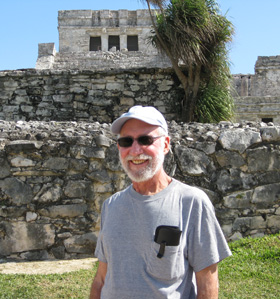
This June we are celebrating our 30th Anniversary—30 years of leading fantastic trips to exotic destinations around the world.
This anniversary comes as a proud moment for our company’s founder, Lee Klein, who continues to scout new locations world-wide in search of new destinations for the active traveler. Klein, who holds an MBA in Management and a BS in International Marketing, spent more than two decades as a corporate manager and college professor until, in 1983, while climbing Ayer’s Rock in the Australian Outback, he decided to drop out of the corporate world, take off his suit and tie, and create an adventure travel company based on the lessons he taught his students on how to succeed in business: “keep the quality high, keep it affordable, and treat people the way you would like to be treated.”
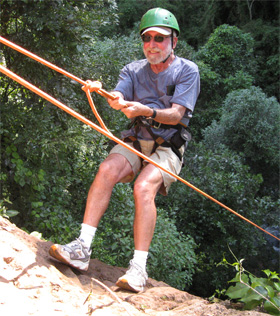
The initial offering from The California Native was a tour billed as “The Other Los Angeles.” This day-long excursion traced the route of the San Andreas Fault from the Mojave Desert to the San Gabriel Mountains without ever leaving Los Angeles County. The tours became so popular that colleges in three California counties offered them as part of their community-education programs. From this, the company expanded its offerings to include tours to the Channel Islands, Death Valley, Yosemite, and other uniquely California destinations, as well as white-water rafting, ballooning, spelunking (caving), sailplane gliding, and other outdoor adventures. “My family has lived in Los Angeles for generations,” writes Klein in the company newsletter, “hence the name The California Native.”
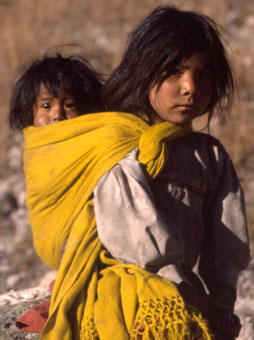
Satisfying the growing client base led to the development of The California Native’s most popular destination—Mexico’s Copper Canyon. These escorted and independent tours feature the Chihuahua al Pacifico Railroad (labeled as one of the most spectacular train rides in the western hemisphere) and highlight one of the most primitive indigenous cultures still subsisting in North America—the Tarahumara Indians. The California Native has become a leading source of information on this remote area and the company and it’s guides are known throughout the area for their work with the Tarahumara.
Today, The California Native offers a wide selection of tours to destinations including Costa Rica, Yucatan, Patagonia, Peru, the Galapagos, Ireland, Bhutan, Myanmar, and China, and more destinations are in the planning stages.

 As we come to the end of another year, it’s time to reflect on what we have accomplished in the last year and what we are looking forward to in the new year.
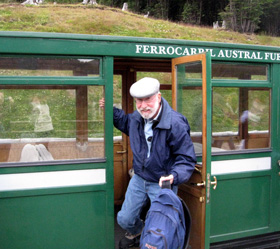
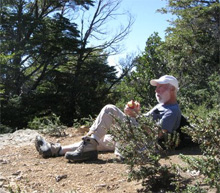 On our very first day in Buenos Aires, exhausted from jet lag and very hungry, we stopped at an empanada stand. Empanadas are a staple of Argentinian food. Basically, they are dough folded around a filling and baked. The name comes from the Spanish verb empanar, meaning to wrap or coat in bread. The available fillings were meat, onions and cheese, or ham and cheese. We opted for the latter. Delicious! OK, it was the first day, but we found a great lunch. Along the way, in other towns, we stopped in grocery stores, bakeries, etc. and ham and cheese was the filling we could consistently count on for empanadas.
 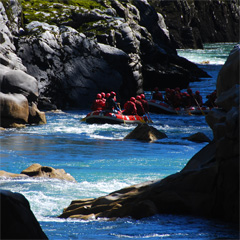 In the winter (our summer), when the snows fall, South Americans flock to the city to take advantage of the many winter sports. In the summer and fall (our winter and spring), people come to hike, raft, kayak, fish, enjoy lakeside beaches, and much more. On our recent scouting trip to Argentina, we sampled some of the abundance of activities Bariloche has to offer. We hiked beautiful mountain trails, stopping for lunch at overlooks above clear blue lakes while giant condors flew to and from their nests on adjacent peaks. We river-rafted down the scenic Rio Manso all the way to the Chilean border. And we enjoyed sumptuous meals of pasta, lamb and steak—to re-energize ourselves after all that exercise.
 Oh, did I mention chocolate? Bariloche is famous for it’s chocolate shops. Strolling from the quaint main square, with its wooden and stone alpine-look municipal buildings, down the main street, you are confronted on every block by at least two or three chocolate shops. We’re not talking about little shops—we are talking about big stores with cases and cases of chocolates by the pound, café sections for sampling decadent desserts, and aisles of every size box of chocolates you can imagine. Visit just before Easter as we did, and you can see some of the most beautifully decorated confections you can imagine. The store windows are like museums of chocolate. And, ALL of it is delicious! I know! I tasted! More than once!
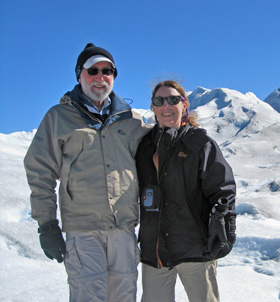
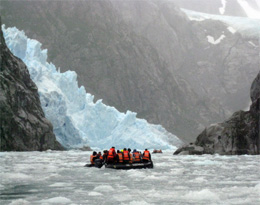 What is blue, white, frosty and cold? If you guessed a type of drink, try again! It is a glacier in Patagonia, and there are hundreds of them to see. The California Native scouting team was on our third trip to explore the area in March. This time we are developing a new itinerary for our adventures not only in Patagonia (Chile and Argentina) but also in other areas of the two countries.
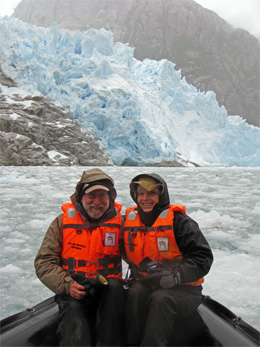 In the first of three weeks of travel in the region, we were able to set foot on Cape Horn (as far south as you can get without being in Antarctica), hiked an island in the Straits of Magellan, crunched our way up an ice field fjord in a zodiac, trekked in Torres del Paine National Park in the shadows of the snow-capped towers, visited the largest and the longest glaciers in Argentina, and even hiked up the glacier itself (crampons on!).
 At California Native, we are always exploring new and exciting destinations to develop unique itineraries to offer our fellow travel enthusiasts.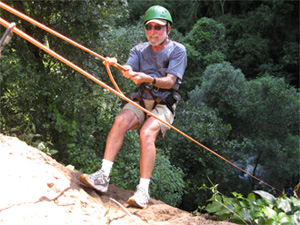







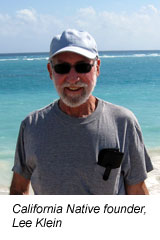 silver anniversary comes as a proud moment for our company’s founder, Lee Klein, who continues to scout new locations world-wide in search of new destinations for the active traveler. Klein, a graduate from Loyola Marymount University with a MBA in Management spent more than two decades as a corporate manager and college professor until, while climbing Ayer’s Rock in the Australian Outback, he decided to venture into the adventure travel business. As he did, he took to heart the lessons he taught his students on how to succeed in business: “keep it simple, and learn to do it right before adding new products and services.”