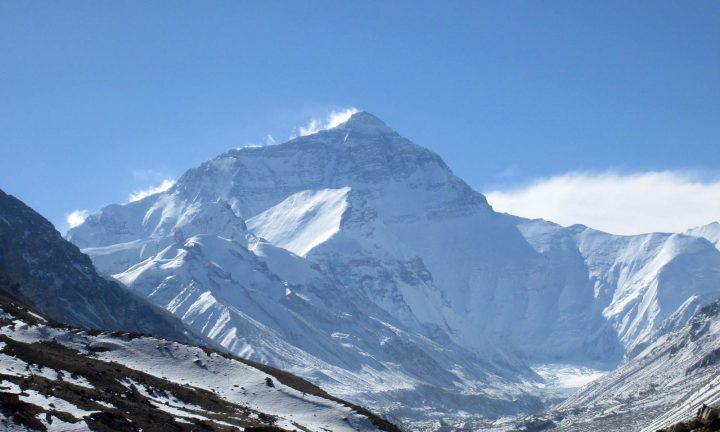
| Click to Watch Our Copper Canyon Slide Show |
 |
Going Bananas in Costa Rica
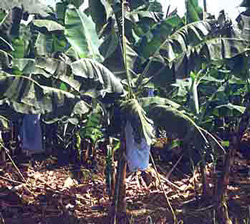
Remember Woody Allen’s movie Bananas? Well, take away the inept Guerrilla fighters and political assassinations and you have Costa Rica, the nicest and most peace-loving republic in Central America.
Costa Rica has rainforests, beaches, rivers, mountains, volcanoes, birds, animals, butterflies, and flowers. It also has bananas, bananas, and more bananas—in fact, Costa Rica produces about two million tons of premium bananas a year, 20% of the world’s total. For the Costa Rican economy, bananas rank second only to tourism.
Bananas are money to Costa Rica. They say “Money doesn’t grow on trees.”—neither do bananas. The banana plant is not a tree but a giant herb and a member of the lily family. It is the largest plant on earth without a woody stem, and grows as high as 25 feet in one year.
Did you ever wonder where bananas came from? Probably not, but I’ll tell you anyway. Bananas originated in Malaysia and the East Indies. Today primitive wild bananas still grow in these areas. Men have farmed bananas since pre-historic times. If you are a student of ancient Hindu, Chinese, Greek, or Roman literature, you can find references to the banana in old dusty manuscripts and scrolls. Aaachoo! Excuse Me!
In 327 B.C., for example, Alexander the Great found people eating bananas in India. An ancient Burmese legend tells us that wise men first realized that bananas could be eaten by observing the birds eating them. It makes one thankful that these same wise men failed to notice that the birds also ate worms.
When Spanish explorers came to the New World, they brought the banana with them. Friar Tomas de Berlanga planted the first banana root stocks in the Caribbean in 1516.
Three hundred years later, American sailors returning from the Caribbean brought bananas to the United States. They were officially introduced to the American public at the 1876 Philadelphia Centennial Exhibition. Each banana was wrapped in foil and sold for 10 cents. Today the average American eats 29 pounds of bananas a year.
So join us on a trip to beautiful Costa Rica and while you’re there, have a banana on us!
Spend the Holidays With Us!
The holidays are coming up fast, but it is not too late to make your plans for a wonderful holiday getaway. We still have some spaces left on our Christmas/New Years escorted tour to Mexico’s Copper Canyon where we will celebrate Christmas with the Tarahumara Indians at the Paraiso del Oso Lodge.
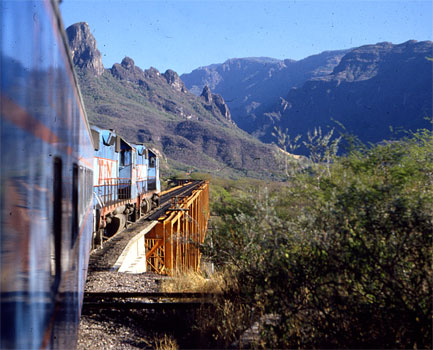
On December 23rd, we will depart with our small group out of Los Angeles and Phoenix airports for an exciting tour into the canyon. The 11-day Ultimate tour spends nights in El Fuerte, Cerocahui, Divisadero, Creel, Batopilas, Chihuahua and the “woodsy” retreat at Nortari. As with all of our Copper Canyon tours, we ride the Chihuahua al Pacifico Railroad for one of the most spectacular train rides in the Western Hemisphere.
On this special trip, participants will have the opportunity to enjoy a special Christmas Eve known as Noche-bueno (the Good Night), a delicious dinner at the Paraiso del Oso, and Ana Maria’s famous Christmas punch. Those wishing to join the Tarahumara Indians and mestizo community may attend the midnight mass, also known as La Misa del Gallo (Rooster’s Mass). Traditional Tarahumara dancing usually starts an hour or two before the mass, then recommences afterwards to make it an all-night celebration. As an old Spanish saying goes, “Esta noche es Noche-Buena, y no es noche de dormir” (Tonight is the Good Night, and it is not meant for sleeping).
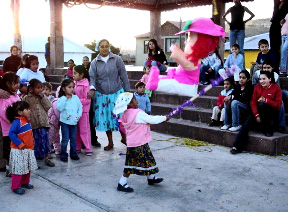
As Christmas morning arrives, the celebration moves back to the Oso Lodge where local Tarahumara, who live in isolated ranchitos in the rugged mountains surrounding the lodge, join the hotel guests for the piñata party. The children take turns swinging at the Christmas piñata until it explodes, showering candy and small toys. The hotel is filled with laughter and glee as the children scramble to collect their treasures. Then gifts from under the Christmas tree are handed out. As the locals return to their mountain ranchitos, The California Native guests prepare for a beautiful day trip to the bottom of Urique Canyon. In the evening after the excursion, guests enjoy a traditional turkey dinner with all the trimmings.
In a few days, it will be time to welcome in 2011, and we’ll spend New Year’s Eve surrounded by pine trees in the Sierra Madre Mountains. We will stay in comfortable log cabins at the Lodge at Norítari. In Rarumari, the language of the Tarahumara Indians, the name means a “Place Above the Clouds.” Here we can hike to a nearby lake or relax on an old-fashioned porch taking in the peacefulness of this lovely area.
Some other highlights of this tour are the Cusarare and Basaseachic waterfalls, a day trip to the village of Urique, the “Lost Cathedral of Satevo,” a trip back in time to the village of Batopilas, and magnificent vista points which overlook a whole series of intertwined “barrancas” (canyons).
Want to celebrate Christmas in Copper Canyon but can’t take the full 11-days for your winter vacation? We also have an 8-day trip which departs on December 19.
To be a part of this year’s celebration and enjoy this truly unique experience, call us at 1-800-926-1140 (or 1-310-642-1140) to make your reservations now as time is running out. Happy holiday season to all of our fellow travelers.
The Plight of the Flightless Cormorant
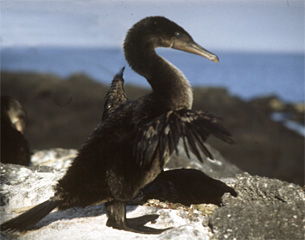 “Get out there and loot!” she seemed to squawk as she roughly shoved her mate out of the nest. He looked about, spotted a nest whose residents had temporarily left unattended, snatched some nesting material from it, and hurried back to his sweetie who nuzzled him appreciatively before sending him out again on another pillaging mission.
Cameras clicking away, we watched this domestic scene of Flightless Cormorants, only a few feet away from us.
Flightless Cormorants are found only on the Galapagos islands of Isabela and Fernandina. They are the largest of the cormorant species and the only ones who can’t fly. Since they have no natural predators in the Galapagos, and their food source (fish, squid octopus, eel, etc.) is easily accessible, these birds had no need to fly, and instead evolved powerful legs and short stubby wings. Since they do not produce a lot of oil, their feathers become waterlogged and so once back on land they pose with their wings spread to dry.
Their courtship “dance” is a sight to behold. The male and female circle each other in the water, eventually interlocking their long necks and making a grunting noise (the only sound these birds make). Then the female follows the male to shore, where they build their untidy nest, the male bringing items to the female to add to the nest. Eventually, three white eggs are laid, and both share the responsibility of incubating them, taking turns getting food and staying on the nest. After the chicks have hatched (and often only one survives), they continue to share the responsibilities of food and protection. Once the chicks can feed themselves, the fickle female leaves in search of a new mate, sometimes breeding three times in one year—the little tart!
In recent years, domestic animals and man have reduced the population to the point where fewer than 1000 pairs remain. They are considered endangered and efforts are being made to keep the current population of birds from decreasing further. Only in the Galapagos, with its protected environment, do we have the opportunity to watch these birds, as well as the other unique species, go about their daily routines, completely unthreatened by our presence.