tour

You are currently browsing articles tagged tour.

Due to the popularity of our Copper Canyon Tours, we occasionally find the need to add additional dates. Last month we added another date for our 11-day Ultimate Tour in October and this week we are adding an additional 8-day Special Tour to our Fall schedule.

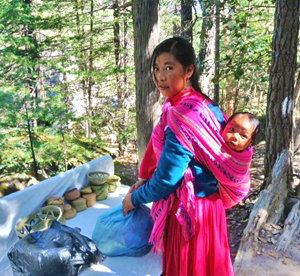
Tarahumara Weaver in Mexico's Copper Canyon

In Mexico's Copper Canyon a young Tarahumara lady smiles as she weaves a basket.

Our newly scheduled 8-day trip begins on October 16th and returns home on the 23rd.

This exciting trip is similar to our 7-day Classic Tour but adds the adventure of traveling from Creel down to the village of Batopilas in the canyon bottom. During our two-night stay in Batopilas, we hike or ride to the “Lost Cathedral” and explore the many sights of this unique little town where time seems to have stopped in the 19th century. The itinerary of the trip is as follows:

October 16: We fly to the city of Los Mochis, then travel to the small colonial city of El Fuerte, where we spend the night and begin our Copper Canyon Adventure.

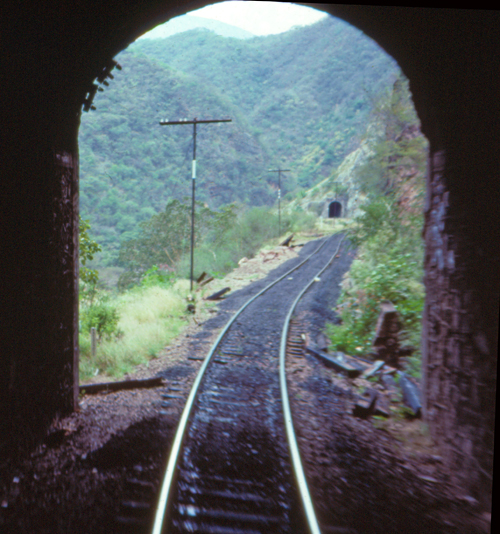
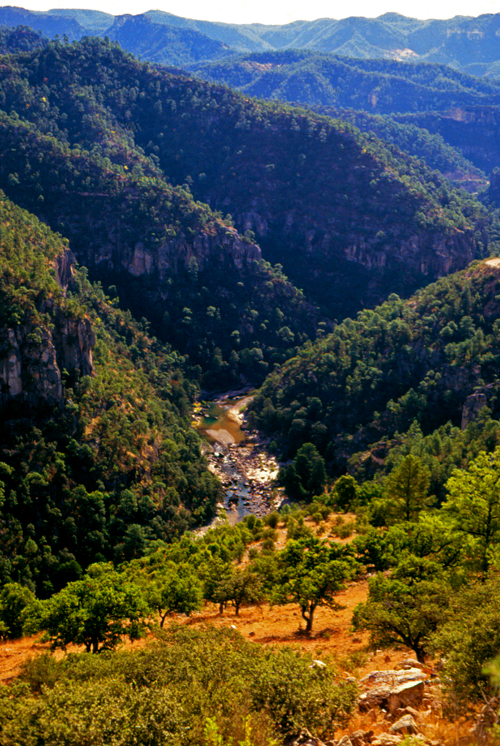
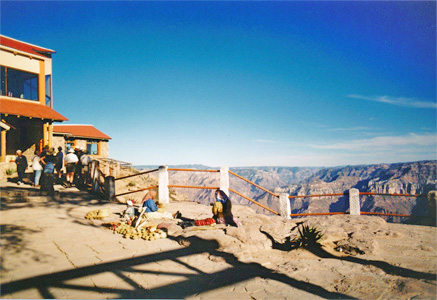
October 17: In the morning we board the first-class Copper Canyon train and travel up into the Sierra Madre Mountains, passing through 86 tunnels and crossing 37 bridges. This is one of the most spectacular train rides in the Western Hemisphere. After lunch we arrive at Divisadero and stay at a picturesque lodge located right on the edge of the canyon. Here we make our first contacts with the cave-dwelling Tarahumara Indians. In the afternoon we hike along the canyon rim for magnificent views. Dinner is at the lodge’s dining room, with its majestic view of the canyon.

October 18: After breakfast we hike to Tarahumara caves and spectacular canyon views. Usually our guides can make arrangements with the Indians to put on demonstrations of their famous foot races and folk dances. In the afternoon we board the train for the ride to Creel, a lumber town high in the Sierra Madre Mountains, where we spend the night.

October 19: We travel from Creel to the little town of Batopilas. We pass through mountains and valleys, and after reaching the Tarahumara community of Kirare we head down the long, winding dirt road that leads to the bottom of the canyon. We spend the next two nights in a charming little Mexican hotel in this village that seems suspended in time somewhere in the nineteenth century.

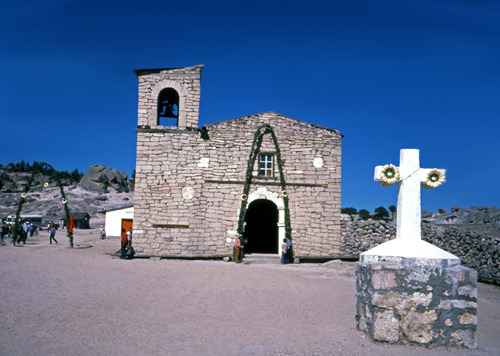
October 20: We hike or ride to the “Lost Cathedral” of Satevo and explore the area surrounding Batopilas.

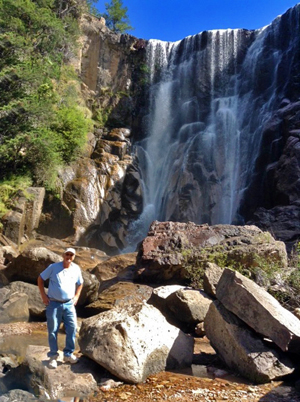
October 21: Today we return to Creel. En route we hike to Cusarare Falls and a cave with petroglyphs.

October 22: Traveling to the city of Chihuahua, we stop at a Mennonite settlement for a homemade lunch, arriving in the afternoon at our deluxe hotel. After checking in we tour the city of Chihuahua—the State Capital with its murals, the State Museum and the home of Pancho Villa. This evening we enjoy our traditional farewell banquet.

October 23: We travel by van from Chihuahua to El Paso where we fly home, sad to leave but returning home with wonderful memories of this remote area of Mexico and the unique people who make it their home.

What’s included: These trips are fully escorted by our experienced bilingual guides. The price includes transportation and accommodations: one night in El Fuerte, one night in Divisadero, two nights in Creel, two nights in Batopilas and one night in Chihuahua; excursions, tips and most meals. Round-trip airfare from Los Angeles, Phoenix or El Paso is also included. Check with us for discounted air rates from other U.S. and Canadian cities.

Price per person (double occupancy): $2520

Space is limited to 14 passengers, so please join us now!

Bookmark and Share

Tags: , , , ,

Visitors get up close and personal with a glacier in an ice field in PatagoniaWhat is blue, white, frosty and cold? If you guessed a type of drink, try again! It is a glacier in Patagonia, and there are hundreds of them to see. The California Native scouting team was on our third trip to explore the area in March. This time we are developing a new itinerary for our adventures not only in Patagonia (Chile and Argentina) but also in other areas of the two countries.

California Native scouts, Lee and Ellen Klein, enjoy glacier in Straits of MagellanIn the first of three weeks of travel in the region, we were able to set foot on Cape Horn (as far south as you can get without being in Antarctica), hiked an island in the Straits of Magellan, crunched our way up an ice field fjord in a zodiac, trekked in Torres del Paine National Park in the shadows of the snow-capped towers, visited the largest and the longest glaciers in Argentina, and even hiked up the glacier itself (crampons on!).

And, that was just our first week! There is a lot of excitement to be had in this region, and The California Native is constantly adding adventures so that you can join us in experiencing these wonders. Stay tuned for more on Patagonia and Argentina.

Bookmark and Share

Tags: , , , , , , , , ,

In Copper Canyon, a California Native group tastes tequilaWe’ve spent an exciting day exploring the remote regions of Mexico’s Copper Canyon, and as sunset repaints the canyon walls, what better way to usher in the evening than with a cool refreshing margarita? Contreau or triple-sec, lime juice, ice, and, most important, tequila. But how much do we really know about this delightfully intoxicating beverage?

Before the arrival of the Spaniards, fermented sap from the Maguey plant was extracted into a beverage known as ‘pulque.’ Pulque holds the esteem of being North America’s first distilled drink. Aside from that, origins of the liquor seem as ethereal as the effects it produces. Tequila branches from this phantom lineage by way of a small town with the same name in the state of Jalisco. In the ancient Nuahatl language, “tequila” translates to “place of the plant harvest” and represents the relationship between the region and the raw material—the Blue Agave.

There are over 130 species of agave. However, only one variety is used in the production of tequila according to standards set by the Mexican government. That variety is the Blue Agave, or Agave Tequilana Weber Azul. A common misconception is that tequila is made from a cactus. The Agave is actually closer in relation to succulents like the Lily or the Amaryllis even though it looks spiky in appearance. Only the hearts of the plant are used in distillation while the thick leaves are processed into fiber. Other varieties may be used in the formulation of tequila’s kindred spirit Mezcal, but only the Blue Agave is used to distill tequila. Mature agave at the time of harvest can grow 5 to 8 feet tall, span 7 to 12 feet across and, although not a cactus, can live up to 15 years!

Another myth infusing the agave spirits of tequila and mezcal turns over the worm. Drinkers and non-drinkers alike recognize the connection. However, like all things Tequila, origins of this curious practice of adding worms to bottles survives mostly as folklore, even though many believe it is more marketing strategy than authentic Mexican Tradition. In fact, only Mezcal carries the worm, this again due to the Mexican standards authority, Norma Oficial Mexicana (NOM). The worms are the thoroughly pickled larvae of the moth species Hypopta Agavis and, although not found in higher-priced bottles of Mezcal, are believed to enhance the flavor as well as act as an aphrodisiac. Viewed as a delicacy by many in Mexico, the Gusano Rojo (Red Worm) and the Gusano Blanco (White Worm) are safe to eat, even if their properties and histories are debatable.

Knowing tequila is not cactus and has no worm, it now comes down to the matter of taste. Tequilas divide into three groups agreed upon by aficionados in the industry. Like many beverages, Tequilas are classified according to their age. Blanco (white), also referred to as Plata (silver), is the youngest of the three types. Tequila Blanco is aged less than two months and is distinguished through its abrasive flavor. Also identified in this category is Tequila Oro (gold). This is a blend of the young Tequila Blanco and a more-aged variety, often mixed with coloring to resemble older vintages. Second of the three classes is Tequila Reposado (rested). This mid-aged tequila is known for its peppery aftertaste and has an age greater than two months but less than one year. The third and final variety is Tequila Anejo (aged). Tequila Anejo mellows for a period between one year and three years and finishes smoother on the palate as a result.

Aside from these distinctions, the sky (or the floor) is the limit. From the heart of the agave all the way to expensive, individually-numbered collectable keepsake bottles, the taste of tequila really boils down to the spirit of personal preference. Sipping, shooting, mixing or just plain drinking are all part of the charm bottled in this passionate product from Mexico. Curious connoisseurs searching for the flavor that suits best may even find themselves, suitcase in hand, bouncing across the border for a measure of Mezcal complete with worm. No matter how it’s served, the taste as well as the mystery surrounding this potent potable are sure to leave any traveler thirsting for more of Mexico.

Bookmark and Share

Tags: , , , , , ,

Our tiny boat bounced as the giant whale broke the water’s surface and rested close enough for us to touch. As she breached, the cameras clicked furiously. Our skipper pointed to more enormous whales—they were all around us!

Visitors pet a baby California Gray Whale in Magdalena BayAfter a summer spent in the frigid waters of the Chukchi and Bering Seas, feasting on immense quantities of small crustaceans, the California Gray Whales begin their annual migration south to Mexico’s Baja California. Swimming 5000 miles along the North American coast, they arrive in the warm, protected bays to breed, give birth, and rear their infants.

During the long southbound journey the whales court and mate. After a gestation period of thirteen months a female whale gives birth to her calf. Newborn Grays are about 15 feet long and can weigh up to 1500 pounds!

A California Gray Whale raises his head to take a look in Baja's Magdalena Bay

Another female, called an “auntie,” often assists the mother with her calf, so the whales are often spotted in groups of three. The calf nurses on its mother’s milk, ten times richer than cow’s milk. By swimming against the current in the lagoon, the young whale builds up its muscles, and by Spring it is fat (around 3000 pounds), mature (at least 19 feet long), and ready for the long northward journey.

One area the whales prefer is Magdalena Bay. This narrow section of calm waters between the coast of Baja and Magdalena Island may harbor fewer gray whales than other lagoons, but here they are densely congregated, creating a wonderful place to watch them swim and play.

A California Gray Whale dives tail up into Baja's Magdalena BayEasily accessible from La Paz and Loreto, Lopez Mateos and San Carlos are two coastal towns where pangas, small motor boats, depart for whale watching. Skimming along the water with frigate birds soaring overhead and whales breaching in every direction is an unforgettable experience.

Magdalena Bay is also home to a variety of fish and shellfish, as well as bottlenose dolphins. In the dense thickets of mangroves, which dominate Magdalena Island, many species of birds can be found. A pack of coyotes inhabits the island, and from the boat they can be seen on the beach feasting on fish which they have learned to eat as they adapt to island life.

An invigorating boat trip like this is sure to build up a whale-sized appetite. Returning to shore, the day concludes by feasting on freshly-caught local seafood at one of the nearby restaurants. Baja offers many activities and is also an excellent gateway for tours to Copper Canyon.

Bookmark and Share

Tags: , , , , , , , , ,

Costa Rica has always been known as an excellent destination for the outdoor adventurer or bird watcher. Another attraction to this peaceful, central American country is the fact that Costa Rica is a fruit-lover’s paradise. Having a warm tropical climate year round makes Costa Rica a perfect place for growing a wide variety of fruits. Fresh pineapples, tree-ripe bananas, and delicious coconuts are just a few of the delicacies to be enjoyed there. Add buttery papayas and juicy mangoes to the list and you’ve got a true Costa Rican fruit cocktail. Many of these fruits you can readily find in supermarkets across the U. S. (and there is a good chance that many of them come from Costa Rica) but some of the more exotic fruits require a passport to taste.

Included among these exotic fruits are Mamones, Tamarindo, and Pejibayes. Curious names for equally curious tastes, these gems highlight the diversity of fruit-filled Costa Rica.

Mamones Chinos (mem-MO-nays), or Chinese Suckers, are pit fruits whose skins are covered with soft red spines. You may have heard them called by the name lychee. Lychees or Mamones Chinos are slightly sweet, not very acidic, and have a chewy texture similar to that of a peeled grape. Their subtle flavor is addictive. The spiny skins are fun to peel into and resemble the seed pod of a Gum tree. Sold in big bags by street vendors, Mamones have unique taste that is not soon forgotten.

Another Costa Rican delicacy comes from the seed pod of the Tamarind tree. Tamarindo looks like a pea pod that you might find in a salad or a stir fry, except they are fuzzy on the outside like a Kiwi or a the skin of a fuzzy peach. Inside the pod, the seeds are sticky and pasty and too bitter to eat. However, if you soak the seeds in hot water you can extract the flavor.  Even then, the mixture may have too strong a flavor, but if a simple syrup is added to sweeten the mixture and then the beverage is poured over ice, the fresh tamarindo drink becomes a refreshing treat similar in flavor and texture to apple juice.

The Pejibaye is probably one of the strangest fruits to be tasted in Costa Rica. Pronounced pay hee bah jay, this palm fruit tastes like a cross between potato and coconut. The Pejibaye is similar in size to a pecan and contains a hard pit that needs to be removed before eating. Like the tamarindo, the pejibaye is prepared by boiling the fruit in water.  Locals often serve the fruit with a dollop of mayonnaise and a cup of hot coffee. This exotic flavor is hearty.

Join us on a vacation in Costa Rica: adventure, fun, good food, and last but not least, fruit as fine as any in the world.

Bookmark and Share

Tags: , , , , ,

There is nothing like standing at a safe distance while watching glowing-hot boulders being pitched into the night sky.

California Native tour group poses by Costa Rica's Arenal Volcano

Costa Rica, located at the center of the America’s along the Pacific Ring of Fire, has five active volcanoes.

The Arenal Volcano, situated near the town of La Fortuna, rises nearly 4,200 feet above the surrounding landscape, making it visible from almost anywhere. Arenal is the youngest and most active of all of Costa Rica’s volcanoes. Major eruptions occured in 1968 and 2000, but smaller eruptions happen more frequently–and on some days as frequent as every 15 to 20 minutes. Belting out its thunderous boom, the Arenal is a highlight for visitors touring the country.

The Poas Volcano, located near the crafts-town of Sarchi, rises 8,884 feet above sea-level and is home to an impressive array of flora and fauna. The main crater is 950 feet deep and quite active with steaming geysers and frequent lava eruptions. At Poas, the last significant eruptions occured during the time between 1952 to 1954.

The California Native offers tours of Costa Rica which visit both of these living reminders of the raging powers beneath our feet.

Bookmark and Share

Tags: , , , , , , ,

My friend and I went to Copper Canyon on February 24, 2009.  Only now do I find the time to tell you what a wonderful this trip was. For us this was the ideal way to travel. You made all the arrangements and we did the rest. The organization was absolutely flawless. The hotels were great, especially the Torres del Fuerte and, of course, the Hotel Mirador in Divisadero.  You encouraged us to take 2 days there, and what a great idea that was. Even though we were late arriving in Los Mochis, our taxi was waiting to drive us to to El Fuerte. My thought was, “this is the one thing I did not want to do, drive in the dark in Mexico.” It turned out that the taxi driver was cautious and competent and put us both at ease. I think our favorite town was El Fuerte. It was great that we had 2 nights in several locations. It made for relaxed traveling and a chance to really walk around. The voucher system worked very well.  We could chose wherever we wanted to eat and had the chance to sample several restaurants.

A real treat is the fact that there were no TVs in all the hotels, except for one. That was the Best Western in Creel. We turned on the news and  turned it off fairly quickly. We were on vacation!

The train ride was all we were hoping for. Since we were only 2 people, we stayed most of the time in the bar car of the train, talked to many people and looked out of the big, clean windows. We had a ball. We took the train to Divisadero, stayed there for 2 nights and went to Creel. The ride from Creel to El Fuerte was just right. I was glad we did not stay on the train any longer.

I have read letters from your clients and all the good things they said about you were true for us. It helps to speak Spanish when you are on your own, but you made it very easy to get around. In Batopilas we ate at Mika’s. Great stuff! Our driver Arturo told us colorful stories about this magic town and made us feel less like tourists.

We thank you very much and hope to hook up with you again. Thanks for all your help.

Ingrid Lewin
San Diego, CA

Bookmark and Share

Tags: , , , , , , ,

The Summer/Fall 2009 edition of The California Native Newsletter is now in the mail. The newsletter, published by The California Native since 1984, has more than 10,000 readers (not counting those who download from the web). If you are not already a subscriber to this free newsletter you can signup now.

This issues feature stories include:

Lee Klein prepares to fly over the Nazca Lines on The California Native Peru ToursREVISITING PERU’S NAZCA LINES

The desert markings, believed to have been made thousands of years ago, made little impression on occasional travelers who viewed them from ground level, but when they were spotted by aircraft in the 1930’s they caught the world’s attention. They have since been surveyed, mapped and studied. Only two questions remain—who made them, and why?

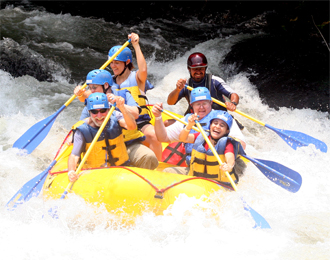
Rafting is one of the many options for guests on The California Native Costa Rica ToursRAPID TRANSIT: COSTA RICA STYLE

Costa Rica has long been a favorite destination for both the beginner and the experienced river runner. With ample annual rainfall, mountainous landscapes, and plenty of road-to-river access, the country prides itself on being a whitewater paradise.

GHOSTS OF THE GALAPAGOS

Packing a pearl-handled revolver, a riding crop and three lovers, the Baroness Eloisa von Wagner Bosquet disembarked on the Island of Floreana, in 1932, and declared herself “Empress of the Galapagos.”

The cathedral is a favorite hiking destination for guests on The California Native China ToursCOPPER CANYON’S LOST TREASURES

In 1880, Alexander “Boss” Shepherd, the last territorial governor of the District of Columbia, packed up his family and, in the remote village of Batopilas, at the bottom of Copper Canyon, developed one of the richest silver mining operations in the world.

THERE’S MORE TO CHINA THAN BEIJING

Naxi ladies strolling home after work can be seen on The California Native China ToursBecause the Olympics were hosted in Beijing, chances are that you learned more about China in 2008 than at any previous time. On the other end of the country, far from bustling Beijing is Yunnan Province—home to the largest variety of ethnic groups in China.

CALIFORNIA NATIVE ADVENTURES
The newsletter also includes schedules, prices and descriptions of California Native’s tours to Mexico’s Copper Canyon, Peru, the Galapagos, Patagonia, Costa Rica, Yucatan and Chiapas, Myanmar (Burma) and Laos, Bhutan, Yunnan, China, and Ireland.

Bookmark and Share

Tags: , , , , , , , , ,

California Native founder, Lee Klein, overlooking the Urubamba Valley from the Inca Trail
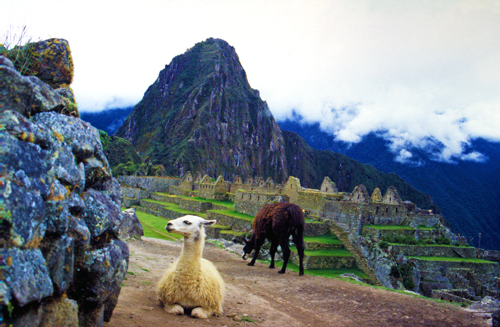
The Inca Trail! Wow! I love to hike, but until this year my experience had been limited to one or two day hikes. Now, we were going to spend four days in the Andes of Peru hiking the trail to Machu Picchu. Most travelers choose to take the three-hour scenic train ride from Cuzco, but we decided to hike the route taken by the ancient Incas—a trail considered to be one of the most scenic in the world. All the literature said that any “reasonably fit” person could do this, but since they also mentioned passes with elevations of up to 14,000 feet, I was a bit apprehensive.

The popular trail now known as The Inca Trail was most likely the “royal” road between Cuzco and Machu Picchu, used mostly by royalty and pilgrims to the sacred city. The trail was a road of its time—built for men on foot, and lightly packed llamas. It is paved with interlocking stones and traverses the mountains and passes with thousands of steps.

The California Native provided us with porters—native farmers who carry all the gear and food—leaving us to carry only a daypack. For the two of us there were six porters, a guide and a cook.

The porters travel ahead of the hikers, carrying up to 50 pounds on their backs. Each time we stopped for lunch or for the night, they were already at the site, the tents were up, and our cook was preparing us a sumptuous meal. View from the Inca Trail

On our first day, before beginning our hike, we stopped at a colorful outdoor market where our cook bought fresh food supplies. Then, crossing a footbridge over the Urubamba River, we began our trek. After a few hours of easy hiking we stopped for lunch. Much to our surprise, in a restful grassy meadow, there was a dining tent, complete with table and chairs, warm water to wash in, and a hot meal. That afternoon we continued on and were treated to views of snow-capped mountains, llamas grazing in the fields, flowers, meadows and lakes.

Along the way we met all kinds of people, including a 71-year-old retired Australian woman traveling on her own (with a guide and porters), huffing and puffing up the stone steps. The very popular trail hosts many hikers, but never really seems crowded.Ellen and Lee Klein at Machu Picchu's Gate of the Sun

On day two we triumphantly crossed the highest pass, known as “Dead Woman Pass,” just under 14,000 feet, through a light drizzle, then began the steep descent, with spectacular views on the way down. As we arrived at the campsite, we heard the other hikers applauding our Australian friend, as she too arrived, having conquered the hardest part of the trail.

Day three included two more passes, visits to several Inca ruins along the trail, and a walk through a beautiful “cloud forest,” filled with lush tropical plants and colorful flowers. If day two was the most difficult, day three was the loveliest. As we crossed the final pass, the Urubamba Valley and the mountain of Machu Picchu lay before us. We walked down the steps through the terraces of Intipata (cloud-level town) to our final campsite at Winay Wayna. Machu Picchu

The next morning we rose before dawn, to arrive at the Intipunku (Gate of the Sun) in time to watch the sun rise over the “Lost City.” As the sun came over the mountain the ruins slowly emerged from dark shadows turning a glorious golden color.

We toured Machu Picchu, then took the bus to Aguas Calientes, a small town noted for its relaxing mineral baths. After a much-needed shower and a short rest, we strolled down the main street, and as we approached a small café, there was our Australian friend, sipping a beer and beaming, “I made it, and I’m still alive!“ Then she raised her beer in a toast to one of the greatest experiences of her life.

Bookmark and Share

Tags: , , , ,

Arriving at Chihuahua City


The following story was submitted to us by Kay Gilliland who describes her experience traveling with friends through Mexico’s Copper Canyon during the Christmas holidays. Today, Kay and her friends journey from Creel to Chihuahua City and learn more about the birthplace of the Mexican Revolution.

The California Native is always thrilled to have groups of friends join our trips to this charming region of Mexico. We appreciate it when our guests share their stories with us and we like to add them to our blog for everyone to enjoy. Excerpts from her journal will be posted regularly, so check back often to learn more about Kay’s 11-day Copper Canyon Adventure.

January 1, 2009, Thursday, New Year’s Day

Breakfast was delicious with juice, fruit (papaya, watermelon and, for the first time, apple), eggs, beans and a cinnamon drink called “café.”

We said goodbye to Sol and climbed into our vehicle. Antonio headed out onto “Ruta 2010” named in honor of the succeeding hundred-year events in Mexican history. Jessica pointed out the major change in our surroundings; we were traversing the chaparo: wheat fields, cattle, large land holdings. We stopped at Ahumada and again at La Posta for snacks and el baño. Jenny bought dolce de leche to share with us. We passed a place where lead and zinc ore from Urique is processed. We drove into a Mennonite town looking for “Campo 2B, Casa 46.” The houses were well-built and prosperous-looking but drab in color by comparison to houses we had been seeing in Batopilas, Creel and San Juanito. Jessica described the Mennonites as industrious and homespun, who made everything themselves, especially foods—cheese, butter, bread, jam—and clothing, potholders, and tablecloths. We stopped at the home of Lisa (I asked for her last name but never got it), who had prepared coffee/tea, cookies, meat, cheese, jams and home-baked bread for us. Her sister Emma had just had a baby and Lisa showed us the camera with a picture. Everything tasted really good and Jessica noticed a type of cookie she had not seen before, so she commented that it was new and asked how Lisa made it. Lisa went into the kitchen and brought out a package of Duncan Hines mix to show us.

We walked around the Mennonite farm looking at the Chihuahua puppies, the goats, cows, pigs, geese and farm machinery. Lisa belongs to a family of Old Colony Mennonites who live in a more conservative way than some others of their group.

Back on the road we passed ocotillo, but not in bloom, and lots of apple orchards. We saw smudge pots and furled nets ready to combat frost and save the apple crops. The apple boxes we had seen at the lumberyard were also in readiness for this vast apple-growing operation. Even the local baseball team gets a piece of the action; they are the Manzaneros. Spring will bring a fragrant show of blossoms and fall will be bright with red apples, but we were driving through in winter.

Jessica gave us maps and told us the name Chihuahua is translated as “Sandy Place” or “Place Between Two Rivers.” The city of Chihuahua is the state capital of the Mexican state of Chihuahua. Here, our local guide, Jesus, spoke Spanish and Jessica did an admirable job of translating. For two hundred years Chihuahua was a place of wars between the Apaches and the Comanches. It was the place where Hidalgo, hero of the Mexican Revolution was imprisoned and executed in 1811. We stopped to see a palacial home, Quinta Manuel Gameros, built 1907-1910. The “Quinta” refers to the size of the property: 1/5 of a hectare. A hectare is almost 2.5 acres, so these homes were well situated.

We toured the Pancho Villa Museum and were especially interested in a powerful mural by Felipe Castellanos Centurión.  Afterward we went into the Cathedral and then walked around the Plaza de Armas to the various booths set up to sell food and gifts. At one I finally saw the tire sandals for sale.  Jessica bought Natas to share with us; they were delicious. Jesus pointed out the Dancing Fountains near the Palacio de Gobierno  and we drove back to the Chihuahua City Holiday Inn Suites. California Native provided free Margaritas for us and we were given a ride to a delightful dinner in a very quiet newly-opened restaurant.  Back at our lodging we were soon asleep.

Bookmark and Share

Tags: , , , , , , , , ,

On a Stroll to Satevo


The following story was submitted to us by Kay Gilliland who describes her experience traveling with friends through Mexico’s Copper Canyon during the Christmas holidays.  Here, Kay and her traveling companions explore the village of Batopilas and the mysterious “Lost Cathedral” at Satevo.

The California Native is always thrilled to have groups of friends join our trips to this charming region of Mexico. We appreciate it when our guests share their stories with us and we like to add them to our blog for everyone to enjoy. Excerpts from her journal will be posted regularly, so check back often to learn more about Kay’s 11-day Copper Canyon Adventure.

December 29, Monday

In the morning, we walked to Carolina’s Restaurant in the Plaza Constitución for breakfast. We saw the sandal maker’s shop and his stack of tires. We enjoyed a wonderful breakfast, then got ready for the walk to Satevo. One of the local dogs, Perucho, joined us for the whole walk. Along the way Jenny found a sack of cheese and Perucho devoured it. I stopped to tie my boot lace and Perucho stayed with me. All of a sudden he looked up to find Jenny far ahead. Perucho ran as fast as his legs would carry him and caught up with her.

Up ahead, we heard a lot of animal snufflings which proved to be coming from one tiny piglet. I couldn’t believe that little thing was making all that noise.

We arrived at the “Lost Cathedral” of Satevo. A woman sitting in the gazebo of the plaza was making embroidered napkins. We sat down while Jessica told us about the Cathedral. It was built in the early 1600s or maybe the 1760s but the records were lost through fire. Another name for it is “Iglesias San Miguel de Satevo” but so little is known about who built it that the name “Lost Cathedral” has stayed with it. Piled around inside the cathedral were statues, basins, and other church paraphernalia.  The walls are being restored (with government money) as near to the original as possible. The Christmas manger had many additions including a giraffe. Jenny climbed the ladder into the tower of the church and out onto the roof while we took pictures.

Jessica, Jenny, Sally, Laurie and I climbed into the truck for a ride back from Satevo. At the top of the hill Jessica and Jenny got out to walk, expecting Perucho to accompany them. Perucho would have none of it. He wanted to ride all the way back. He was finally pulled out of the truck and walked the rest of the way with Jenny and Jessica.

After a shower we walked over to Doña Mica’s for lunch. This restaurant is built onto her home and she cooks everything on an old-fashioned wood-fire stove.

A young woman came to the door of the restaurant with a basket full of something in red cellophane wrappers. Jessica bought some and introduced us to a sweet candy made of Cameron. After a refreshing lunch we walked to the General Store for chocolate covered frozen bananas and cups of frozen mango.

Back at Juanita’s Place I watched life on the Rio Batopilas: women washing clothes, children playing, teens swimming and teasing each other, cattle coming for a drink, and a truck driving down through the middle of it all. Sally crossed the swaying footbridge and returned saying there were many missing and broken slats. Bill pointed out the enormous bougainvillea tree and we talked about how it could exist when we knew the plant only as a slender vine.

We walked toward the Hacienda de San Miguel. I went the long way, getting a ride from Antonio for part of it, but everyone else crossed the river on a very narrow makeshift “bridge” with lots of help from Jessica. When asked if she felt like turning back, Sally said she was determined to make it because Laurie was making it. They did make it, but it was a “one-way bridge” because Jessica did not offer to take us back that way.

The ruins were quite impressive. Jessica explained that Alexander Shepherd administered his silver empire from this site.  He decided the silver mines could be profitable if the silver was processed into ingots rather than trying to ship raw ore out of remote Batopilas, and those mines made him very rich. We walked around the ruins of stamp mills, an assay office, refectory, boardinghouse, corral and stables, machine shop, iron foundry, ingot mill, and other buildings and sheds.  At one time an aerial tram linked canyon slopes on both sides of the river. Several large fig trees grow on the compound walls and the tallest building is overgrown with a huge bougainvillea; Jessica said the bougainvillea is considered the largest in the world.

We came back from our walk to find the museum as well as the craft store closed. We hung out in the Main Plaza watching the kids play ball. As we walked to supper Jessica saw Señora Montes and asked her to open the store after we had dinner. She said she would be there. We ate a wonderful supper at Patio Cinco Restaurante. The tostadas of avocado and of chicken tasted especially good. Jessica took glasses from the restaurant and walked across the street to get them filled at a place with a license. When we walked back the light was on in Señora Montes’ store and she greeted us at the door. We bought butterfly rattles, drums, baskets. Jennie bought a magnificent big drum for Lori.

We returned to Hotel Juanita’s and went star gazing on the roof. We found Orion, Auriga, Canis Major with Sirius the Dog Star, the Pleiades, the Great Square of Pegasus, Cassiopea, and the Milky Way but we never saw the Big Dipper, North Star or the Little Dipper.  We went back down to our room and were soon asleep.

Bookmark and Share

Tags: , , , , , , , ,

Next Stop: Divisadero

The following story was submitted to us by Kay Gilliland who describes her experience traveling with friends through Mexico’s Copper Canyon during the Christmas holidays. Breathtaking is the word quite often associated with someone’s first view of the Copper Canyon at the area around Divisadero. Below Kay offers us a similar response.

The California Native is always thrilled to have groups of friends join our trips to this charming region of Mexico. We appreciate it when our guests share their stories with us and we like to add them to our blog for everyone to enjoy. Excerpts from her journal will be posted regularly, so check back often to learn more about Kay’s 11-day Copper Canyon Adventure.

December 26, Friday

Jenny made a fire in the neat little stove. We took pictures of the room and the rock high on the cliffs that resembled Yogi Bear.

Breakfast included eggs, cheese and mild chili sauce, all on a taco.  We watched our cook make tortillas de aveno, then packed and thanked our hosts. Sally, Laurie and I went off for a hike with Jessica while Jenny went horseback riding. The hikers crossed an open area near lava- and tuff-layered cliffs, then up the arroyo to a small dam. Laurie decided to sit on a rock by the water. Sally and I followed Jessica upstream where she showed us an arrowhead. I asked if I could keep it and she said, “Oh, no. I always place it back under this leaf and rock so I can find it again for the next group. It is not considered to be of local origin, probably obtained in trade.” We continued upstream to the Cave of the Crosses. Fifty-three white crosses were painted on the black wall of the cave and there were human bones on the rocks. It is believed that the people died here of disease sometime around 1890 to 1900. There was possibly a storage area against the wall and there were several examples of the mano metate used for grinding corn. We hiked back down passing many kinds of oak and pine. Jessica pointed out the Alligator Juniper—it gets its name from the bark. I had seen a flock of little birds and a large bird like a woodpecker, but we did not see them again. We continued on to where Laurie was waiting and all four of us returned to the lodge in time to see Jenny coming in on her horse.

Jessica helped hoist our bags into the van and we all piled in for a ride to the train station. We talked with various people at the station. I rode between the cars in the open window. The canyons are very deep, 6135 feet in the case of the Urique (compare that to 6030 for the deepest part of the Grand Canyon in the United States). We passed the place where three canyons came together: Tararequa, Urique, and Copper. As before, many tunnels and bridges. The train stopped at San Rafael, a very colorful spot, where I bought my fourth basket.

Jessica explained that the pink-flowered trees were called Amapa and those trees came in yellow also. The beautiful fig type trees with yellow trunks and branches were Tescalame, one of the fig tree types. We got off at Divisidero for a van ride to the Mirador Hotel. We had a little porch outside our room with a fantastic view. Every room has a similar opportunity for its occupants to marvel at the canyon.

I saw a woman weaving a beautiful basket and wanted a picture. I bought my fifth basket so I could take a picture of her working on the basket.

The Mirador Hotel knows how to take full advantage of the reason for being on the rim of the Copper Canyon area. Jessica pointed out the place where the three canyons converge, only one of which is the Copper Canyon proper. Jenny’s and I sat on our porch filling our souls with the magnificence around us.

As we entered the lodge, Felipe gave us sombreros and began to play his guitar—lots of great songs. The Hat Dance brought a few people up to dance and more joined in as other tunes were played. Dinner of chicken, mashed potatoes and carrots (standing up like sentinels in the mashed potatoes) was followed by tea and cheesecake. Another wonderful day and off to bed.

Bookmark and Share

Tags: , , , , , , , , , , , , ,

We received this e-mail today from Janice and Greg Druian, of Terrebornne, Oregon, who have just returned from our 11-day Ultimate Copper Canyon Tour:

Greg and I have only been back two days, but we are convinced this is one of the best trips we have ever taken (the 11-day Copper Canyon guided tour).

We generally avoid tours, wanting to explore on our own. But we never could have arranged a trip like this…the sites were so carefully chosen; each lodge was not only unique but chosen so that we could experience the diversity of the area. Obviously care and attention was paid to the quality of the food (it ranged from very good to outstanding), And the choice of excursions allowed us in such a short period of time to get a really intimate glimpse of the culture, the terrain, and the history of this area.

As a guide, Jessica Jerman is outstanding. She had a wonderful balance between control (you have to get 13 people going in the same direction) and patience (inevitably there are a lot of personalities, styles and interests). She never seemed frustrated by our different requests or expectations. (I am not sure I could have been as patient.) She modeled wonderful behavior in her interactions with a wide range of people…giving us a role model for our own interactions.

We are definitely recommending this tour to our friends.

Janice M. Druian
Fine Art by Janice Drurian

Bookmark and Share

Tags: , , , ,

We received this letter from Robert Bolton, a photographer from Wellsville, Utah, who was delighted with his trip and the photographic opportunities in Copper Canyon.

Dear California Native,

Respecting my recent trip to Copper Canyon with your company, to begin Rob was an outstanding tour guide in all respects. He is highly competent, knows his facts and he was a pleasure to be with. Rob worked diligently to meet the various requests of tour participants. In summary, I count Rob as a new friend.

In regards to the trip itself, it was a thorough adventure. It seemed in some ways as though I was stepping back in time one hundred and fifty years – except for the modern amenities. I particularly enjoyed the cultural aspects of the sojourn, dealing with remote peoples and villages.

Batopilas was exceptional, and in my view the high point of the trip, although there were many other singular experiences as well. This remote village was a joy to visit, and, as I am a serious photographer, a pictorial feast. I spent the first afternoon there making pictures of the town and colorful facades. I would have enjoyed spending an additional day in Batopilas. Another aspect of this particular experience was observing the village inhabitants interacting with one another. They take time to enjoy one another’s company, something that is disappearing in western culture.

Further, this is the first time I have ridden a train since I was a child, other than a brief experience in Europe this past September. I thoroughly enjoyed the train and the various cultural experiences along the rails.

Our first nights stay at Torres Del Fuerte in El Fuerte was a special treat. The old world charm at this hotel was particularly memorable. I would have enjoyed spending a bit more time at this venue.

Throughout our travels the food was great. In particular, the cooking at the restaurant in Batopilas and at Diego’s – Paraiso del Oso – was outstanding. One other note: I had some of the best guacamole of my life at a small restaurant in Creel that Rob took us to.

To conclude, I’ll not soon forget this outstanding travel experience. Thank you for a wonderful adventure.
Sincerely,

Robert Bolton
Wellsville, UT

Thank you Mr. Bolton. And we invite others to share their impressions, photographs, and videos of their California Native trips.
Lee Klein

Bookmark and Share

Tags: , , , , , , , ,

Riding the Hulahula to the Arctic Ocean: a Guide to 50 Extraordinary Adventures for the Seasoned Traveler edited by Don Mankin and Shannon Stowell is not a typical walk in the park, not by a long shot. Instead, the anthology, published by National Geographic, takes the reader from National Geographic features Copper Canyon tour in new bookthe frozen latitudes of polar ice caps to the desert sands of Tunisia and most everywhere in between to highlight adventures for the active traveler. Since no adventure compendium would be complete without featuring the remote Sierra Madre mountains, Joan Merrick, a contributor to Hulahula and California Native client, reflects on her experience touring Mexico’s Copper Canyon.

Merrick, a New Yorker now living in Alaska working as a nurse practitioner, is no stranger to adventure. Her work serving patients of fly-in villages along the Yukon River and Pribilof Islands is thrilling enough that vacations to the bottom of Copper Canyon are the only way she and her husband keep in step with this excitement. “I wanted a destination that offered more than just sand and sun and sweet alcoholic drinks with funny umbrellas,” writes Merrick in her essay. For Merrick, the escorted 11-day Ultimate Tour, arranged by The California Native and guided by Jessica Jerman, proved to be this and much more: “The ride to the bottom of Copper Canyon was breathtaking. . . The information from our tour operator had warned us that the ride was not for the faint of heart, but I had no idea just how hair-raising it would be!”

While safety is paramount on all California Native trips, the nature of travel in this rugged area of Mexico is known to be effective at raising the pulse. Descending approximately 5000 feet while traversing 40 miles of poorly maintained gravel roads without guard rails to protect from the sometimes vertical shoulders is indeed a test of fortitude. However, clients tend to agree with Merrick, feeling vertigo is a small price to pay when they arrive at the town of Batopilas: “The town has 1500 people, one main street, a small sleepy town square, and a sprinkling of businesses, including a sandal maker who uses old tires for soles. . . A small store sells mango ices dusted with chili powder. The town was charming, a step back into the past and well worth a little discomfort and anxiety to get there.” It’s hard to tell these days, but the sleepy town of Batopilas was once the site of the largest silver-mining operation in the world, adding a rich history to this quaint village.

The flagstone of California Native Copper Canyon Adventures rests on the capabilities of guides who accompany guests on deluxe escorted tours. Guides enjoy sharing their knowledge of the area with clients. In many cases, California Native guides have spent time working with charitable organizations in the area and can provide a behind-the-scenes look at the Tarahumara culture. Such is the case with Jessica Jerman, the 27 year old from Wisconsin who facilitated Merrick’s trip. Merrick remarks: “Through Jessica’s efforts, we had the good fortune to visit the home of a Tarahumara weaver. . . Jessica also arranged a dance and game demonstration and took us to the home of a violin maker. These are just two examples of the several times during the trip that Jessica’s language skills and the goodwill that she and the company had built up over the years led to a unique experience.” These personal touches did not go unnoticed by Merrick, who was at first hesitant to group-style travel, but warmed to it when she realized she was in good hands: “These experiences convinced me of the advantages of visiting this area with a guide who has already established personal relationships with these very special people.”

Riding the Hulahula to the Arctic Ocean offers similar accounts from other traveler writers who, like Merrick, are more in their element when hiking the backcountry or interacting with an exotic culture.

The California Native prides itself in developing tours for the active traveler who enjoys creature comforts—even in the most remote locations. For twenty-five years The California Native has led adventurous people to exotic places all over the globe and continues to scout for new destinations off the beaten path.

Bookmark and Share

Tags: , , , , , , , , ,

Launched in June 1983, our company is celebrating its 25th year leading wonderful trips to unique destinations. ThisCalifornia Native founder Lee Klein silver anniversary comes as a proud moment for our company’s founder, Lee Klein, who continues to scout new locations world-wide in search of new destinations for the active traveler. Klein, a graduate from Loyola Marymount University with a MBA in Management spent more than two decades as a corporate manager and college professor until, while climbing Ayer’s Rock in the Australian Outback, he decided to venture into the adventure travel business. As he did, he took to heart the lessons he taught his students on how to succeed in business: “keep it simple, and learn to do it right before adding new products and services.”

The initial offering from The California Native was a tour billed as “The Other Los Angeles.” This day-long excursion traced the route of the San Andreas Fault from the Mojave Desert to the San Gabriel Mountains without ever leaving Los Angeles County. The tour became so popular that colleges in three California counties offered them as part of their community-education programs. From this, the company expanded its offerings to include tours to the Channel Islands, Santa Barbara Wine Country, Death Valley, and other uniquely California destinations, as well as white-water rafting, ballooning, spelunking (caving), sailplane gliding, and other outdoor adventures. “My family has lived in Los Angeles for generations,” writes Klein in the company newsletter, “hence the name The California Native.”

Satisfying the growing client base led across the border to the development of The California Native’s most popular destination—escorted and independent tours of Mexico’s Copper Canyon. These tours feature the Chihuahua al Pacifico Railroad (labeled as one of the most spectacular train rides in the western hemisphere) and highlight one of the most primitive indigenous cultures still subsisting in North America—the Tarahumara Indians. The California Native has become a major source of information on this remote area of Mexico, and it’s guides are known throughout the area for their work with the Tarahumara.

Today, The California Native offers a wide selection of tours to Costa Rica, Mexico, Patagonia, Peru, the Galapagos Islands, Ireland, Bhutan, Myanmar, China, and Laos, and more destinations are in the planning stages.


Bookmark and Share

Tags: , , , , , , , , , , , , ,