We appreciate it when we receive comments and photos to share. From our story “Her Uncle Rode With Pancho Villa” we received many interesting comments by family members of people associated with Pancho Villa:
Crickett Quijada
Hi Lee, thank you for writing this article on my great uncle Ricardo Gonzalez with Francisco Villa and his wife Maria Luz Corral de Villa. He had three brothers. Jose, Simon and Daniel who was killed in WW11. Also he had three sisters, my grandmother Prajedes, Epifania and Isabel, all children of Estefana (Fanny) Gagen and Pedro Gonzalez.
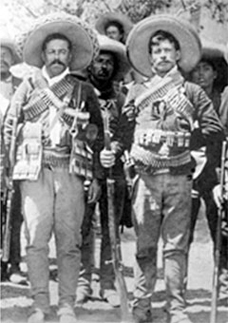
Pancho Villa with Ricardo Gonzalez, great uncle of Bessie “Crickett” Quijada.
Alberto Gonzalez
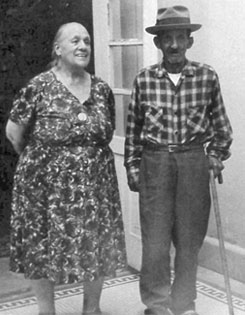
Crickett is my cousin. I remember my Grandfather always with the funny hat and cane, I was with my Dad and my Grandfather (Ricardo Gonzalez) when this visit occurred
Rebecca Hughes
This is so cool, Ricardo was my Great-Grandfather and Crickett and Alberto are my cousins.
Matt Holguin
Ricardo was my great grandfather too! Small world!
Jonathan Corral
My family and I have been building a family tree of our family, the Corral’s, and since we only know of the Corral side. Everyone has passed away in our blood line from the elderly side and can only hope to find out more about Maria through her family or if we could find out if Francisco Villas side of the family happen to know more about Maria Corral. We have all been told by our (now deceased) grandparents that our family is related to Francisco Villas wife Dona Maria de la Luz Corral de Villa. I’m told my grandfather Joseph Louis Corral (born 1927) had a father named Leopoldo Corral (a Police Officer in Mexico and was assassinated as well) and his wife Maria Ortiz Figueroa Corral (born 1888). We know Maria Luz had a father named Jose de Jesus Corral, but we haven’t pin pointed exactly if she had any brothers our cousins. We’re told Leopoldos aunt was Maria Luz Corral.
Javier Solis
Jonathan my mother Alejandra Corral’s grandmother was Benigna Corral which was Luz Corral Sister. She still has memories of her grandmother and my grandmother (my mother’s mom) knew Luz Corral around Durango and Buena Sevi. My great great grandfather talked a lot about Pancho Villa.
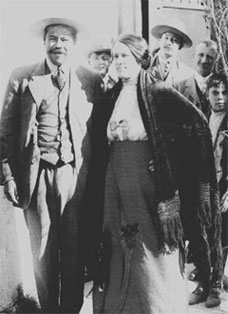
Pancho Villa and his wife, Luz Corral de Villa, in 1914.
Dona Luz Corral de Villa with Ricardo Gonzalez in 1967.
The California Native has been leading tours to Copper Canyon for more than 30 years. Located in the Sierra Madre Mountains, Copper Canyon is four times larger than the Grand Canyon. This area is rich in history from Pancho Villa and the Mexican Revolution to the booming silver town of Batopilas.
We offer a full range of itineraries from small group escorted tours to worry-free adventures designed for the independent traveler.
Colors set our mood and add an important dimension to our feelings and memories of the places we visit. I thought it might be fun to group some of the photos from our library of California Native images by their predominant colors. Our first collection was based on the color yellow.
This, our second collection is based on the color blue. Blue is the color of the sky and the ocean. It symbolizes trust, loyalty, wisdom, confidence, intelligence, faith, and truth.
“Somewhere over the rainbow, skies are blue, and the dreams that you dare to dream really do come true”—Lyman Frank Baum
“Mozart has the classic purity of light and the blue ocean”—Henri-Frédéric Amiel, 18th century Swiss philosopher
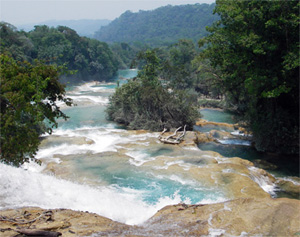
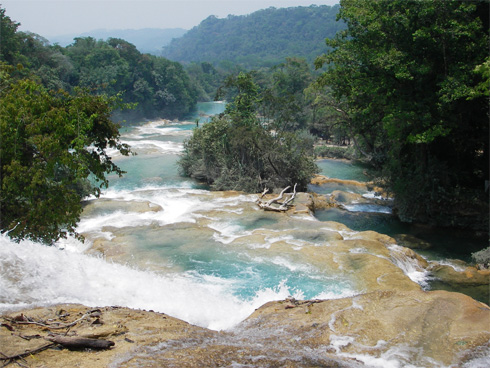
Beautiful, blue Agua Azul falls, located 40 miles from the Mayan ruins of Palenque, in the Mexican state of Chiapas, tumble down from the jungle in a series of cascades where they have carved out delighful limestone swimming holes.
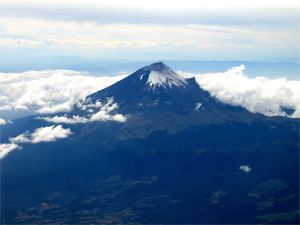
Photographed from an aircraft, the dark blue hues of Mount Popocatépetl, located in central Mexico, are highlighted by the blue sky just before sunset. Popocatépetl, which can be seen from Mexico City is a very active volcano, whose last eruption was just last year (May, 2013).
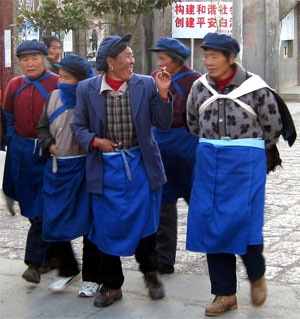
Wearing blue aprons and caps, Chinese ladies go home from work in Yunnan Province.
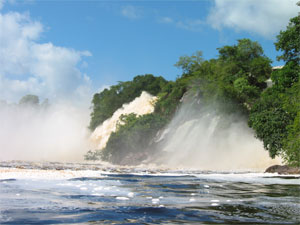
Falls cascade down into the refreshing lagoon in Venezuela’s Canaima National Park.
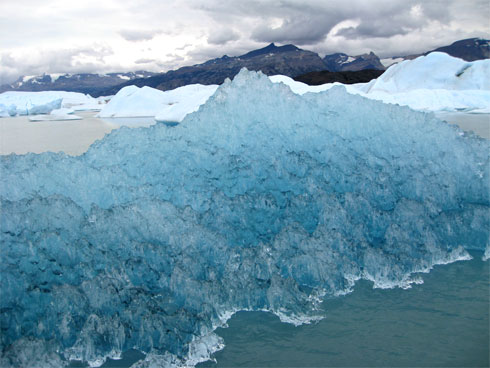
The blue of this Patagonian glacier looks almost unreal as it glistens in the sunlight near the bottom of the world.
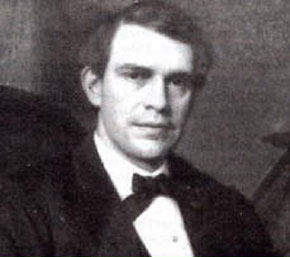
Alexander Robey “Boss” Shepherd was born in Washington D.C. in 1835 and served as Territorial Governor of D.C. from 1873 to 1874.
At the bottom of the deepest canyon in the vast complex of mountains and canyons known collectively as Copper Canyon is the sleepy little village of Batopilas. Sitting next to the bougainvilleas in the town square you might see a cowboy riding his horse down the sunbaked-earth main street, or a group of brightly clad Indians packing their burros for the long journey back to their remote village. It is hard to believe that this quiet village was once one of the richest silver mining cities in the world.
The Spaniards first mined ore here in 1632. Over the centuries more than three hundred mines were worked, but it took a most unusual American to bring real wealth to the area. The man was Alexander Shepherd and the story starts, not in this remote section of Mexico’s Sierra Madre mountains, but in Washington D.C.
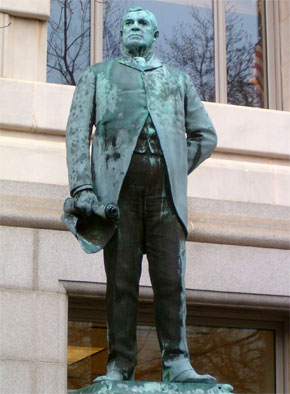
Statue of Alexander Shepherd in Washington D.C.
In 1871, Alexander Robey “Boss” Shepherd headed the D.C. Board of Public works and two years later became territorial governor of the District of Columbia. At that time Washington was a city with muddy streets and unpaved sidewalks. During his three years in office Shepherd constructed 157 miles of roads, 123 miles of sewers, 39 miles of gas mains and 30 miles of water mains, leading some historians to refer to him as the “Father of Modern Washington.” Instead of being heralded as a hero, however, he was ungraciously chased out of office after Congress discovered that he had overspent the cities budget by $16 million with a disproportionate share of the benefits going to neighborhoods in which he had financial interests.
Shepherd declared bankruptcy and, in 1880, moved his family to Batopilas, where he had purchased a silver mine from another American, John Robinson, for $600,000. Thirteen years earlier, Robinson bought two old supposedly worked out mines where he discovered a rich vein of ore, but then ran into a major obstacle—because of the remoteness of the area his transportation and processing costs were far too high to make the operation profitable.
Shepherd, who always thought on a grand scale, applied the same organizing skills he had used in Washington to his new mining venture.
He began by filing more than 300 additional mining claims and consolidating his holdings into the Batopilas Mining Company. Then, instead of shipping out raw ore to be processed at some distant location, he constructed a complete processing facility in Batopilas. The processed silver was cast into bars, loaded two bars per mule, and taken by monthly mule trains of up to 100 mules to Chihuahua.
Between 1880 and 1906, 20 million ounces of silver were extracted from the mines—ranking the Batopilas mines among the richest silver mines in the world. At their peak the mines employed 1500 workers, and the total length of tunnels exceeded 70 miles.
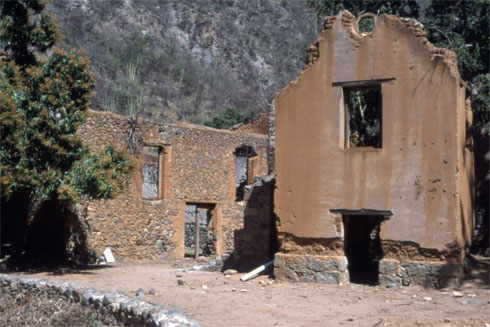
Ruins of the Shepherd Hacienda in Batopilas, at the bottom of Mexico’s Copper Canyon. It was once one of the richest silver mining cities in the world.
Shepherd’s innovations included the construction of the Porfirio Diaz tunnel—a tunnel bored through the base of a mountain, where a train hauled out ore, which was dropped down shafts from the tunnels above. The train had to be dismantled and hauled in almost 200 miles by burro and human labor. The tunnel is still there, now deserted except by bats.
Shepherd did much to improve the town of Batopilas, building bridges, aqueducts, and a hydroelectric plant, which made Batopilas the second city in Mexico to have electricity—second only to Mexico City itself. By the time Shepherd died in 1902, the town’s population had grown from 400 to around 5000 (it is now around 1000). The hydroelectric facility he built was restored in 1988 and once again powers the town, and his original aqueduct still provides the local water supply.
Today there is no large-scale mining in Batopilas, though a few old prospectors still pan gold and silver from the river or extract small quantities of ore from the abandoned workings.
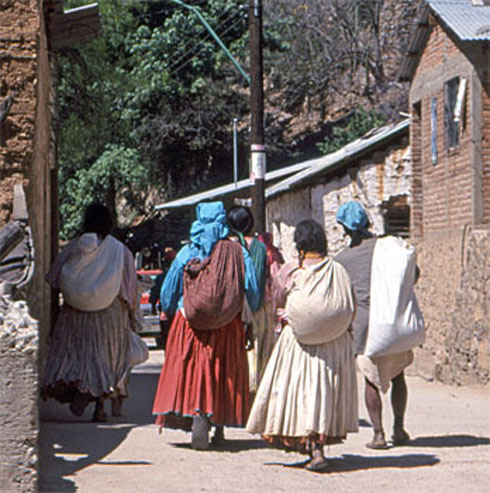
Today, a group of Tarahumara Ladies go about their business in the quiet little town of Batopilas.
We appreciate it when our guests share their stories with us and allow us to post them on our blog. Last summer, Bonnie Brunt from Spokane, Washington, enjoyed our tour to Chiapas and Yucatan.
I wanted to write you a quick note to let you know how thoroughly this trip surpassed my expectations. It really was a magical trip for all of us—one that we will never forget—and much of that was due to the services of our amazing tour guide Javier. He really was a great match for our group of bright, professional, well-traveled women. His knowledge of the Mayan civilization and culture was profound, his passion for the subject deep, and his explanations, articulate. He was extremely professional and personable (good-natured, kind, sensitive to the needs and desires of the group). In addition, he was really good at organizing our time such that we were in the right places at the right time, taking into consideration the weather, the size of the crowds, etc. We just could not have been more happy with him.
Thanks for all you did to make this trip so special for all of us!
Bonnie Brunt
Dean, Visual & Performing Arts Spokane Falls Community College
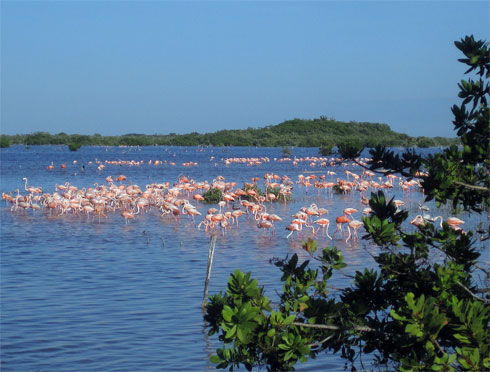
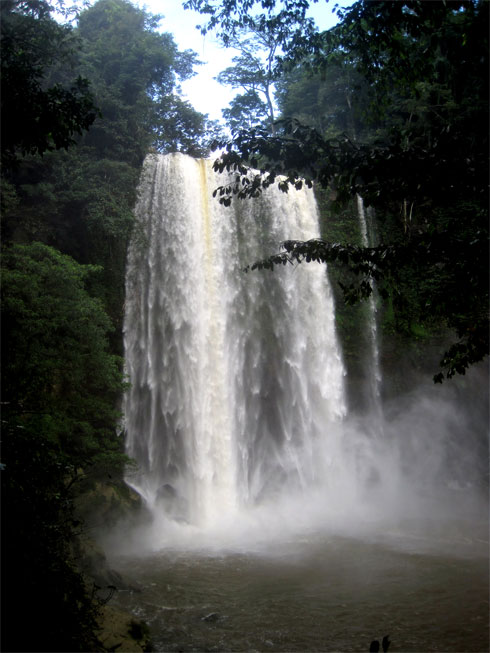
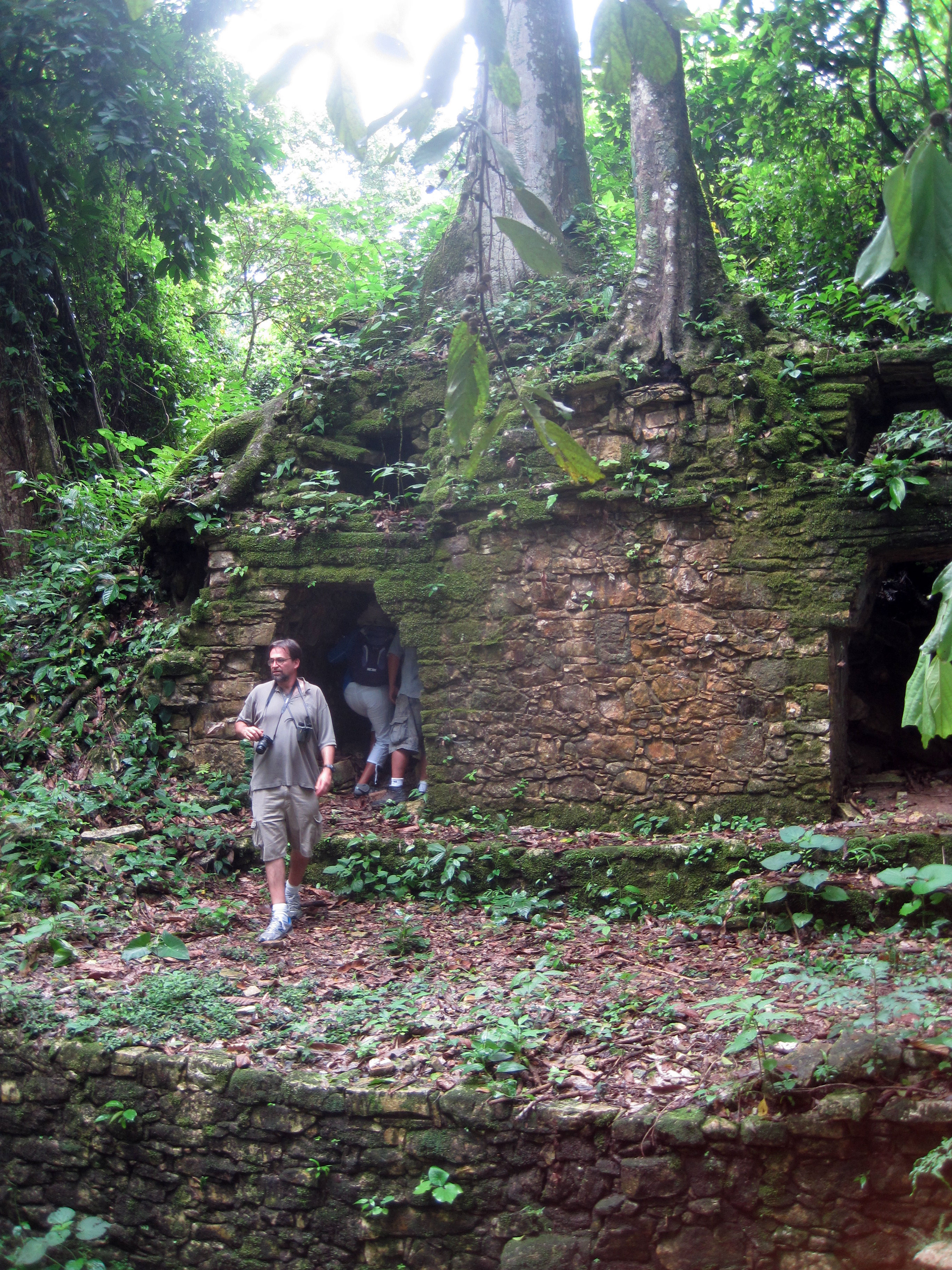
Flamingos flock at an estuary near the beach at Progreso, Yucatan.Misol Ha Falls in Chiapas, MexicoExploring the Mayan ruins of Palenque
About thirty years ago I first became aware of Copper Canyon when a travel writer friend of mine returned from a journey to Northern Mexico.
“Lee, you have to see Copper Canyon,” he insisted. “It’s magnificent!!” After viewing his slides I became excited and traveled to the Sierra Madre mountains of Northern Mexico to explore this remote area. Since then, over the last thirty years, we have introduced thousands of people to this fascinating area of mountains, rivers and canyons, and to the Tarahumara, the indigenous people who make this rugged land their home.
The Canyons
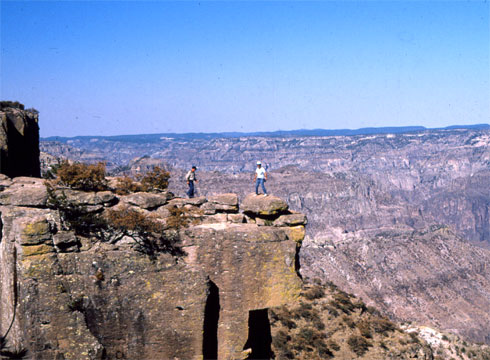
California Native founder Lee Klein tests the stability of Balancing Rock on the rim of Mexico’s Copper Canyon. Copper Canyon is four times Larger than the Grand Canyon and almost 300 feet deeper.
Long ago, about a hundred million years, a huge plateau arose in an area that is now part of northern Mexico. Seventy million years passed before volcanoes erupted and flooded the plateau with molten rock. Rivers then sliced this lava-covered plateau into deep twisting canyons—the largest area of canyons in North America.
Between the volcanic layers and the old plateau are rich mineral deposits. The depth of the canyons exposes these layers, making the gold, silver, and copper accessible for mining. It is from the abundant copper ore that the area derives its name—Copper Canyon.
The Miners
The first people to mine the ore were the Spaniards, in 1632. Over the centuries, hundreds of mines were worked, peaking at the end of the 19th century when 20 million ounces of silver were extracted from the mines at Batopilas, making Copper Canyon one of the richest silver mining areas in the world.
The Tarahumara
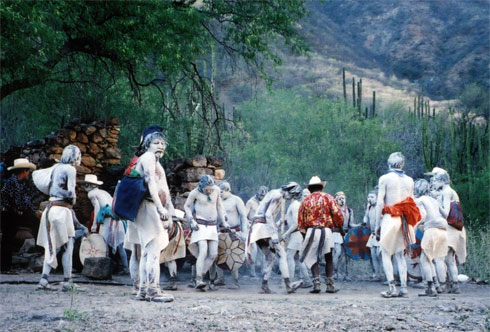
Tarahumara men wear traditional makeup for the Easter celebrations in Copper Canyon, the most important celebration of their year.
The longest term residents of Copper Canyon are the Tarahumara Indians. No one knows how long they have lived here, but archaeologists have found artifacts of people living in the area 3000 years ago.
Francisco Vasquez de Coronado’s expedition, which passed through the Sierra Madres in 1540, in search of the legendary Seven Golden Cities of Cibola, may have been the first contact between the Tarahumara and Europeans.
The Jesuits
In 1607 the Jesuits established the first of their 29 missions to be built in the canyons and introduced the Tarahumara to Catholicism, domestic animals and the plow.
When the Spaniards discovered the rich mineral wealth in the canyons, they forced the Indians to work as slaves in the mines. This led to many bloody revolts throughout the 17th century.
The influence of the Jesuits came to a halt in 1767 when the King of Spain expelled their order from the New World. In the canyons there are legends of treasure hidden by the Jesuits during their rapid departure). The Franciscans took over from the Jesuits, but the Indians were pretty much left alone until the Jesuits returned in 1900.
The Tarahumara Today
Today the Tarahumara number around 60,000. They live in caves and small cabins and practice subsistence farming. The majority practice a form of Catholicism liberally intermixed with their traditional beliefs and ceremonies. Among the peoples of North America, they are considered to be the least touched by modern civilization and the most unmixed of any of the Indian tribes of Mexico.
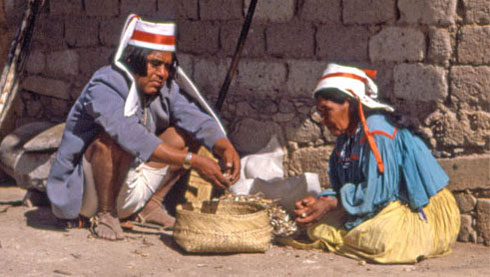
In the remote village of Kirare, in Mexico’s Copper Canyon, a Tarahumara man helps his wife with her chores. The California Native has been a leader in operating tours to this remote area for almost thirty years.
We appreciate it when our guests share their stories with us and allow us to post them on our blog. Last summer, Mardis Nenno from Spokane, Washington traveled with us to Chiapas and Yucatan and had this to report:
I want to thank you for providing an excellent tour. The six of us were impressed by the scope of the itinerary, the variety of experiences and the professional way in which the tour was conducted. The accommodations were well chosen and very comfortable.
We so enjoyed the luxury of sitting back and relaxing as each new day unfolded. And each day brought a new adventure — thanks to our wonderful guide, Javier. His knowledge of Maya history, architecture and culture is extensive and his fluency in English is remarkable. He was patient, unhurried and always courteous. He went out of his way to make sure that we had a positive experience and came away with a deeper knowledge of the Maya people’s past and their lives today.
This was a trip I’ll never forget. I had an extraordinary experience in Chiapas and Yucatan and hope to return to continue to study and improve my Spanish! In a very significant way the success of it was due to the excellent service and professionalism provided by CalNative.
Best Regards,
Mardis Nenno
Instructor, Fine Arts
School of Design and Construction
Spokane Falls Community College
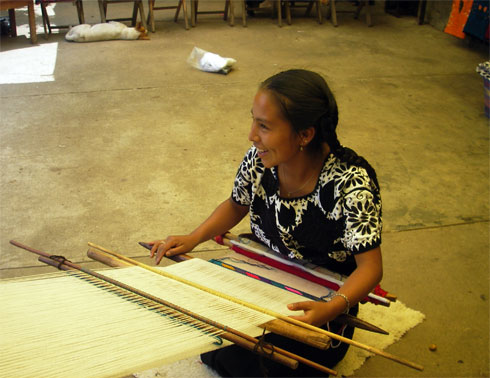
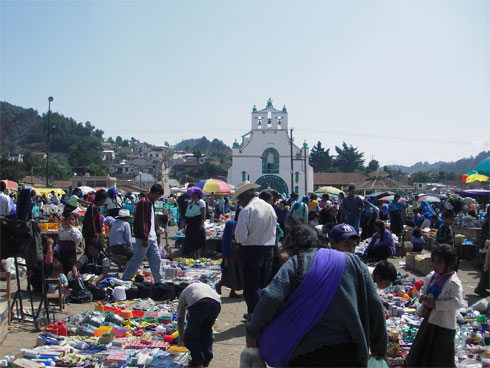
Beautiful Aqua Azul Falls in the Mexican state of Chiapas are located 40 miles from the ruins of the ancient Mayan city of Palenque.A young lady weaves patterns on a hand loom in Mexico’s state of ChiapasSunday is market day in the lovely town of San Cristobal de las Casas in Mexico’s Chiapas state.
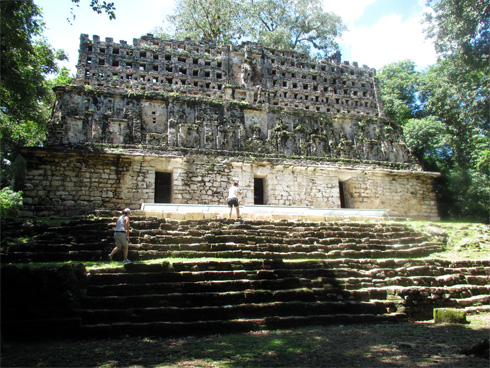
The Mayan archaeological site of Yaxchilan is accessed by a boat ride up the Usumacinto River which is the border between Mexico and Guatemala.
A few weeks ago, as guests of the Mexican Tourist Board, we traveled to the city of Merida, the capital of the Mexican state of Yucatan, to attend the 5th Annual Feria Turistica del Mundo Maya, Mayan World Tourism Fair, a trade show which featured tourism vendors from the area that once was the Mayan Empire. Now this rain forested terrain encompasses Guatemala, Belize, El Salvador and Honduras and the Mexican states of Yucatán, Tabasco, Campeche, Quintana Roo and Chiapas.
We met with regional tour operators, tourism boards, hoteliers and other vendors, and visited many sites where we had not previously explored.
New to us was the Mayan archaeological site of Dzibilchaltun, a lesser visited site not far from Merida which was inhabited since around 500 B.C. We climbed around its temple, plaza and other structures, and were quite impressed with its museum of artifacts from throughout the Mayan world.
We then traveled to the town of Palenque, in the state of Chiapas. After driving through the jungle we boated up the Usumacinta River to the ruins of Yaxchilan, capital of one of the most powerful Maya states in the region and a rival to Palenque and Tikal. The site contains many impressive ruins, with palaces and temples bordering a large plaza above the Usumacinta River. Throughout the ruins are impressive hieroglyphics depicting the history of the kingdom.
South of Yaxchilan, on the border of Guatemala, we explored the ruins of Bonampak, another Mayan city, noted for its vivid 8th century murals.
In the near future we will be offering these Mayan sites as add-on options to our Yucatan adventures.
We appreciate it when our guests share their stories with us and allow us to post them on our blog. Last month, Carman Cunningham and Lucile Griffiths, from San Rafael, California, traveled with us on our Copper Canyon 9-day Independent Tour to the Bottom and had this to report:
My friend, Lucile Griffiths, and I traveled to Copper Canyon, Mexico from December 23 to 31. We flew to Phoenix, Hermosillo, Los Mochis, then by taxi two hours to El Fuerte, Sinaloa. One of the few disappointments of the trip was that we arrived in El Fuerte after dark, and left before sunrise to catch the train. From the little we could see, El Fuerte is a beautiful colonial town and we wanted to see much more of it. Our hotel was a traditional hacienda with courtyards and gardens open to the sky, furnished with Persian rugs and antique furniture. Modern plumbing, though.
Our early morning train quickly climbed from farm land surrounding El Fuerte up into the mountains. By noon we were in the canyon lands, pine forests, ice and snow on canyon rims and mountain peaks. We had gone through 86 tunnels and crossed 37 bridges.
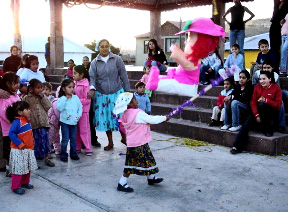
Tarahumara children celebrate Christmas with a piñata at Copper Canyon’s Paraiso del Oso.
We got off the train at a little town called Bahuichivo and were met by a enthusiastic American, proprietor of the lodge where we stayed two nights. Although simple, the lodge was comfortable and the hospitality outstanding. We were swept into Christmas preparations and rituals. A pinata was stuffed, bags of sweets prepared for the area children who were expected, and a toy selected for each one. Doug’s family members (his wife is Mexican from the area) and Tarahumara Indians came and went, all excited.
In the late afternoon, we set off for the small village called Cerocahui, about 20 minutes drive from the lodge. Doug stopped to pick up all the people, most Indians, he met along the road. They overflowed the SUV, sat stacked on one another, smiling and silent. When we reached the village, we all congregated in the church.
When mass was over, the crowd walked around the central plaza stopping along the way to sing the song that asks for lodging (the posada) for Mary and Joseph. The householders sang back that there was “no room at the inn” until the last house where they were welcomed to the manger. After a pinata was battered open by the children and the sweets distributed (they made sure the only foreigners, Lucile and me, received a share) we went back to the lodge.
Two twenty five pound turkeys were put on to roast, but it became obvious that the American Christmas dinner tradition was unclear at best. And so it was that I made gravy for 120 people. The poor turkeys were not so much carved as torn apart and served with instant mashed potatoes and canned corn. The following day, I even introduced them to the old Dresden tradition, carcass soup. The children lined up for their presents, and the Indian women lined up to receive a blanket each. At this point Lucile I gave up and went to bed, but most people returned to the village for another mass and dancing. We were told they got to bed around 2:30 am.
The following (Christmas) day we boarded the train again and traveled to a town called Creel. Creel is 8000′ and pretty cold, patches of ice and snow crunched underfoot. The landscape was similar to the High Sierra, but I gather the biodiversity is much greater; more species of pine trees, oaks and other plants. Rock formations, caves and waterfalls are found all around the countryside. Some Tarahumara live in the caves. Many houses are built of logs and rock looking like the Lincoln log buildings we made as children. Men on horseback on unpaved roads add to the Far Western look of the area. The hotel is also built of rock and log. It could have been in Montana.
With the exception of one group of men in the bar one night, and one Canadian, we were the only foreigners we saw the whole trip. The hotel was full, but all the guests were Mexican. It was fun to see middle class Mexican families enjoying their Christmas holidays. And they were so polite and gracious with us. Perhaps the novelty of seeing two elderly American women traveling alone was the reason, perhaps they are just culturally different, but we were treated with utmost courtesy. I think the fact that I could speak (basic, I’ve forgotten a lot) Spanish had something to do with it, too. A lot of people remarked on my efforts.
From Creel, we were supposed to travel seven hours down to the canyon floor to spend a day in a town called Batopilas. However, about two days previously there had been a storm, the town was partially destroyed and the roads washed out. We were advised not to go. So, we missed Batopilas. Our driver had some ideas, and it turned out that we spent the next three days in the area and saw some interesting sights. The first day (which would have been the day of the descent) we saw the Valleys of the Mushrooms, the Frogs and the Monks (all rock formations), cave dwellers, and had a picnic by the side of a mountain stream.
The second day we went to a resort town called Divisadero and took a thrilling cable car–finicular-teleferique trip across a section of the canyon. We could see into the depths, thousands of feet below, sheer rock walls all around us. Copper Canyon is six times larger than the Grand Canyon! We had lunch in a market set up along the train track after that. I should tell you that neither of us had any stomach trouble at all on the trip. The third day (which would have been the ascent) we went to a very old village and as it was Sunday, attended mass in an attractive old church. We were amused when one of the “hymns” was Jingle Bells.
Prior to our departure on this trip several people expressed concern about our safety. We never saw any evidence of danger, nor sensed tension. As I mentioned previously, aside from the one group of men in a bar, and one Canadian, we did not see any people other than Mexicans. Surely tourism is suffering and it is too bad. The trains were guarded, that is, two armed soldiers walked up and down the aisles from time to time. We saw several armed vehicles on the road, filled with soldiers, presumably on patrol. That was all. No one looked the least bit intimidated, or even interested in them.
On the way up to Creel there were few passengers on the train. On the way down, the train was very crowded. In order to get from our seat to the dining car we had to go through the bar. It was packed with revelers, singing, dancing and drinking. They treated us like delicate eggs, as the train swayed and rocked and jumped, they handed us along, person to person, with welcoming smiles and greetings. When we got to the dining car, they put us at the head of the line to be seated.
We traveled home on the 31st the way we came: El Fuerte, Los Mochis, Hermosillo, Phoenix, San Francisco. Again the frustration at not seeing El Fuerte. Despite that, we had a wonderful time. To a future traveller, I would recommend stocking up on 5 and 10 peso pieces for tips and Indian children. Our 20 peso notes were too big.
A trip to Copper Canyon is one that I would recommend without hesitation. Beautiful scenery, friendly people, comfortable train and hotels. It doesn’t get much better than that.
We appreciate it when our guests share their stories with us and allow us to post them on our blog. Last July, Judy Theodorson, from Spokane, Washington, traveled with us on our Yucatan & Chiapas Adventure.
Dear Lee,
Overall, I could not be more pleased with this trip. Just abut everything exceeded my expectations. While I have extensive travel experience, I have never before used services of packaged/guided tour. This trip taught me the value of utilizing the experts.
Highlights are many. Perhaps the most memorable stop was the church in Chemula where we saw an amalgamate of Mayan and Catholic practices. My academic area is architecture, so I was delighted by the Mayan ruins, in particular, I enjoyed those less traveled—Calakmul, Edzna, and Uxmal. In the future, I hope to visit more of the smaller ones. I was also pleased by the opportunities to experience the natural world—rivers, jungles, beaches—which helped to contextualize the ecological foundations of this impressive place.
I appreciated that our group was able to customize the tour to meet our needs. I hope to do another trip in the future with students that will require even more customization.
The hotels were fine. Several—San Cristobal, Merida, Chichen Itza—were unexpectedly wonderful in terms of both architecture and comforts.
The absolute highlight of our trip was our guide, Javier Sosa Pacheco, who was perfectly matched to our group. I must sing his praises—foremost is his deep knowledge in many subjects including archaeology, anthropology, architecture, Mayan beliefs, history and natural history. He is a natural teacher, delivering the knowledge with clarity, with stories, and with a point of view. By the end, he had done a beautiful job of tying our experiences into a coherent and memorable whole. Furthermore, he is professional in every way—on time, courteous, attentive—and gifted with patience and humor. Importantly, he took the initiative to massage the itinerary so that we had the best experiences possible, for instance, visiting Chichen Itza early in the morning rather than late on a busy day. Finally, he was a great driver.
My experience overall is so positive that I’m already planning another trip to the Yucatan peninsula.
Sincerely yours,
Judy Theodorson, M.Arch, RA
Assistant Professor Interior Design
School of Design and Construction
Washington State University
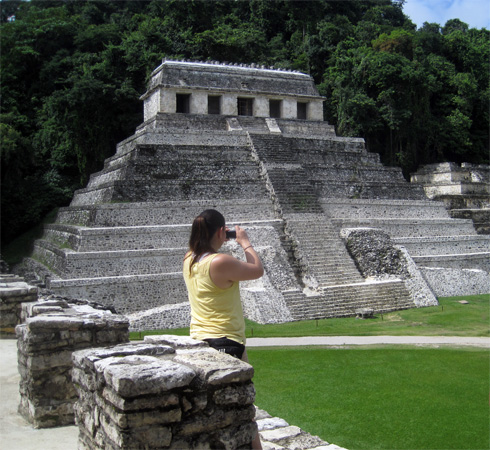
In the jungles of the Mexican state of Chiapas, the ruins of Palenque contain some of the finest architecture, sculpture, and bas-relief carvings that the Mayans produced.
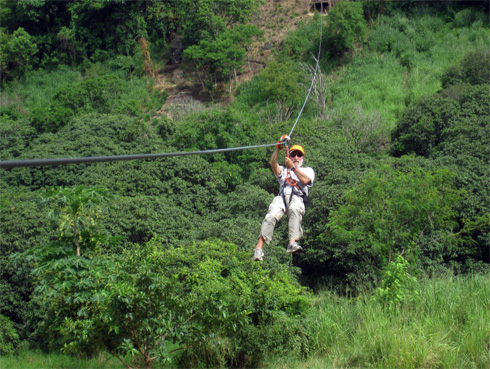
California Native founder Lee Klein on zip-line over rain forest in Veracruz, Mexico.
Last week California Native’s founder and president, Lee Klein, attended ATMEX, the Adventure Travel event in the State of Veracruz, Mexico. It was a great opportunity to meet again with adventure tour providers in Mexico and develop future partnerships for providing California Native adventures in this exciting and beautiful state.
Along with friends in the adventure travel industry, Lee rafted down the Rio Antigua, zip-lined over the canopy, and hiked and kayaked in the Sierra de Los Tuxtlas, a secluded rain forest located in the shadow of a volcano. In addition to it’s wonderful opportunities for outdoor recreation, The State of Veracruz offers a treasure chest of historic and cultural sites.
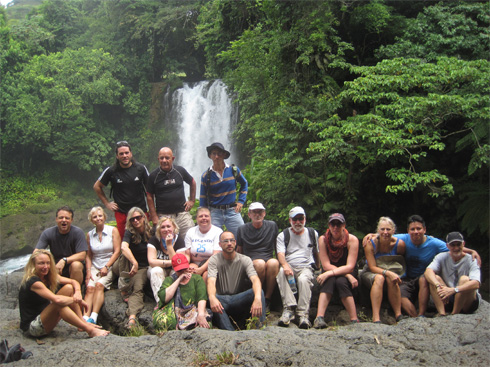
California Native’s Lee Klein (5th from right) with group at Los Tuxtlas waterfall.