California Native
You are currently browsing articles tagged California Native.
We appreciate it when our guests share their stories with us and allow us to post them on our blog. Last month Tessa Godfrey, from Hoddesdon, Hertfordshire, England, traveled with us on our Copper Canyon 10-day Independent Tour to the Bottom.
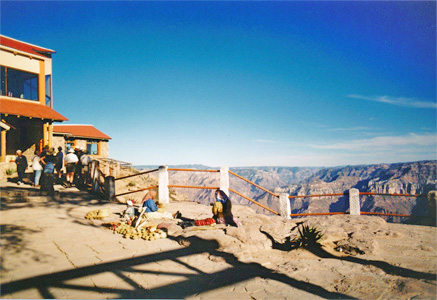
The journey down from Creel to Batopilas was both hair-raising and amazing. Lovely day exploring Batopilas and walking up and down-stream from the village. Glorious drive back up to Creel. The rock formations of the “Valley of the Monks” were a wonderful surprise. I also very much enjoyed the trip to Urique with Doug Rhodes, a very interesting man. The view of the canyon from the hotel [at Divisadero], including the bedrooms, was magnificent.
I liked the balance between your organization and our freedom. The scenery [on the trip] was incredible and your arrangements were excellent.
Many thanks,
Tessa Godfrey

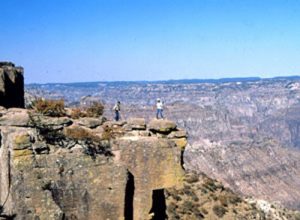
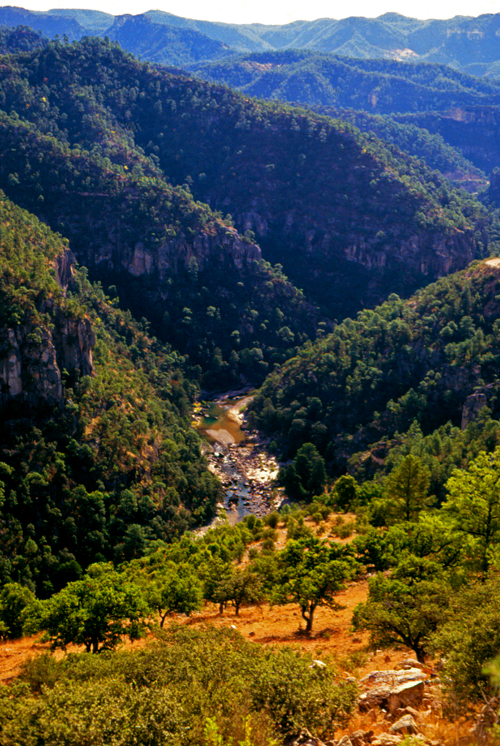
If you look carefully you can see many cave dwellings in the cliffs throughout Mexico's Copper Canyon. Many indigenous Tarahumara Indians still make their homes in these traditional lodgings.
Tags: California Native, Copper Canyon, Mexico, Rutas de Mexico, sierra madre, Tours, Travel

Archery is the national sport of Bhutan.
Dancing about and shouting sexual insults at the opposing team, Bhutanese sports fans enjoy their favorite pastime—archery!
Archery? It may seem counter intuitive for a devoutly Buddhist nation to choose a sport like archery since Buddhists have a profound reverence for all living things. Participating in a sport where the equipment is primarily designed for hunting or warfare seems a bit out of place. However, judging by the fact that nearly all villages in the Kingdom of Bhutan have an archery range, passion for the sport is not to be taken lightly.
Popularity of the sport can be traced all the way back to a 15th century legend. During this time, it is believed Lama Drukpa Kuenley, known affectionately as the “divine madman,” shot an arrow from Nangkartse in Tibet. Following the path of the arrow led him to Bhutan, land of the thunder dragon. Archery symbolism is present in Buddhist beliefs and often represents the offering of prayers.
Today the matches are a festival of brightly-costumed archers and spectators alike. In fact, the activity is centered as much around the pageantry of the festival as it is around the competition of hitting the bulls-eye. Archers go to great lengths to distract or demoralize their opponents—even going so far as to dance in front of the other’s target! This behavior is not just limited to the archers—the women in the crowd act as cheerleaders, shouting raucous and degrading comments about the other team’s heritage and sexual prowess. All of the hullabaloo is in jest, and no one is ruffled by it or takes much offense.

Nearly every village in Bhutan has an archery range.
Wielding the traditional hand-carved bamboo bow (nowadays some use state-of-the-art compound bows), participants compete in teams of 15 players. Two points are given if the arrow hits any part of the target, three points for a bullseye, and if the arrow sticks in the ground within one arrow’s distance of the target, the team earns one point. The first team to score 25 points is declared the winner. To play, the archers are each given two shots during their turn. The field is set up like a horseshoe pitch, so team members shuttle between the targets in between shots. Not only is hitting the target difficult, but the walking back and forth across the pitch can be tiresome as well, because the small wooden targets are placed 140 meters apart! That’s nearly three times the distance of Olympic standards (a mere 50 meters) and probably why archers take the risk of taunting their rivals while standing in front of the target. The rival discouragement is a large part of the spectacle.
Archery is the only Olympic sport in which Bhutanese athletes compete. The Bhutanese have been involved in the games since 1984 and in the 2004 Olympics they made it to the second qualifying round. In the 2012 London Olympics, Bhutan sent two female archers, one of the smallest teams at the event. They remain hopeful that Olympic gold is in their future. For now, as in the past, the bowmen (and women!) from Bhutan continue to play for the love of the sport and the next chance to poke fun at their friends.
Tags: archery, Bhutan, California Native, Tours, Travel
Last Christmas we attended a candelaria and bell-ringing event at the Centinella Adobe, an historical Spanish adobe located a few miles from The California Native. When we met the docent, Betty Keel, an attractive woman in her 80′s, she recalled having traveled on a back-packing trip with The California Native down to the bottom of Copper Canyon back in 1993. A few months later she came over to our office with her sister-in-law and hiking companion on the trip, Bee Jay Keel. They brought us a scrapbook with photos, made by the third guest on the trek, Barbara Boone.
We really enjoyed visiting with these delightful adventurous women and reminiscing about the many years we’ve been conducting tours in this wonderfully remote part of Mexico’s Sierra Madre mountains.

The "three caballeras" in the small town of Urique in the bottom of Copper Canyon.

Loading up the burro for the days journey.

Everything tastes better in camp.
Tags: California Native, Copper Canyon, Mexico, Rutas de Mexico, Tours, Travel
Last week I attended ATMEX, the Adventure Travel Event in the State of Veracruz, Mexico. It was a great opportunity to meet with adventure tour providers in Mexico and lay the groundwork for future partnerships to develop California Native tours to this beautiful region. We joined with Mexico Verde Expeditions and rafted down the Rio Antigua, zip-lined and mountain biked in the rainforest nearby the village of Jolcomulco. The State of Veracruz offers a plethora of historic and cultural destinations in addition to its wonderful opportunities for outdoor recreation. Please let me know if you are interested in joining us on future tours to the historic and wildly scenic State of Veracruz.

California Native President Lee Klein and Mexico's Minister of Tourism Gloria Guevara at ATMEX.

White water rafting on Mexico's Rio Antigua with Mexico Verde Expeditions. California Native founder Lee Klein is the guy in front wearing sunglasses.
Tags: California Native, Mexico, Tours, Travel, veracruz
Some people like to read about the places in the world that they are planning on visiting while other folks prefer to be armchair travelers and visit these places vicariously in the comfort of their homes. What ever is your preference here are our recommendations for good reading materials on one of our favorite destinations: Mexico’s Copper Canyon.
Topping off our list is The Copper Canyon Companion. (We’re probably a bit prejudiced when it comes to this book since we wrote it.)
The Copper Canyon Companion was written by the California Native staff as a reference for travelers to this unique destination. In its pages you will meet the Tarahumara Indians, who have lived in the remote mountain area for centuries. California Native’s guides share with you their personal memories and affection for these proud people who refused to be conquered by both the Spaniards and the modern world. The book takes you back in time and introduces you to the 17th-century conquistadors and priests who conquered and colonized the area, and the 19th-century Americans who left their mark in these rugged canyons. The book includes lots of useful information for travelers, including a sightseer’s log of the Railroad. Considering a trip to Copper Canyon? The Copper Canyon Companion will travel with you and give you an in-depth look into this unique region of Mexico’s Sierra Madres. Been there already? It’s a great souvenir.
There’s a lot of good reading about Copper Canyon and some of our other destinations. In the coming months we’ll highlight more books—stay tuned!
In the meantime, for more on Copper Canyon, take a look at our web store, from Amazon.com.
Tags: California Native, Chihuahua al Pacifico Railroad, Copper Canyon, Mexico, Tours, Travel

Statues of White elephants guard the entrance to a temple in Myanmar.
In Myanmar (Burma), the white elephant is highly respected as a symbol of power and prosperity and so it was only natural that a few months ago Myanmar’s government warmly welcomed two newly found white elephants. At the same time, the country was awarded chairmanship of the Association of Southeast Asian Nations for 2014, and U.S. Secretary of State Hillary Clinton’s visit ended 50 years of political isolation from the West. Coincidence? The people in Myanmar don’t think so.
The elephant has for centuries been a symbol of Southeast Asian countries. Maharajas sent them to battle like living tanks, and workmen used them as bulldozers. The rare “white” elephant, though, holds a special place in the lore of these countries.

A white elephant is unloaded from a transport to take its place of honor near a temple in Myanmar.
While other elephants worked hard, white elephants were cherished by kings, kept in palaces, cared for by senior officials, and worried over constantly. Possession of these sacred beasts was very important. A king who had many white elephants would reign for a long time and his kingdom would prosper. If his white elephants died, it was an omen of disaster for the kingdom.
Burmese kings would hunt for these special beasts, and would present them to each other as marks of diplomacy. Sometimes they fought over them, but they always took great care of them—their rule depended on it.
As elephants were used less and less in warfare, elephant hunts became less common, and fewer white elephants were discovered. In Siam (now Thailand), the King decreed that any white elephant found must be given to him and he offered rewards for their discovery. Each time a white elephant was found, it was cause for public celebration.
When King Mongkut of Siam heard that America had no elephants, he offered to send several to President Lincoln, thinking that if conditions were right they would multiply and Americans would be able to “tame and use them as beasts of burden, making them of benefit to the country.” The President replied that the American climate was probably unsuitable, and Americans preferred to use steam power, but he thanked the king for his gift of two magnificent tusks.
Brahman texts list attributes which must be met to qualify the animal as a true “white” elephant—pearl eyes (the animal is usually an albino), white hoofs, a back which hangs down like the bough of a banana tree, white hairs on the body and tail, and ears which are larger than a regular elephant’s.
Today, in Laos, Cambodia, Viet Nam and Thailand, white elephants are pretty much nonexistent. In Myanmar, with the two new white elephants, the country now has at least five. They are considered sacred, and treated with the utmost respect and care. At certain times of the day, the public may view the elephants. No photos are allowed.
With its new found popularity, Myanmar is on its way to becoming a major tourist destination. Tourist numbers are going up and so are prices. Now is the time to visit this fascinating country while it is still pristine and take advantage of The California Native’s “White Elephant” Sale.

California Native, Ellen Klein, serving rice to monks in Myanmar.
Tags: burma, California Native, myanmar, Tours, Travel
We appreciate it when our guests share their stories with us and allow us to post them on our blog. A few months ago Doris Beinhauer and Henry Adler from Rio de Janiero, Brazil, traveled with us on our Copper Canyon 11-day Independent Trip to the Canyon Bottom.
Hi Lee, Laurie and all the California Native team,
Just this week we have been talking with friends from Los Angeles about our trip to Copper Canyon and how much we enjoyed it. This little adventure turned out even better than I imagined.
We liked El Fuerte and the Hotel Torres del Fuerte. Chihuahua was also a real surprise.
Highlight of course was the trip from Creel to Batopilas. If we ever would visit again we would like to hike into the canyon, and if there is another time we shall surely contact you.
All the best from Rio de Janeiro,
Doris and Henry

In the town of Batopilas, at the bottom of Copper Canyon, the ruins of the Shepherd Hacienda are a reminder of the time when this town was one of the richest silver mining cities in the world.
Tags: batopilas, California Native, Copper Canyon, Mexico, Tours, Travel
|
San Jose, Costa Rica, that is. San Jose is located in Costa Rica’s central valley and is the nation’s capital. It is the starting place for our California Native Costa Rica Adventures.
Located at the center of the Americas, between Nicaragua and Panama, Costa Rica has become one of the world’s most popular destinations for Eco-tourism due to its fantastic biodiversity—it may contain as many as 6% of the world’s plant and animal species, and its friendly people. It is a delightfully peaceful little country which constitutionally abolished its army more than sixty years ago.
From its rain forests to its volcanoes and beaches it is a wonderful country to explore and we have been introducing people to Costa Rica for more than a quarter of a century. Our Nature Explorer Tours combine the best features of a guided tour with the flexibility of independent travel. We arrange everything just for you, so you can depart on any date. The tours are designed to maximize your time exploring the natural beauty of the country. Whether you want to raft down a thrilling jungle river or relax in a hammock it is all there for you. Please join us.
|
|

Tags: California Native, Costa Rica, tour, Travel

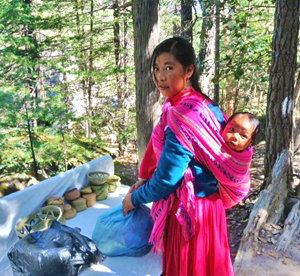
The Tarahumara inhabit the same region they have for centuries—the rugged Sierra Madre of northern Mexico, known as Copper Canyon.
A recent post on the blog “never stop traveling, the source for travelers 50 and beyond,” listed the top tourism destinations in Mexico, as reported by the Mexico Tourism Board.
They noted that although there has been much coverage by the US media of the crime situation in some areas of Mexico, millions of US and Canadian citizens visit Mexico each year, and many live there year-round.
Among the destinations listed as Top Ten are Copper Canyon, Yucatan and Chiapas, all places which The California Native has specialized in for the past thirty years. We would love for you to join us.
Tags: California Native, chiapas, Copper Canyon, Mexico, tarahumara, Tours, Travel, Yucatan and Chiapas
|
“On the Road to Mandalay, Where the flyin’ fishes play, An’ the dawn comes up like thunder outer China ’crost the bay.” – Rudyard Kipling
|

Located in Mandalay, the Kuthodaw Pagoda is popularly known as "the World's Biggest Book" for its 729 stone slabs on which are inscribed the entire Buddhist Scriptures.
In 1892 Rudyard Kipling published Barrack Room Ballads, a collection of poems about the life of British soldiers stationed in colonial India. It included the poem “Mandalay,” in which a lovelorn soldier longs to return to Burma and his Burmese sweetheart. While the road to Mandalay may not necessarily lead to love, it does lead travelers to a fascinating experience of Myanmar’s culture and history.
The fabled city of Mandalay lies on the banks of the Ayeyarwady River. The last capital of Myanmar before the British took over in 1886, it is second only to Yangon (Rangoon) in size and lies in the center of the country. It was founded by King Mindon in 1857 in an empty area that, according to prophecy, would be the location of a town that would come into existence on the 2,400th jubilee of Buddhism. To fulfill this prophecy, the king moved his capital from Amarapura, dismantling the wooden buildings and royal palaces and loading them onto carts and elephants to relocate them seven miles south to Mandalay.
The city gets its name from Mandalay Hill, which rises more than 700 feet above the Mandalay Fort. Visitors can climb up two covered stairways that wind up the hill, stopping at the shrines, stupas and monasteries along the way. Near the top is a standing Buddha image pointing to the place where the city would be built according to the prophecy. Once on top, visitors are rewarded with sweeping views of the plains, the Palace and the Shan mountains in the distance.
The road to Mandalay is a route studded with ancient cities, where cars share the road with ox carts and markets teem with life. Although most of the significant buildings in the ancient royal capital of Amarapura were moved to Mandalay, some interesting structures still remain. The most picturesque is U Bein’s Bridge, the longest teak bridge in the world, which stretches three-quarters of a mile across Taungthaman Lake. A stroll across the busy bridge is a great way to experience the local ambiance. At one end of the bridge is the Maha Ganayon Kyaung monastery, where thousands of young monks live and study in a strictly disciplined setting. Each day at 11 a.m. they may be observed eating their main meal in complete silence.
A few miles south down the road is the ancient city of Ava (Inwa), which was the capital of the northern kingdom for almost 400 years, succeeding the nearby city of Sagaing. Both of these cities boast a number of interesting pagodas and historic sites.
One of the most interesting of the ancient cities on the road to Mandalay is Mingun, where in 1790 King Bodawpaya decided he would build the world’s largest pagoda. Despite employing thousands of slaves and prisoners to build it, he died before it was completed. What remains is the massive brick base that stands over 50 meters high. Although damaged by an earthquake, it is possible to climb the ruins for a wonderful view. The king also had a gigantic bell cast—weighing 90 tons, it hangs nearby and is the largest ringing bell in the world.
There is much to see on the road to Mandalay, but unlike the poem, there are no flying fishes and, alas, China is not across the bay.
Please join us on one of our California Native Myanmar Adventures.
Tags: burma, California Native, myanmar, Tours, Travel

In 1610, the Viceroy of Mexico and Peru ordered a fort to be built on a hill overlooking the town now known as El Fuerte, the first stop on California Native tours of Copper Canyon.
In 1610, Juan de Mendoza y Luna, the Viceroy of Mexico and Peru, ordered that a riverside fort be erected on a hill overlooking the town of San Juan Bautista de Carapoa, to defend it against attacks by fierce Mayo, Zuaque and Tehueco Indians, and to guard the rich haul of silver from its many mines. Founded fifty years earlier by the Spanish conquistador Don Francisco de Ibarra, the town was renamed El Fuerte, “The Fort.”
In successive years, El Fuerte became a major trading post for gold and silver from the mines of Urique, Batopilas, and other Sierra Madre settlements and a station on Spain’s fabled Camino Real trade route. In 1824, after almost three centuries as the most important commercial and agricultural center in northern Mexico, El Fuerte became the capital of the territory which now makes up the Mexican states of Sinaloa and Sonora, and part of Arizona. After a few years, and a few wars, its administrative functions were taken over by Culiacán, Hermosillo and Phoenix.
El Fuerte today, with a population of around 30,000, is a quiet, picturesque colonial town, but the old fort still looks down on the quaint cobblestone streets as they wind past its historic church, mansions and shops, many dating back to colonial times. El Fuerte is also the starting point for most of The California Native’s journeys through the spectacular Copper Canyon.
Tags: California Native, Copper Canyon, Mexico, the california native, Tours, Travel
We receive many queries about current conditions in Mexico’s Copper Canyon, so here are some of the latest reports from recent guests on our Copper Canyon tours:
David Martin, from San Diego, CA, enjoyed our October 9, 11-day Ultimate Tour. “The whole trip exceeded [my expectations]! Food, lodging, views, train trip, Jessica. Could not have asked for a better guide on this trip. Personable, sense of humor, and a love for Mexico that pours forth in her discussions…it was wonderful! She really made the trip. Super knowledgeable.” His travel companion, Ann Cunningham, concurred, “I have collected articles since 1986 on Copper Canyon—my dream was realized to the nth degree.”
On the same trip, Irene and Randy Pollard, from Farmville, NC, reported that, “Jessica was one of the best guides we have ever experienced (We have traveled a lot). Her maturity and efforts to insure each person’s comfort and satisfaction was remarkable. We thoroughly enjoyed every part of this trip. Jessica provided opportunities at all ability levels. I wasn’t expecting the excellent accommodations—when materials mentioned ‘local’, I had expected much less.”
As a single traveler on our 8-day Independent Trip, Bruce M. Hale, from La Crescenta, CA, returned on November 17 and reported: “I liked all the hotels and staff. They all provided excellent lodging and personalized service even though I was solo. I particularly like Paraiso del Oso—the rustic atmosphere, the remote location [and] the chance to go to Urique. You made it easy to travel alone and your providers all performed as expected. Also, I’m pleased to have confirmed the safety aspect. I never felt in any danger, everything was fine.”
We, at California Native, value our guests comments, opinions and suggestions. These together with reports from our guides and inspection trips by our staff help us to keep our trips safe, fun and educational.
Tags: California Native, Copper Canyon, Mexico, Tours, Travel
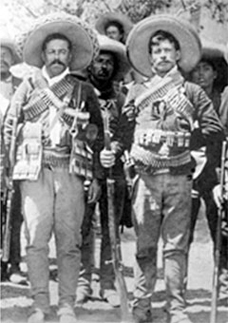
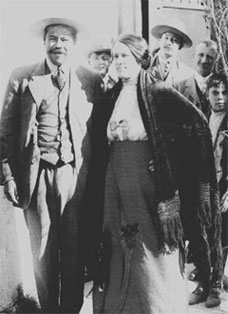
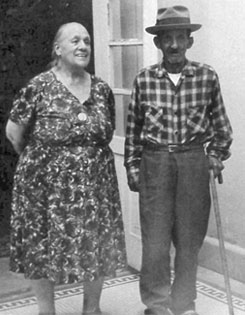
Pancho Villa, so the saying goes, was “hated by thousands and loved by millions.” He was a Robin Hood to many and a cruel, cold-blooded killer to others. But who was this colorful controversial hero of the Mexican Revolution and where did he come from?
Doroteo Arango, for that was Pancho Villa’s real name, was born in the state of Durango in 1878, a share-cropper peasant on a hacienda. According to the legend, one day when he was sixteen, he returned home from the fields to find that his sister had been raped by the owner of the hacienda, Don Agustin López Negrete. Doroteo took up his revolver, shot Don Agustin, and escaped into the mountains on a horse.
He became a cattle rustler and later joined a band of rustlers that was led by a man named Francisco “Pancho” Villa. In one of their many skirmishes with the law, the group was surprised by a group of rurales (mounted police) and Francisco was killed. Doroteo then took command of the gang and also assumed the name of the fallen leader. He may have done this to throw off those who hunted him for the murder of the hacienda owner or he may have done this to insure his authority over the group. Anyway, from that time on it was he who was known as Francisco “Pancho” Villa.
Pancho Villa was a natural leader and was very successful as a bandit, leading raids on towns, killing, and looting. He was also involved in more legitimate ventures, including being a contractor on the Copper Canyon railroad.
In 1910, when the Mexican Revolution broke out, Villa was recruited by the revolutionary leader, Abraham Gonzalez. Villa put together an army of armed cowboys and ruffians and became the revolutionary general who led the war in the northern part of Mexico. His charisma and victories made him an idol of the masses.
In 1916, when an American merchant refused to deliver the arms to Villa’s army which they had paid him for, Villa entered the United States and raided the town of Columbus, New Mexico. He was pursued by General “Black Jack” Pershing through the mountains of the State of Chihuahua. Pershing’s pursuit of Villa ended in failure, causing him to telegraph back to Washington that “Villa is everywhere, but Villa is nowhere.”
The war ended in 1920, and many attempts were made on Villa’s life by relatives of persons he had killed. On July 20, 1923, while driving his car through the town on Parral, Chihuahua, he was assasinated. The men responsible were never identified.
Tags: California Native, Mexico, pancho villa, Tours, Travel
On May 21, 2010, California Native owners Lee and Ellen Klein were guests of Mexico’s President Felipe Calderón at a luncheon he held in Mexico City at Los Pinos, Mexico’s official presidential residence.
Guests at the luncheon were specially selected international tour operators, and members of the international press corps.
The event was the kick-off of an initiative to spur tourism in Mexico’s many beautiful and fascinating “non-beach-resort” destinations.
This year marks Mexico’s Bicentennial, as well as the Centennial of the Mexican Revolution. In recognition of these events, The Mexican Tourism Board has created “Rutas de Mexico,”—ten tourism routes covering the 31 States of Mexico.
We enjoyed a delicious lunch and listened to speeches from Gloria Guevara, Mexico’s new tourism minister, as well as the President himself, who spoke of each of the routes. He spent quite a bit of time on the Copper Canyon Route, and talked about the town of Batopilas, which is visited on most California Native Copper Canyon tours.

As guests of the Tourism Board and President Calderón, we spent the next four days touring on the “Revolution Route,” which included many charming Colonial Cities, including Querétaro, San Miguel de Allende, Guanajuato, Zacatecas, San Luis Potosi and others.
Watch our blog for more on these cities, along with our other Mexican destinations of Copper Canyon, Chiapas and Yucatan.
Tags: batopilas, California Native, Copper Canyon, Mexico, President Calderón, Rutas de Mexico, the california native, Tours, Travel
Let’s catch a quetzal—on camera that is. We can begin our hunt by hiking through the Monteverde cloud forest, on a California Native Costa Rica Adventure. If we are lucky, we may see this incredible looking bird winging its way through the sky. With its shimmering emerald green body, red belly, and blue back, the bird does not look real. Adding to this effect is his long flowing blue and green tail, twice as long as his 15 inch body. Truly, the Resplendent Quetzal is one of the most beautiful birds in the world.
To the Aztecs and Mayas, the quetzal was their most sacred symbol. Its name was derived from quetzalli, an early Aztec word for the bird’s beautiful tail feathers. The quetzal was a symbol of both freedom and wealth. Freedom, because a quetzal was believed to die in captivity, and wealth, because the Mayas were traders, and quetzal feathers along with jade were their most sought after treasures. They traded the feathers as far north as the central valley of Mexico and as far south as the Empire of the Incas. Only the priests were allowed to wear the feathers of the quetzal. It is said that the feathers were only taken from living birds which were then released to grow new feathers.
A Mayan legend describes how the bird got its crimson breast. When the Mayan chieftain Tecun Uman fell in battle, mortally wounded by the Spanish conquistador Pedro de Alvarado, a gold-and-green quetzal landed on his chest. As the chieftain died, the bird flew off, its breast forever stained with the blood of the Mayan.
During most of the year the quetzals are solitary birds. During breeding season, between March and June, they mate and produce two blue eggs. Both the male and female take turns at incubating the eggs. They feed by darting out of their nests to pluck fruit, insects and occasionally a lizard or frog from the forest canopy.
Originally endangered by local hunters seeking its feathers for religious ceremonies, the quetzal is now threatened by the destruction of its habitat and the demand for its live export.
Tags: adventure, California Native, Costa Rica, Tours, Travel
What is blue, white, frosty and cold? If you guessed a type of drink, try again! It is a glacier in Patagonia, and there are hundreds of them to see. The California Native scouting team was on our third trip to explore the area in March. This time we are developing a new itinerary for our adventures not only in Patagonia (Chile and Argentina) but also in other areas of the two countries.
In the first of three weeks of travel in the region, we were able to set foot on Cape Horn (as far south as you can get without being in Antarctica), hiked an island in the Straits of Magellan, crunched our way up an ice field fjord in a zodiac, trekked in Torres del Paine National Park in the shadows of the snow-capped towers, visited the largest and the longest glaciers in Argentina, and even hiked up the glacier itself (crampons on!).
And, that was just our first week! There is a lot of excitement to be had in this region, and The California Native is constantly adding adventures so that you can join us in experiencing these wonders. Stay tuned for more on Patagonia and Argentina.
Tags: adventure, Argentina, California Native, Cape Horn, Chile, glacier, patagonia, Torres del Paine, tour, Travel
Please, let me tell you of our marvelous adventure to the Copper Canyon in Mexico. It began in El Fuerte in the state of Sinaloa at Hotel Torres Del Fuerte and ended at Hotel Torres Del Fuerte. The hotel is a delightful restored hacienda that is artistically decorated and each room is, individually unique. We stayed two nights in the hotel in the beginning of the trip and two nights at the end of the trip. The owners, Jesus and his wife and their son, Francisco, enhanced our trip with their graciousness, friendliness, and personal attentiveness to the point that we felt that we were personal guests at the hacienda.
The Chepe train ride into the Barrancas del Cobre was a beautiful exposure into the vistas of canyons and mountain ranges, which gave us an appreciation of the wonder and majesty of the many canyons of the area known as Copper Canyon. This is a natural wonder of the world and the man-made wonder of bridges and tunnels carved out of the rock from the canyons is a spectacular engineering accomplishment.
Our first stop was in Cerocahui. We stayed at a ranchito that gave us the opportunity to hike and to ride horses into the rugged canyons. It was also our first opportunity to meet two Tarahumara children. After two nights in Cerocahui, we then traveled to Creel for two nights then back to Posada Barrancas to stay at the El Mirador Hotel.
Our time in the canyons was memorable, enjoyable, pleasurable, and interesting.
On our return to El Fuerte, upon exiting the train, our chauffeur, picked us up at the railroad station and we waved goodbye to the Chepe. During our transfer to Hotel Torres Del Fuerte, I realized that I had left my purse on the train! Of course, it contained everything of importance, money, camera, and passport!
In panic, I informed the chauffeur that I had left my purse on the train. He was shocked and thought for sure that I had misplaced it in my luggage. The driver pulled off to the side of the road and he and my husband searched the luggage in the back of the suburban. Of course it was not there! Francisco, from Hotel Torres Del Fuerte, had been to the train station to pick up someone from the train, too.
While we were searching the Suburban, Francisco stopped his car to inquire why we had stopped. My husband said that Francisco and the driver talked for a couple of moments and Francisco asked where we were sitting on the train. The chauffeur then motioned for my husband to return to the car. The chauffeur drove off without saying a word and went past the town of El Fuerte and into the countryside.
The night was very dark, there were few stars, and there was a gusty wind. Suddenly, after about 40 minutes, the driver pulled to the side of the road, stopped in the “middle of nowhere”, and then turned off his car lights and turned on his car flashers. He motioned for us to get out of the car. As we got out of the car, we noticed the train track crossing the road at what is known as Santa Maria crossing. Within thirty seconds, the train, which we had exited in El Fuerte station and was now on its way to Los Mochis, grew out of the night darkness, began to slow down and was beginning to cross the road; at the same time, the train engineer shouted out of his window for us to go to the last car on the train.
The last car was brightly lit and we could see that the porter was hanging out of the door with one hand fully extended from the handrail and the other arm fully extended toward the approaching chauffeur. In his hand he was holding my purse! He handed the purse to the running chauffeur without the train ever fully stopping. It was another engineering event, or rather a miracle!
We learned later that in the short conversation between the chauffeur and Francisco that they had devised the plan to retrieve the purse. Francisco made several calls to contact the train operated by the Mexican Federal Railroad and the chauffeur told Francisco at what crossing he would meet the train. After several calls, Francisco successfully contacted the train’s engineer. Francisco, the chauffeur, the train engineer, and the porter made it all happen!
This story is a tribute to the personal service which one experiences at Hotel Torres Del Fuerte. We are so pleased and thankful with all of the Mexican people that helped us as they exhibited such warmth, honor, chivalry, honesty, and generosity. We shall never forget our rescuers!
We wish to thank California Native for their specialized help and expertise in making the train and hotel reservations. They were attentive to details and gracious to work with.
Needless to say, we highly recommend staying at Hotel Torres Del Fuerte for its ambiance, its charm, its history, the delicious menu items, the wonderful and generous owners, and for their outstanding ability to turn a tragedy into a miracle.
The power of Mexico is, and always has been, its people, living together in a lovely land, influenced by culture, traditions, history, art.
Come and share this special part of Mexico!
Stephanie & John Hamann
Tags: California Native, Chihuahua al Pacifico Railroad, Copper Canyon, El Fuerte, Tours, Travel
Have a thirst for a real native experience? While traveling in Peru, stop at a house displaying a red flag on a long pole. There you can join the locals in a glass of chicha, an ancient Andean drink made from fermented corn.
The strange-tasting drink, yellowish in color with a bubbly froth, is served warm for just a few coins, and is quite strong. It is not usually found in restaurants (a similar drink, chicha morada, made from blue corn, is sweet and sold everywhere like a soft-drink), but is sold by individuals, usually in the lower socioeconomic bracket, who have passed down the traditional recipes since pre-Inca times.
Recently, in the mountaintop city of Cerro Baul in southern Peru, archeologists from the University of Chicago unearthed remains of an ancient brewery dating back to the Wari Empire (AD 600-1000). It is believed that the brewery was used to produce massive amounts of chicha, which was used both for ritual purposes and festivities.
The ruins indicate that the last gathering at this brewery ended with a ritual burning of the entire facility. As the Wari’s threw their cups into the fire, the beams and thatched roof collapsed, leaving what was underneath in very good condition. Scientists have found remains of fire pits and fifteen-gallon ceramic vats.
The first step in preparing the chicha is boiling the fruits and grains (now corn) with water. After boiling, the liquid is transferred to fermenting jars and is ready in two weeks. It must be consumed soon after—it does not have a shelf life!
So, join your Peruvian neighbors in a glass of chicha, if you dare, and carry on the ancient tradition. There is also a musical form called chicha, inspired by the drink, but more on that in another post.
Tags: California Native, chicha, Peru, Tours, Travel
Thinking about a trip in the next few months? Soon we will be posting our new 2010 prices for our tours to Mexico’s Copper Canyon. Now is you chance to book travel for 2010 at guaranteed 2009 prices! The best time to go to Copper Canyon is between now and May. What a wonderful vacation for the beginning of next year, and what a great price! Compare trips here and call us with your questions, and book it now.
Tags: California Native, Copper Canyon, Mexico, Tours, Travel
We’ve spent an exciting day exploring the remote regions of Mexico’s Copper Canyon, and as sunset repaints the canyon walls, what better way to usher in the evening than with a cool refreshing margarita? Contreau or triple-sec, lime juice, ice, and, most important, tequila. But how much do we really know about this delightfully intoxicating beverage?
Before the arrival of the Spaniards, fermented sap from the Maguey plant was extracted into a beverage known as ‘pulque.’ Pulque holds the esteem of being North America’s first distilled drink. Aside from that, origins of the liquor seem as ethereal as the effects it produces. Tequila branches from this phantom lineage by way of a small town with the same name in the state of Jalisco. In the ancient Nuahatl language, “tequila” translates to “place of the plant harvest” and represents the relationship between the region and the raw material—the Blue Agave.
There are over 130 species of agave. However, only one variety is used in the production of tequila according to standards set by the Mexican government. That variety is the Blue Agave, or Agave Tequilana Weber Azul. A common misconception is that tequila is made from a cactus. The Agave is actually closer in relation to succulents like the Lily or the Amaryllis even though it looks spiky in appearance. Only the hearts of the plant are used in distillation while the thick leaves are processed into fiber. Other varieties may be used in the formulation of tequila’s kindred spirit Mezcal, but only the Blue Agave is used to distill tequila. Mature agave at the time of harvest can grow 5 to 8 feet tall, span 7 to 12 feet across and, although not a cactus, can live up to 15 years!
Another myth infusing the agave spirits of tequila and mezcal turns over the worm. Drinkers and non-drinkers alike recognize the connection. However, like all things Tequila, origins of this curious practice of adding worms to bottles survives mostly as folklore, even though many believe it is more marketing strategy than authentic Mexican Tradition. In fact, only Mezcal carries the worm, this again due to the Mexican standards authority, Norma Oficial Mexicana (NOM). The worms are the thoroughly pickled larvae of the moth species Hypopta Agavis and, although not found in higher-priced bottles of Mezcal, are believed to enhance the flavor as well as act as an aphrodisiac. Viewed as a delicacy by many in Mexico, the Gusano Rojo (Red Worm) and the Gusano Blanco (White Worm) are safe to eat, even if their properties and histories are debatable.
Knowing tequila is not cactus and has no worm, it now comes down to the matter of taste. Tequilas divide into three groups agreed upon by aficionados in the industry. Like many beverages, Tequilas are classified according to their age. Blanco (white), also referred to as Plata (silver), is the youngest of the three types. Tequila Blanco is aged less than two months and is distinguished through its abrasive flavor. Also identified in this category is Tequila Oro (gold). This is a blend of the young Tequila Blanco and a more-aged variety, often mixed with coloring to resemble older vintages. Second of the three classes is Tequila Reposado (rested). This mid-aged tequila is known for its peppery aftertaste and has an age greater than two months but less than one year. The third and final variety is Tequila Anejo (aged). Tequila Anejo mellows for a period between one year and three years and finishes smoother on the palate as a result.
Aside from these distinctions, the sky (or the floor) is the limit. From the heart of the agave all the way to expensive, individually-numbered collectable keepsake bottles, the taste of tequila really boils down to the spirit of personal preference. Sipping, shooting, mixing or just plain drinking are all part of the charm bottled in this passionate product from Mexico. Curious connoisseurs searching for the flavor that suits best may even find themselves, suitcase in hand, bouncing across the border for a measure of Mezcal complete with worm. No matter how it’s served, the taste as well as the mystery surrounding this potent potable are sure to leave any traveler thirsting for more of Mexico.
Tags: California Native, Copper Canyon, Mexico, the california native, tour, Tours, Travel
There they stand in a line, offerings of food and flowers covering their pedestals. These figures are called Nats, spirits of the wind, earth, rain and sky, and in Myanmar (formerly Burma) they are representations of people (and animals) who have died tragic deaths. Some are former royalty, territorial overlords or soldiers. One is a former Burmese King. Another is a buffalo, who is said to have raised a prince. The prince was found by some soldiers and returned to the palace, wherein the buffalo followed them and rammed through the palace gates to get to her stepchild before the guards killed her.
On Mt. Popa, the core of an ancient volcano often described as the Mt. Olympus of Myanmar, the thirty-seven “inside” Nats are honored in the most sacred Nat shrine in the country.
Around 1100 AD, King Anawratha, who had learned Buddhism from a missionary, united all the Burmese kingdoms then attempted to convert the people to Buddhism, outlawing the worship of Nats, but this act angered his subjects and they resisted his efforts. Finally, he decided to incorporate the Nats into the Buddhist religion and, declaring Buddha to be the greatest of the Nats, announced that there would be 37 official Nats, whose images he personally carried up to Mt. Popa. These are known as the “inside” Nats. Other Nats, who continue to be worshipped, are called “outside” Nats.
Mt. Popa rises straight up from the plain, with a staircase winding to the temple at the top. Along the way are colorful Nat shrines, and pilgrims come from all over the country to give their offerings and make peace with the flamboyantly dressed representations of the spirits. Alongside the stairways, shops sell all variety of exotic merchandise, including bear paws, while frolicking monkeys run up and down the stairs begging for handouts.
It is believed that Nats can cure illnesses, grant favors and predict the future as long as they are rewarded. Otherwise, they can cause a lot of trouble. The spirit of the Nat is believed to enter the physical statue as it is crafted.
Most Nats have regular festival days, when pilgrims come with offerings and ask for favors. Each Nat has foods he favors or dislikes. They all love color, so everyone dresses brightly at these festivals. When a family has a celebration, they may hold their own festival. The Nats have “spouses,” someone who has had a dream in which the Nat offers to marry them. A traditional marriage ceremony is carried out, then the “Natgadaw” presides over the festival. The spirit of the Nat possesses the “spouse,” who then acts out the life of the Nat, accompanied by cheering and hissing. The Nat’s favorite foods are served, and there is much music, dancing, clapping, loud singing and drinking (except in the case of a Nat who abhors alcohol!).
Myanmar society is very conservative, and many believe that these festivals allow people to temporarily abandon the extreme self-control that is the norm in everyday Burmese life.
Tags: burma, California Native, myanmar, nat, Tours, Travel
Surrounded by pine trees in Mexico’s Sierra Madre Mountains, the Lodge at Norítari is a favorite relaxing place for California Native guests. In Rarámuri, the language of the Tarahumara Indians, Norítari means “Place Above the Clouds.”
The lodge is the realization of Lauro and Soledad Marquez, who live here with their daughter, Solecito, a Nahuatl Indian, whom they adopted at birth. Lauro was formerly an engineer with INEGI, the Mexican Government Institute for Statistical and Geographical Information. He met Soledad when she was working for the Acapulco city government. A few years before, she had taught in the Sierras and was enchanted by the beauty of the area and the friendliness of its people.
The couple purchased the land in 1995 and three years later began construction of the lodge. Presently they have nine log cabins (cabañas) with two rooms each, which Sol has decorated with colorful furniture and crafts from all over Mexico. Each room has a large fireplace—it gets cool at 7,800 feet in the Sierras.
Geese and turkeys clamor at visitors on the paths hiking to nearby lakes, while horses and cows graze peacefully in the meadows.
On the old-fashioned porch, which wraps around two pine trees, you can relax with cafe de olla, a cinnamon bark tea to which coffee grounds are added. Then Sol prepares a gourmet dinner: zucchini squash soup, cinnamon beef with sopes, and local baked apples in a delicious sauce. Lauro tends the bar and offers his private-label mescal.
The next day we drive to Basaseachic Falls—at 811 feet it is one of Mexico’s highest. The view of the falls is spectacular. From an observation point we enjoy picnic lunches. After lunch, hikers have the opportunity to stretch their legs, while the others chat and soak in the beautiful scenery. When the hikers return, we head back to Norítari for another fine dinner at our “place above the clouds.”
Tags: California Native, Copper Canyon, Mexico, the california native, Tours, Travel
Our tiny boat bounced as the giant whale broke the water’s surface and rested close enough for us to touch. As she breached, the cameras clicked furiously. Our skipper pointed to more enormous whales—they were all around us!
After a summer spent in the frigid waters of the Chukchi and Bering Seas, feasting on immense quantities of small crustaceans, the California Gray Whales begin their annual migration south to Mexico’s Baja California. Swimming 5000 miles along the North American coast, they arrive in the warm, protected bays to breed, give birth, and rear their infants.
During the long southbound journey the whales court and mate. After a gestation period of thirteen months a female whale gives birth to her calf. Newborn Grays are about 15 feet long and can weigh up to 1500 pounds!

Another female, called an “auntie,” often assists the mother with her calf, so the whales are often spotted in groups of three. The calf nurses on its mother’s milk, ten times richer than cow’s milk. By swimming against the current in the lagoon, the young whale builds up its muscles, and by Spring it is fat (around 3000 pounds), mature (at least 19 feet long), and ready for the long northward journey.
One area the whales prefer is Magdalena Bay. This narrow section of calm waters between the coast of Baja and Magdalena Island may harbor fewer gray whales than other lagoons, but here they are densely congregated, creating a wonderful place to watch them swim and play.
Easily accessible from La Paz and Loreto, Lopez Mateos and San Carlos are two coastal towns where pangas, small motor boats, depart for whale watching. Skimming along the water with frigate birds soaring overhead and whales breaching in every direction is an unforgettable experience.
Magdalena Bay is also home to a variety of fish and shellfish, as well as bottlenose dolphins. In the dense thickets of mangroves, which dominate Magdalena Island, many species of birds can be found. A pack of coyotes inhabits the island, and from the boat they can be seen on the beach feasting on fish which they have learned to eat as they adapt to island life.
An invigorating boat trip like this is sure to build up a whale-sized appetite. Returning to shore, the day concludes by feasting on freshly-caught local seafood at one of the nearby restaurants. Baja offers many activities and is also an excellent gateway for tours to Copper Canyon.
Tags: Baja, California Native, Copper Canyon, Mexico, photography, the california native, tour, Tours, Travel, whales
Cuauhtemoc may have only been an Aztec ruler for the short period between 1520 to 1521, but the myths surrounding him are time tested. The name Cuauhtemoc translates from the ancient Nuahtl to mean “Descending Eagle.” He rose to power at the early age of 18 just as his homeland Tenochtitlan was being invaded by Spanish explorers.
After a brutal battle lasting nearly eighty days, Cuauhtemoc went to recruit new warriors to fend off the attacking Spanish during which time he was caught by Hernan Cortes himself. It is believed that Cortes took mercy on the Aztec who, in lieu of his capture, asked bravely to be killed with his own knife. Impressed by his courage, Cortes spared Cuauhtemoc.

However, Cortes’ motives would not prove to be so noble. He had Cuauhtemoc tortured in hopes that he would reveal the location of hidden gold sought after by the Spaniards. Cuauhtemoc’s feet were put to the fire but he refused to give up any information the royal treasurer, Aldrete, demanded. Only later would Cortes learn the gold he and his men hunted were not in quantities they had imagined.
Cortes eventually had Cuauhtemoc hanged. While on an expedition to Honduras, Cortes had taken Cuauhtemoc along with him fearing that he would lead a rebellion if he were not under careful supervision. During the trip, Cortes’ suspicions grew into fear that the leader of the Aztecs would strike and so had him killed. Cortes’ worried with good cause. Cuauhtemoc’s boldness against the invading forces was legendary.
Today, the legacy of Cuauhtemoc can be seen throughout Mexico in names and in statues. The city of Cuauhtemoc, in the area just outside of Copper Canyon, is modern and lies en route to the state capital of Chihuahua. Cuauhtemoc is now the home of several thousand Mennonites who came to the area shortly after the Mexican Revolution to farm lands which were formerly owned by William Randolph Hearst. The Mennonites live in a series of numbered “campos” just outside of the city and still preserve their traditional pious lifestyle. They are very prosperous farmers and market their crops throughout Mexico along with their famous cheese.
Tags: California Native, Chihuahua al Pacifico Railroad, Copper Canyon, Mexico, Tours
Costa Rica has always been known as an excellent destination for the outdoor adventurer or bird watcher. Another attraction to this peaceful, central American country is the fact that Costa Rica is a fruit-lover’s paradise. Having a warm tropical climate year round makes Costa Rica a perfect place for growing a wide variety of fruits. Fresh pineapples, tree-ripe bananas, and delicious coconuts are just a few of the delicacies to be enjoyed there. Add buttery papayas and juicy mangoes to the list and you’ve got a true Costa Rican fruit cocktail. Many of these fruits you can readily find in supermarkets across the U. S. (and there is a good chance that many of them come from Costa Rica) but some of the more exotic fruits require a passport to taste.
Included among these exotic fruits are Mamones, Tamarindo, and Pejibayes. Curious names for equally curious tastes, these gems highlight the diversity of fruit-filled Costa Rica.
Mamones Chinos (mem-MO-nays), or Chinese Suckers, are pit fruits whose skins are covered with soft red spines. You may have heard them called by the name lychee. Lychees or Mamones Chinos are slightly sweet, not very acidic, and have a chewy texture similar to that of a peeled grape. Their subtle flavor is addictive. The spiny skins are fun to peel into and resemble the seed pod of a Gum tree. Sold in big bags by street vendors, Mamones have unique taste that is not soon forgotten.

Another Costa Rican delicacy comes from the seed pod of the Tamarind tree. Tamarindo looks like a pea pod that you might find in a salad or a stir fry, except they are fuzzy on the outside like a Kiwi or a the skin of a fuzzy peach. Inside the pod, the seeds are sticky and pasty and too bitter to eat. However, if you soak the seeds in hot water you can extract the flavor. Even then, the mixture may have too strong a flavor, but if a simple syrup is added to sweeten the mixture and then the beverage is poured over ice, the fresh tamarindo drink becomes a refreshing treat similar in flavor and texture to apple juice.
The Pejibaye is probably one of the strangest fruits to be tasted in Costa Rica. Pronounced pay hee bah jay, this palm fruit tastes like a cross between potato and coconut. The Pejibaye is similar in size to a pecan and contains a hard pit that needs to be removed before eating. Like the tamarindo, the pejibaye is prepared by boiling the fruit in water. Locals often serve the fruit with a dollop of mayonnaise and a cup of hot coffee. This exotic flavor is hearty.
Join us on a vacation in Costa Rica: adventure, fun, good food, and last but not least, fruit as fine as any in the world.
Tags: California Native, Costa Rica, the california native, tour, Tours, Travel
There is nothing like standing at a safe distance while watching glowing-hot boulders being pitched into the night sky.
Costa Rica, located at the center of the America’s along the Pacific Ring of Fire, has five active volcanoes.
The Arenal Volcano, situated near the town of La Fortuna, rises nearly 4,200 feet above the surrounding landscape, making it visible from almost anywhere. Arenal is the youngest and most active of all of Costa Rica’s volcanoes. Major eruptions occured in 1968 and 2000, but smaller eruptions happen more frequently–and on some days as frequent as every 15 to 20 minutes. Belting out its thunderous boom, the Arenal is a highlight for visitors touring the country.
The Poas Volcano, located near the crafts-town of Sarchi, rises 8,884 feet above sea-level and is home to an impressive array of flora and fauna. The main crater is 950 feet deep and quite active with steaming geysers and frequent lava eruptions. At Poas, the last significant eruptions occured during the time between 1952 to 1954.
The California Native offers tours of Costa Rica which visit both of these living reminders of the raging powers beneath our feet.
Tags: Arenal, California Native, Costa Rica, Poas, the california native, tour, Tours, Volcano
 |
| Machu Picchu, ‘Lost City’ of the Incas |
“Suddenly we found ourselves standing in front of the ruins of two of the finest and most interesting structures in ancient America. Made of beautiful white granite, the walls contained blocks of Cyclopean size, higher than a man. The sight left me spellbound.”
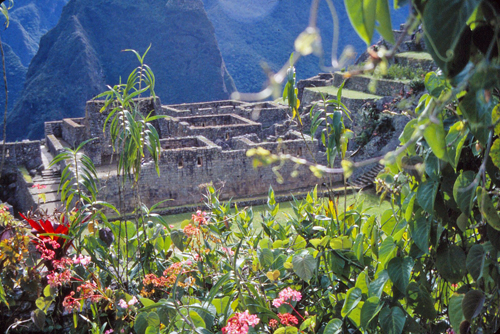
When Hiram Bingham went looking for the legendary Inca city of Vilcabamba, the last refuge of the Inca kings, he did not suspect that his journey would lead him to discover the most spectacular archeological site in the Americas—Machu Picchu.
When the expedition from Yale University, of which Bingham was the director, entered the Urubamba Canyon, in July of 1911, a peasant told him of the ancient ruins at the top of a hill called Machu Picchu. Bingham accompanied him up the dense jungle-covered slope to the top, where a child guided Bingham to the ancient stone structures buried beneath tropical vegetation. Bingham was so impressed that he wrote in his diary, “would anyone believe what I have found?”
 |
| Hiram Bingham in 1911 |
It is hard to imagine a more spectacular setting—an ancient stone city 1,300 feet above a frothing whitewater river, surrounded by jungle-covered peaks and brilliant orchids.
Of the two surrounding peaks, the first is named Huayana Picchu, which translates to “young peak” and is the one most often seen in photographs. The second peak is called Machu Picchu or “older mountain.” The original name of the city has long been forgotten.
Until Bingham’s discovery, Machu Picchu had been unknown to the outside world for nearly 400 years. It was a mystery how all knowledge and records of an entire city disappeared. It is now believed that Machu Picchu was not a city at all, but a royal estate and religious retreat, built around 1460 and located off the main routes. It could only be reached by paths accessible to those traveling by royal decree. The Incas had no written language. Their history was kept by verbal historians, who, following the collapse of the Inca state, were unemployed. Few of the Inca people ever knew that Machu Picchu even existed. As the Spaniards advanced into Peru, around 1527, half of the population died of small pox. This was followed by civil war and the abandonment of Machu Picchu. Thus, this magnificent “stone city” disappeared.
Tags: California Native, machu picchu, Peru, Tours, Travel
My friend and I went to Copper Canyon on February 24, 2009. Only now do I find the time to tell you what a wonderful this trip was. For us this was the ideal way to travel. You made all the arrangements and we did the rest. The organization was absolutely flawless. The hotels were great, especially the Torres del Fuerte and, of course, the Hotel Mirador in Divisadero. You encouraged us to take 2 days there, and what a great idea that was. Even though we were late arriving in Los Mochis, our taxi was waiting to drive us to to El Fuerte. My thought was, “this is the one thing I did not want to do, drive in the dark in Mexico.” It turned out that the taxi driver was cautious and competent and put us both at ease. I think our favorite town was El Fuerte. It was great that we had 2 nights in several locations. It made for relaxed traveling and a chance to really walk around. The voucher system worked very well. We could chose wherever we wanted to eat and had the chance to sample several restaurants.
A real treat is the fact that there were no TVs in all the hotels, except for one. That was the Best Western in Creel. We turned on the news and turned it off fairly quickly. We were on vacation!
The train ride was all we were hoping for. Since we were only 2 people, we stayed most of the time in the bar car of the train, talked to many people and looked out of the big, clean windows. We had a ball. We took the train to Divisadero, stayed there for 2 nights and went to Creel. The ride from Creel to El Fuerte was just right. I was glad we did not stay on the train any longer.
I have read letters from your clients and all the good things they said about you were true for us. It helps to speak Spanish when you are on your own, but you made it very easy to get around. In Batopilas we ate at Mika’s. Great stuff! Our driver Arturo told us colorful stories about this magic town and made us feel less like tourists.
We thank you very much and hope to hook up with you again. Thanks for all your help.
Ingrid Lewin
San Diego, CA
Tags: California Native, Chihuahua al Pacifico Railroad, Copper Canyon, Mexico, the california native, tour, Tours, Travel
Saying Goodbye to Copper Canyon
The following story was submitted to us by Kay Gilliland who describes her experience traveling with friends through Mexico’s Copper Canyon during the Christmas holidays. Today, Kay and her friends travel from Chihuahua City to El Paso for their flights home.

The California Native is always thrilled to have groups of friends join our trips to this charming region of Mexico. We appreciate it when our guests share their stories with us and we like to add them to our blog for everyone to see. We hope you have enjoyed reading about Kay’s 11-day Copper Canyon Adventure.
January 2, Friday
We were up early the next day for cereal and huevos rancheros, then off to the border. We stopped twice, once at Ahumada and again farther on. Jenny bought dolce de leche and shared it with us. It had a good, sweet taste. We drove about 230 miles to Ciudad Juarez and waited in line for an hour and a half before we were able to cross the Ysleta Bridge into El Paso. During the wait, people were in the middle of the street with carts selling food, baskets, trinkets, copper goods, watches, hats, everything they could think of and carry. We had a bit of time at the airport together.
We said goodbye to Jessica and then to Sally and Bill. Jenny, Laurie and I boarded the plane, straight through with a stop in Las Vegas. Lori and Rhea picked us up at the Oakland Airport and we were soon at home with dreams of our experiences in the Copper Canyon.
Tags: California Native, Copper Canyon, Mexico, sierra madre, tarahumara, the california native, Tours, Travel
Arriving at Chihuahua City

The following story was submitted to us by Kay Gilliland who describes her experience traveling with friends through Mexico’s Copper Canyon during the Christmas holidays. Today, Kay and her friends journey from Creel to Chihuahua City and learn more about the birthplace of the Mexican Revolution.
The California Native is always thrilled to have groups of friends join our trips to this charming region of Mexico. We appreciate it when our guests share their stories with us and we like to add them to our blog for everyone to enjoy. Excerpts from her journal will be posted regularly, so check back often to learn more about Kay’s 11-day Copper Canyon Adventure.
January 1, 2009, Thursday, New Year’s Day
Breakfast was delicious with juice, fruit (papaya, watermelon and, for the first time, apple), eggs, beans and a cinnamon drink called “café.”
We said goodbye to Sol and climbed into our vehicle. Antonio headed out onto “Ruta 2010” named in honor of the succeeding hundred-year events in Mexican history. Jessica pointed out the major change in our surroundings; we were traversing the chaparo: wheat fields, cattle, large land holdings. We stopped at Ahumada and again at La Posta for snacks and el baño. Jenny bought dolce de leche to share with us. We passed a place where lead and zinc ore from Urique is processed. We drove into a Mennonite town looking for “Campo 2B, Casa 46.” The houses were well-built and prosperous-looking but drab in color by comparison to houses we had been seeing in Batopilas, Creel and San Juanito. Jessica described the Mennonites as industrious and homespun, who made everything themselves, especially foods—cheese, butter, bread, jam—and clothing, potholders, and tablecloths. We stopped at the home of Lisa (I asked for her last name but never got it), who had prepared coffee/tea, cookies, meat, cheese, jams and home-baked bread for us. Her sister Emma had just had a baby and Lisa showed us the camera with a picture. Everything tasted really good and Jessica noticed a type of cookie she had not seen before, so she commented that it was new and asked how Lisa made it. Lisa went into the kitchen and brought out a package of Duncan Hines mix to show us.
We walked around the Mennonite farm looking at the Chihuahua puppies, the goats, cows, pigs, geese and farm machinery. Lisa belongs to a family of Old Colony Mennonites who live in a more conservative way than some others of their group.
Back on the road we passed ocotillo, but not in bloom, and lots of apple orchards. We saw smudge pots and furled nets ready to combat frost and save the apple crops. The apple boxes we had seen at the lumberyard were also in readiness for this vast apple-growing operation. Even the local baseball team gets a piece of the action; they are the Manzaneros. Spring will bring a fragrant show of blossoms and fall will be bright with red apples, but we were driving through in winter.
Jessica gave us maps and told us the name Chihuahua is translated as “Sandy Place” or “Place Between Two Rivers.” The city of Chihuahua is the state capital of the Mexican state of Chihuahua. Here, our local guide, Jesus, spoke Spanish and Jessica did an admirable job of translating. For two hundred years Chihuahua was a place of wars between the Apaches and the Comanches. It was the place where Hidalgo, hero of the Mexican Revolution was imprisoned and executed in 1811. We stopped to see a palacial home, Quinta Manuel Gameros, built 1907-1910. The “Quinta” refers to the size of the property: 1/5 of a hectare. A hectare is almost 2.5 acres, so these homes were well situated.
We toured the Pancho Villa Museum and were especially interested in a powerful mural by Felipe Castellanos Centurión. Afterward we went into the Cathedral and then walked around the Plaza de Armas to the various booths set up to sell food and gifts. At one I finally saw the tire sandals for sale. Jessica bought Natas to share with us; they were delicious. Jesus pointed out the Dancing Fountains near the Palacio de Gobierno and we drove back to the Chihuahua City Holiday Inn Suites. California Native provided free Margaritas for us and we were given a ride to a delightful dinner in a very quiet newly-opened restaurant. Back at our lodging we were soon asleep.
Tags: California Native, Chihuahua al Pacifico Railroad, Copper Canyon, Mexico, sierra madre, tarahumara, the california native, tour, Tours, Travel
A Place in the Clouds
The following story was submitted to us by Kay Gilliland who describes her experience traveling with friends through Mexico’s Copper Canyon during the Christmas holidays. Today, the group reaches the cabins at Noritari and explore the forest and nearby lake before attending Mass to celebrate the new year.
The California Native is always thrilled to have groups of friends join our trips to this charming region of Mexico. We appreciate it when our guests share their stories with us and we like to add them to our blog for everyone to enjoy. Excerpts from her journal will be posted regularly, so check back often to learn more about Kay’s 11-day Copper Canyon Adventure.
December 31, Wednesday, New Year’s Eve
I enjoyed the breakfast: cereal, huevos rancheros and beans. We left Creel to make our way to San Juanito. Just past San Juanito was our lodging, Cabañas en el Bosque Noritari. Our hostess, Señora Sol, greeted us warmly and served hot “ponche” or “punch.”
We checked into our respective cabañas and tried to decide how to use our time. Jessica said we could drive two hours to the Cascada Basaseachi, the highest waterfall in all of Mexico, or drive only 39 minutes to a lake and have more time to walk around. Bill decided to go to neither place so someone came to light the wood in the fireplace for him. The rest of us opted for the lago.
Jessica explained that Noritari means “Place Among the Clouds,” and we certainly have the perfect day for it—big billowy clouds scud across the bright blue sky, sometimes obscuring the sun and reminding us of the light cool breeze.
We tried a route recommended by Señora Sol, passed a big lumber operation making apple boxes, drove between to trees with about an inch on either side of the vehicle. Finally Antonio said we could not make it going this way—the ditches were too deep. (Later we saw a big bridge that had been destroyed in the last storm). Antonio turned around, went back between the two trees and back along the rutted road to the main highway.
On our way again, Antonio turned at a sign: Mirado de la Prensa Situriachi. We parked at an overlook of the lake and ate our lunch. Jenny, Jessica and I went for a walk while the others drove to see the dam. It was a beautiful walk down through Manzanita to the stream, across along the lake and up to the swaying footbridges. We climbed a tower for views of the lake, then walked back and rode with the others back to the paved road. I asked Jessica about the big load of Tecate beer cans we had seen dumped in the road at Batopilas. She confirmed that they were there for cars to run over and flatten. She had talked with the man and he said he picked up cans from all the small villages and towns, then took them to a central point where he sold them to someone who shipped them to the United States for processing into new cans.
We returned to our cabaña in the Bosque Noritari to find that no fire had been lit. The cabin was quite cold and Jenny went to the office for help. They said they would take care of it, so Laurie, Jennie and I went off for a walk to find the “sweat lodge” that had been described to us. We followed a path labeled “Lago” but soon realized it was not going in the direction we wanted to go. There was a barbed-wire fence between us and our destination, so we walked along it trying to find an opening. Jenny went ahead and found a place where the barbed wire was loose. We could hold the wires apart and climb through. The sweat lodge was shaped like an igloo and appeared very new. We soon left because it was growing dark and we still needed to make our way back to the lodge for supper.
It was New Year’s Eve and we were invited to a Catholic Mass in the main room, the dining room, of the lodge. We were seated at the front round table, the two priests came into the room and celebrated a mass. It was very beautiful and full of tradition. When the mass was over we were served dinner. Sol did much of the serving, spreading joy wherever she went. At the end she put a bottle of wine on each table and proposed a toast to the New Year. We all clinked glasses many, many times, and Jenny and I talked past midnight in celebration of the New Year.
Tags: California Native, Chihuahua al Pacifico Railroad, Copper Canyon, Mexico, sierra madre, tarahumara, the california native, Tours
Leaving Batopilas in Search of Cusarare Falls

The following story was submitted to us by Kay Gilliland who describes her experience traveling with friends through Mexico’s Copper Canyon during the Christmas holidays. Today, the group leaves Batopilas and makes a stop at the majestic Cusarare Falls before returning to Creel.
The California Native is always thrilled to have groups of friends join our trips to this charming region of Mexico. We appreciate it when our guests share their stories with us and we like to add them to our blog for everyone to enjoy. Excerpts from her journal will be posted regularly, so check back often to learn more about Kay’s 11-day Copper Canyon Adventure.
December 30, Tuesday
Bags out early. Seven-thirty at Carolina’s for breakfast. There was good bread made by the proprietor of the General Store, eggs, freshly squeezed orange juice, and great fruit. We returned to Juanita’s Place, said goodbye, before Jenny and I started walking. We went into the church and a store and took pictures of people on the street.
Jessica caught up with us and we continued to the bridge. It was decided the tire needed air so Antonio took care of the vehicle in Batopilas while we walked on along the road. Antonio picked us up after having to take the tire off to check for leaks. It is 20 kilometers (more than 12 miles) uphill to La Buta and Jessica did that with a bicycle recently. Along that rutted, desolate-looking road, a man stood with his dog selling oranges.
We stopped at La Bufa and ate some of the oranges Jessica had purchased from the man at the side of the road.
We drove past the “U” in the road where I had walked on Sunday, gazed out at the curtain of rock and the “yurt” rock. We looked down to see the dirt road winding its way back to Batopilas.
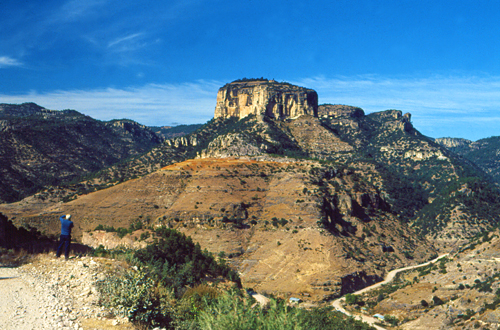
We crossed a bridge where we looked down to see burros resting in the warm sand by the river. Next came Humira Point where we looked out at the canyon and bought things from local vendors. Much later we came to the paved road and clapped happily for Antonio who had maneuvered the long dirt road so capably. Little did we know there was more rough road to come.
Antonio soon turned onto on a dirt road and we were headed for Cascada Cusarare. Antonio crossed the boulder-filled stream five times. Jenny, Jessica and I got out to walk along the pine needle strewn trail, finally joining the others along the last half-mile of the trail to the cascade. We are such a disparate group that Jessica was running back and forth making sure each of us was okay, happy, and on the right path. All along the trail were Tarahumara families in beautiful, bright traditional clothing selling baskets, figurines, shawls, and other lovely things they had made. At the top of Cascada Cusarare the water fell in ribbons down to the stream far below.
When we reached the top Jenny had already hiked to the bottom of the falls 98 feet below so we took pictures of her down there. After walking back down the trail and buying a “snake” made from a root, I rode back out with Sally, Bill, Laurie, and Antonio.
Jenny and Jessica walked and we met them back at the paved road; they made it before we did. Soon we were back in Creel. Both museums were closed but the mission store was open, so, of course, we bought more mementos. I bought an offprint from the Annals of Sports Medicine entitled Rarajipari: The Kick-Ball Race of the Tarahumara Indians. At first I thought everything was very expensive, then I realized the prices were in pesos. Jessica explained that a share of the profits from the mission store goes to the Clinic of Santa Teresita, started by Jesuit priest Luis Verplancken in the 1950’s in an effort to improve the health the Tarahumara children. The clinic depends upon volunteers and provides services and medicines free to the Tarahumara and other people who need them. We walked across the street to supper—another delicious Mexican meal with Hibiscus juice and rice pudding for dessert. Back at The Lodge at Creel we were soon asleep.
Tags: California Native, Chihuahua al Pacifico Railroad, Copper Canyon, Mexico, sierra madre, tarahumara, the california native, Tours, Travel
On a Stroll to Satevo

The following story was submitted to us by Kay Gilliland who describes her experience traveling with friends through Mexico’s Copper Canyon during the Christmas holidays. Here, Kay and her traveling companions explore the village of Batopilas and the mysterious “Lost Cathedral” at Satevo.
The California Native is always thrilled to have groups of friends join our trips to this charming region of Mexico. We appreciate it when our guests share their stories with us and we like to add them to our blog for everyone to enjoy. Excerpts from her journal will be posted regularly, so check back often to learn more about Kay’s 11-day Copper Canyon Adventure.
December 29, Monday
In the morning, we walked to Carolina’s Restaurant in the Plaza Constitución for breakfast. We saw the sandal maker’s shop and his stack of tires. We enjoyed a wonderful breakfast, then got ready for the walk to Satevo. One of the local dogs, Perucho, joined us for the whole walk. Along the way Jenny found a sack of cheese and Perucho devoured it. I stopped to tie my boot lace and Perucho stayed with me. All of a sudden he looked up to find Jenny far ahead. Perucho ran as fast as his legs would carry him and caught up with her.
Up ahead, we heard a lot of animal snufflings which proved to be coming from one tiny piglet. I couldn’t believe that little thing was making all that noise.
We arrived at the “Lost Cathedral” of Satevo. A woman sitting in the gazebo of the plaza was making embroidered napkins. We sat down while Jessica told us about the Cathedral. It was built in the early 1600s or maybe the 1760s but the records were lost through fire. Another name for it is “Iglesias San Miguel de Satevo” but so little is known about who built it that the name “Lost Cathedral” has stayed with it. Piled around inside the cathedral were statues, basins, and other church paraphernalia. The walls are being restored (with government money) as near to the original as possible. The Christmas manger had many additions including a giraffe. Jenny climbed the ladder into the tower of the church and out onto the roof while we took pictures.
Jessica, Jenny, Sally, Laurie and I climbed into the truck for a ride back from Satevo. At the top of the hill Jessica and Jenny got out to walk, expecting Perucho to accompany them. Perucho would have none of it. He wanted to ride all the way back. He was finally pulled out of the truck and walked the rest of the way with Jenny and Jessica.
After a shower we walked over to Doña Mica’s for lunch. This restaurant is built onto her home and she cooks everything on an old-fashioned wood-fire stove.
A young woman came to the door of the restaurant with a basket full of something in red cellophane wrappers. Jessica bought some and introduced us to a sweet candy made of Cameron. After a refreshing lunch we walked to the General Store for chocolate covered frozen bananas and cups of frozen mango.
Back at Juanita’s Place I watched life on the Rio Batopilas: women washing clothes, children playing, teens swimming and teasing each other, cattle coming for a drink, and a truck driving down through the middle of it all. Sally crossed the swaying footbridge and returned saying there were many missing and broken slats. Bill pointed out the enormous bougainvillea tree and we talked about how it could exist when we knew the plant only as a slender vine.
We walked toward the Hacienda de San Miguel. I went the long way, getting a ride from Antonio for part of it, but everyone else crossed the river on a very narrow makeshift “bridge” with lots of help from Jessica. When asked if she felt like turning back, Sally said she was determined to make it because Laurie was making it. They did make it, but it was a “one-way bridge” because Jessica did not offer to take us back that way.
The ruins were quite impressive. Jessica explained that Alexander Shepherd administered his silver empire from this site. He decided the silver mines could be profitable if the silver was processed into ingots rather than trying to ship raw ore out of remote Batopilas, and those mines made him very rich. We walked around the ruins of stamp mills, an assay office, refectory, boardinghouse, corral and stables, machine shop, iron foundry, ingot mill, and other buildings and sheds. At one time an aerial tram linked canyon slopes on both sides of the river. Several large fig trees grow on the compound walls and the tallest building is overgrown with a huge bougainvillea; Jessica said the bougainvillea is considered the largest in the world.
We came back from our walk to find the museum as well as the craft store closed. We hung out in the Main Plaza watching the kids play ball. As we walked to supper Jessica saw Señora Montes and asked her to open the store after we had dinner. She said she would be there. We ate a wonderful supper at Patio Cinco Restaurante. The tostadas of avocado and of chicken tasted especially good. Jessica took glasses from the restaurant and walked across the street to get them filled at a place with a license. When we walked back the light was on in Señora Montes’ store and she greeted us at the door. We bought butterfly rattles, drums, baskets. Jennie bought a magnificent big drum for Lori.
We returned to Hotel Juanita’s and went star gazing on the roof. We found Orion, Auriga, Canis Major with Sirius the Dog Star, the Pleiades, the Great Square of Pegasus, Cassiopea, and the Milky Way but we never saw the Big Dipper, North Star or the Little Dipper. We went back down to our room and were soon asleep.
Tags: California Native, Copper Canyon, Mexico, sierra madre, tarahumara, the california native, tour, Tours, Travel
Bound for Batopilas

The following story was submitted to us by Kay Gilliland who describes her experience traveling with friends through Mexico’s Copper Canyon during the Christmas holidays. Today, Kay and her traveling companions descend into the canyon to the village of Batopilas.
The California Native is always thrilled to have groups of friends join our trips to this charming region of Mexico. We appreciate it when our guests share their stories with us and we like to add them to our blog for everyone to enjoy. Excerpts from her journal will be posted regularly, so check back often to learn more about Kay’s 11-day Copper Canyon Adventure.
December 28, Sunday
7:15 with Jenny up before me. Today we travel to the village of Batopilas to spend two nights at the bottom of the canyon. Breakfast in the lodge was a simple buffet, just right. Everything was set upon a big copper platter such as I had seen in the gift shop. After breakfast I asked the price of a copper platter and was told, $60.00 (or six-hundred persos). I appreciated that my morning breakfast plate was set upon a $60.00 platter.
Leaving Creel, with Antonio as our driver, we could see the Cristo Rey statue high above the town of Creel. We drove past a lake and Jessica pointed out some rocks that looked like elephants and a big rock shaped like a frog. Someone had scratched an eye and eyebrow to emphasize its frogness. We stopped by a bridge over the Urique River, walked across, and took pictures of the river and cliffs. Jenny climbed up to a shrine constructed like a miniature church and discovered it full of candles, plastic flowers, and assorted strange items. We walked back across the bridge where a family was selling baskets. We took two more walks, on one Jessica pointed out the jicama plant with a beautiful flower.
At Quirare, Jessica pointed out how the drop in elevation changes the vegetation from pine to oak and agave. Further on, we crossed the Batopilas River and stopped.
We saw a little school at La Bufa. Further on there was a sign saying “desponchado” meaning they would fix flat tires. We passed by Arroyo Santiago on the Batopilas River. Not far after that we saw the aqueduct which brings water to the town. Jessica explained that the aqueduct was built by Alexander Shepherd nearly a hundred years ago to provide a constant water supply for the town and to generate hydroelectric power. Batopilas still relies on the structure for its main water supply. We began seeing houses, signaling our entrance into the main part of Batopilas. The long, narrow town is along a road bordered by a river and the cliffs, leaving little room for expansion.
We arrived at Hotel Juanita’s across from the Main Plaza. Jenny and I have room 103 with a view of the river. There is a large patio and a veranda. Jessica gave us a map of Batopilas. We explored the town a bit with Jessica as guide. In the Main Plaza there was a wonderful mural made by schoolchildren.
We came back and explored the hotel’s second-floor balcony and rooftop lounge. We walked to the Plaza Constitutión for dinner at Doña Mica’s then walked back to our hotel. In the evening, Jenny and I walked up to the roof to see the stars and the Milky Way. We were in bed early and slept well.
Tags: California Native, christmas, Copper Canyon, Mexico, the california native, Tours
Canyon Sunrise, Then on to Creel

The following story was submitted to us by Kay Gililand who describes her experience traveling with friends through Mexico’s Copper Canyon during the Christmas holidays. On this day, Kay and her traveling companions watch the sunrise over the canyon, visit a Tarahumara family, and ride the rails higher into the Sierras until they reach the town of Creel.
The California Native is always thrilled to have groups of friends join our trips to this charming region of Mexico. We appreciate it when our guests share their stories with us and we like to add them to our blog for everyone to enjoy. Excerpts from her journal will be posted regularly, so check back often to learn more about Kay’s 11-day Copper Canyon Adventure.
December 27, Saturday
A knock on the door got us up for a walk to the canyon rim to watch the sunrise. Laurie, Jenny and I bundled up against the cold and walked along the uneven path in the dark to a perfect spot to see a layer of red and gold in the sky. Clouds drifted along the cliffs making the cliffs themselves appear to move. The clouds kept moving and obscured the actual sunrise but the sky brightened with long sun rays highlighting the ridges.
We took tea to our room and sat on our porch watching the canyon colors change. Mexican eggs for breakfast, a shower, and then off for a walk along the canyon rim on ground strewn with long pine needles and oak leaves. We came to a cabin built for mining and railroad construction. We followed a large rock wall past a water supply to a big dog lying on a warm rock in the sun. A girl, Alicia, came from her house to greet us and was soon joined by her younger sister, Ypoli. They led us around the side of the dwelling—quite large for a cabin—and inside where we saw old furnishings, a victrola, hanging fixtures for candles, an old grinder, and other cabin necessities.
We walked with Alicia to their adobe house where we saw seven tiny puppies. Alicia said they were about one month old. Ypoli brought her little sister out and the girls played with the puppies and smiled at us. We left a bit regretfully; we had enjoyed the girls, the puppies and the setting.
Jenny had gone on a horseback ride and returned saying that she had a great time. Showers, lunch, and a short bus ride brought us to the train station. As usual the best place for sight-seeing was between train cars where Jenny and I rode the entire time and Sally part of the time. Jessica pointed out the Weeping Pine and explained there were more varieties of pines and oaks in the Tarahumara area than in any other region of similar size in the world.
On the train, we passed the highest point on the rail line (Los Ojitos at nearly 8000 feet) before we arrived at Creel.
Jessica gave us maps of Creel, the second-largest town in the municipality of Bocoyna, state of Chihuahua, and we boarded a big yellow school bus for a short ride to The Lodge at Creel. In our room, we lit the gas heater made to look like a little wood stove. Jenny and I walked to the museum to learn more about the Tarahumara people. Afterwards, we walked back and met the others for a complementary margarita provided by The California Native. Later, we walked to Veronica’s Restaurant for excellent guacamole and delicious vegetable soup.
Tags: California Native, Chihuahua al Pacifico Railroad, Copper Canyon, Creel, Mexico, rail road, sierra madre, the california native, Tours, train, Travel
Next Stop: Divisadero

The following story was submitted to us by Kay Gilliland who describes her experience traveling with friends through Mexico’s Copper Canyon during the Christmas holidays. Breathtaking is the word quite often associated with someone’s first view of the Copper Canyon at the area around Divisadero. Below Kay offers us a similar response.
The California Native is always thrilled to have groups of friends join our trips to this charming region of Mexico. We appreciate it when our guests share their stories with us and we like to add them to our blog for everyone to enjoy. Excerpts from her journal will be posted regularly, so check back often to learn more about Kay’s 11-day Copper Canyon Adventure.
December 26, Friday
Jenny made a fire in the neat little stove. We took pictures of the room and the rock high on the cliffs that resembled Yogi Bear.
Breakfast included eggs, cheese and mild chili sauce, all on a taco. We watched our cook make tortillas de aveno, then packed and thanked our hosts. Sally, Laurie and I went off for a hike with Jessica while Jenny went horseback riding. The hikers crossed an open area near lava- and tuff-layered cliffs, then up the arroyo to a small dam. Laurie decided to sit on a rock by the water. Sally and I followed Jessica upstream where she showed us an arrowhead. I asked if I could keep it and she said, “Oh, no. I always place it back under this leaf and rock so I can find it again for the next group. It is not considered to be of local origin, probably obtained in trade.” We continued upstream to the Cave of the Crosses. Fifty-three white crosses were painted on the black wall of the cave and there were human bones on the rocks. It is believed that the people died here of disease sometime around 1890 to 1900. There was possibly a storage area against the wall and there were several examples of the mano metate used for grinding corn. We hiked back down passing many kinds of oak and pine. Jessica pointed out the Alligator Juniper—it gets its name from the bark. I had seen a flock of little birds and a large bird like a woodpecker, but we did not see them again. We continued on to where Laurie was waiting and all four of us returned to the lodge in time to see Jenny coming in on her horse.
Jessica helped hoist our bags into the van and we all piled in for a ride to the train station. We talked with various people at the station. I rode between the cars in the open window. The canyons are very deep, 6135 feet in the case of the Urique (compare that to 6030 for the deepest part of the Grand Canyon in the United States). We passed the place where three canyons came together: Tararequa, Urique, and Copper. As before, many tunnels and bridges. The train stopped at San Rafael, a very colorful spot, where I bought my fourth basket.
Jessica explained that the pink-flowered trees were called Amapa and those trees came in yellow also. The beautiful fig type trees with yellow trunks and branches were Tescalame, one of the fig tree types. We got off at Divisidero for a van ride to the Mirador Hotel. We had a little porch outside our room with a fantastic view. Every room has a similar opportunity for its occupants to marvel at the canyon.
I saw a woman weaving a beautiful basket and wanted a picture. I bought my fifth basket so I could take a picture of her working on the basket.
The Mirador Hotel knows how to take full advantage of the reason for being on the rim of the Copper Canyon area. Jessica pointed out the place where the three canyons converge, only one of which is the Copper Canyon proper. Jenny’s and I sat on our porch filling our souls with the magnificence around us.
As we entered the lodge, Felipe gave us sombreros and began to play his guitar—lots of great songs. The Hat Dance brought a few people up to dance and more joined in as other tunes were played. Dinner of chicken, mashed potatoes and carrots (standing up like sentinels in the mashed potatoes) was followed by tea and cheesecake. Another wonderful day and off to bed.
Tags: California Native, Chihuahua al Pacifico Railroad, Copper Canyon, Divisadero, Hotel, Hotel Mirador, Mexico, rail road, tarahumara, the california native, tour, Tours, train, Travel
Christmas in Copper Canyon
The following story was submitted to us by Kay Gililand who describes her experience traveling with friends through Mexico’s Copper Canyon during the Christmas holidays. On this day, Kay recalls her experience riding the train into the Sierra Tarahumara and spending Christmas Eve at the Paraiso del Oso Lodge in Cerocahui. The holidays are a fascinating time to visit Copper Canyon.
The California Native is always thrilled to have groups of friends join our trips to this charming region of Mexico. We appreciate it when our guests share their stories with us and we like to add them to our blog for everyone to enjoy. Excerpts from her journal will be posted regularly, so check back often to learn more about Kay’s 11-day Copper Canyon Adventure.
December 24, Wednesday, Christmas Eve

Jessica’s knock on the door summoned us to a walk through El Fuerte. The town plaza was bordered by a church and public buildings with an elaborate ironwork gazebo at the center. Jessica had given us maps of El Fuerte, so it was easy to walk to the fort. The fort was constructed in 1610 under the order of the Viceroy of Montesclaros. We took pictures and hurried back for breakfast.
We returned to the Torres del Fuerte and walked through the lovely courtyard by the outside lounge area and into the dining room: papaya, watermelon, coffee, fresh orange juice, Mexican eggs, bacon, potato pancake and special toast.
It was not far to the train station. Bags were unloaded and we joined about 20 people waiting for the Chihuahua al Pacifico Railroad. A local boy carried my bag to the dock. Jessica gave us good maps of the train route and of the general area called Sierra Tarahumara, Barrancas del Cobre. We had assigned seats on the train but there were few passengers so we soon went wherever we wished. Favorite spots were a table in the dining car and standing on the platforms between the train cars. Those were the best viewing spots. Jessica pointed out typical plants of the thorn scrub: Kapok Tree, Palo Verde, Morning Glory Tree, Organpipe Cactus and Acacia. Many bridges and tunnels through spectacular mountains kept us on the platforms between the trains most of the time.
We got off the train at Bahuichivo Station. Our bags were loaded into a large van for the ride to the Hotel Paraiso del Oso (Paradise of the Bear). Located at kilometer 12 route 51 between Bahuichivo Station and Cerocahui, the lodge is in the Huetoibo Valley, Ejido de Cerocahui, Municipio de Urique, State of Chihuahua at an elevation of 5648 feet. Doug “Diego” Rhodes and Anna María Chavez de Rhodes own the 2.5 acre lodge and a 23 acre Rancho with horses. The theme is built around the enormous rock feature shaped like Yogi Bear, thus the name Paraiso del Oso.
Later, we went for a ride to Cerocahui. Diego picked up a family who were walking the road and then continued to the church where people were gathering for a posada because it was Christmas Eve. We looked into the church then walked about the town, bought food to take to a family, and returned to the plaza in front of the church to watch children trying to hit a piñata.
After a ride home, a few minutes of rest, a fire in the wood stove thanks to Jenny, we were off to the lodge for “ponche” (hot Christmas punch) and dinner. We were invited to a Midnight Mass with traditional dancing, but we were too tired and went to bed instead. Christmas Eve had been a delight.
Tags: California Native, cerocahui, Chihuahua al Pacifico Railroad, christmas, Copper Canyon, El Fuerte, Mexico, piñata, tarahumara, the california native
Here at the The California Native, we are always looking for new ways to connect with our “fans.” We love to share any information we have about our destinations like Mexico’s Copper Canyon, Costa Rica, Yucatan, Peru, Bhutan, Burma and more. Lately we have noticed that more and more people are joining social networking sites to keep abreast of their friends and interest groups.
We are happy to announce that we now have a California Native Page on Facebook, and you can become a fan on our Facebook page. If you are not yet a member of Facebook, you can also join and connect with old friends and make new ones too. You might learn about a trip some old friend took that you are dying to try yourself! Maybe they even posted some great pictures.
You may also have noticed that all of our stories, and this blog itself, are available for sharing on dozens of social networking sites as well as e-mail. Just click on the “share” icons on our website, www.calnative.com, to share a story, or page.
There is also an RSS feed on the top of our blog pages, to allow you to see blog updates, as soon as they are posted, on your Google Home Page or RSS reader.
Of course, you budding travel writers can always post your own story or photos on our blog or Facebook Page.
Tags: burma, California Native, Copper Canyon, Costa Rica, facebook, Mexico, Peru, Tours, Travel, Yucatan and Chiapas
Over the past 25 years there have been many changes in technology, and we have always tried to keep our offices as efficient as possible to keep our prices low and our quality high. This has created a room full of old computer equipment and other items that we no longer needed, most of which were in good working order, just a little out of date for us.
We searched for an earth-friendly and community-friendly way to dispose of these items. California Native employee Dave Klein went online and discovered Komputers 4R Kidz, a non-profit refurbishing program. Their mission is to help children of all ages acquire the technology and technology skills they need to succeed in the future by providing equitable access to technology resources.The Komputers 4 R Kids Program has been designed to address four key issues:

- E-waste
- Computer to student ratio
- Work Experience for Information Technology students
- PC’s for underserved students due to economic, language and cultural barriers
They use the donated computers to aid in education on computers and computer repair, and what they can’t use they recycle, so it’s good for the kids and the environment.
The truck from Komputers 4 R Kidz pulled up last week in front of The California Native headquarters in Los Angeles and picked up monitors, computers, accessories, and other items they might use with the kids. We were proud to be able to donate these items to such a worthy cause, and to know that they will continue to be used to help others.
Tags: California Native, kids, Tours