Going the Extra Mile in Copper Canyon

Please, let me tell you of our marvelous adventure to the Copper Canyon in Mexico. It began in El Fuerte in the state of Sinaloa at Hotel Torres Del Fuerte and ended at Hotel Torres Del Fuerte. The hotel is a delightful restored hacienda that is artistically decorated and each room is, individually unique. We stayed two nights in the hotel in the beginning of the trip and two nights at the end of the trip. The owners, Jesus and his wife and their son, Francisco, enhanced our trip with their graciousness, friendliness, and personal attentiveness to the point that we felt that we were personal guests at the hacienda.

The Chepe train ride into the Barrancas del Cobre was a beautiful exposure into the vistas of canyons and mountain ranges, which gave us an appreciation of the wonder and majesty of the many canyons of the area known as Copper Canyon. This is a natural wonder of the world and the man-made wonder of bridges and tunnels carved out of the rock from the canyons is a spectacular engineering accomplishment.

Our first stop was in Cerocahui. We stayed at a ranchito that gave us the opportunity to hike and to ride horses into the rugged canyons. It was also our first opportunity to meet two Tarahumara children. After two nights in Cerocahui, we then traveled to Creel for two nights then back to Posada Barrancas to stay at the El Mirador Hotel.

Our time in the canyons was memorable, enjoyable, pleasurable, and interesting.

On our return to El Fuerte, upon exiting the train, our chauffeur, picked us up at the railroad station and we waved goodbye to the Chepe. During our transfer to Hotel Torres Del Fuerte, I realized that I had left my purse on the train! Of course, it contained everything of importance, money, camera, and passport!

In panic, I informed the chauffeur that I had left my purse on the train. He was shocked and thought for sure that I had misplaced it in my luggage. The driver pulled off to the side of the road and he and my husband searched the luggage in the back of the suburban. Of course it was not there! Francisco, from Hotel Torres Del Fuerte, had been to the train station to pick up someone from the train, too.

While we were searching the Suburban, Francisco stopped his car to inquire why we had stopped. My husband said that Francisco and the driver talked for a couple of moments and Francisco asked where we were sitting on the train. The chauffeur then motioned for my husband to return to the car. The chauffeur drove off without saying a word and went past the town of El Fuerte and into the countryside.

The night was very dark, there were few stars, and there was a gusty wind. Suddenly, after about 40 minutes, the driver pulled to the side of the road, stopped in the “middle of nowhere”, and then turned off his car lights and turned on his car flashers. He motioned for us to get out of the car. As we got out of the car, we noticed the train track crossing the road at what is known as Santa Maria crossing. Within thirty seconds, the train, which we had exited in El Fuerte station and was now on its way to Los Mochis, grew out of the night darkness, began to slow down and was beginning to cross the road; at the same time, the train engineer shouted out of his window for us to go to the last car on the train.

The last car was brightly lit and we could see that the porter was hanging out of the door with one hand fully extended from the handrail and the other arm fully extended toward the approaching chauffeur. In his hand he was holding my purse! He handed the purse to the running chauffeur without the train ever fully stopping. It was another engineering event, or rather a miracle!

We learned later that in the short conversation between the chauffeur and Francisco that they had devised the plan to retrieve the purse. Francisco made several calls to contact the train operated by the Mexican Federal Railroad and the chauffeur told Francisco at what crossing he would meet the train. After several calls, Francisco successfully contacted the train’s engineer. Francisco, the chauffeur, the train engineer, and the porter made it all happen!

This story is a tribute to the personal service which one experiences at Hotel Torres Del Fuerte. We are so pleased and thankful with all of the Mexican people that helped us as they exhibited such warmth, honor, chivalry, honesty, and generosity. We shall never forget our rescuers!

We wish to thank California Native for their specialized help and expertise in making the train and hotel reservations. They were attentive to details and gracious to work with.

Needless to say, we highly recommend staying at Hotel Torres Del Fuerte for its ambiance, its charm, its history, the delicious menu items, the wonderful and generous owners, and for their outstanding ability to turn a tragedy into a miracle.

The power of Mexico is, and always has been, its people, living together in a lovely land, influenced by culture, traditions, history, art.

Come and share this special part of Mexico!

Stephanie & John Hamann

Betting on the Yeti in Bhutan

“AAARRGH! The yeti, “Abominable Snowman,” or mirgu, as it’s called in Bhutan, has been a legend throughout the Himalayas for centuries. They are even depicted in ancient Tibetan and Bhutanese manuscripts.

There is a sanctuary for the Yeti in BhutanThe Kingdom of Bhutan has set aside an area specifically for the yeti, the Sakten Wildlife Sanctuary—a sanctuary for a creature that local lore claims is invisible! While in Bhutan, I was told that not only is the yeti invisible, but his feet point backwards to avoid being tracked.
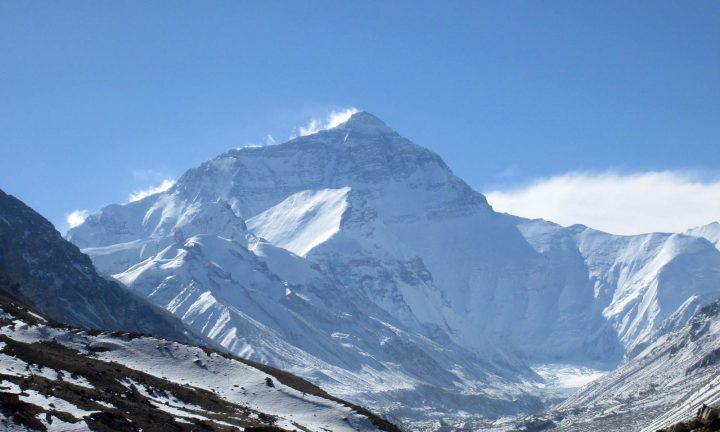
On their unsuccessful attempt to climb Mount Everest in 1923, a British expedition spotted a line of creatures moving along a cliff face. When they arrived at the location they found huge humanoid footprints in the snow. Twenty-six years later, Tenzing Norgay, who along with Sir Edmund Hillary, was the first to reach Everest’s summit, saw a Yeti playing in the snow.

The yeti has been described as a wildman, half-man half-beast, covered with reddish brown hair but with a hairless face. The descriptions are similar to North America’s “Big Foot.” Many theories have been advanced as to the identify of this “abominable snowman.” Some scientists believe that the yeti is a form of ancient man, a “missing link.” It has been theorized that it is a form of Homo Giganticus, an unproven subspecies of humans. So far expeditions which have set out to capture or photograph the yeti have returned without positive proof of the creature’s existence.

Reinhold Messner is a writer, film maker, and a member of the European Parliament. He is also considered to be one of the world’s greatest mountaineers, having climbed all of the world’s 8,000 meter peaks, and being the first man to climb Everest without oxygen and to climb it solo. In 1986, while leading an expedition in Nepal, he encountered a yeti.

“I thought it was a fairy tale (until) I saw a yeti for myself. I could only see a shadow because it was very late. When I approached the place where the yeti (had) stood, I found a footprint of a two-leg-going animal.”

This led Messner on a twelve year quest for the yeti. His conclusion, “The yeti is the sum of many tellings of a legend. The local people have a lot of fantasy creatures because they live without television and without Hollywood, so they have to create their own myths. Most of these figures, like the yeti, are built on real, existing beings out of nature. The local people tell each other the story. And from time to time somebody brings along a new part because they’ve been in touch, in the night, with one of these creatures. So the yeti is the sum of this fantasy figure and the zoological reality behind it—a Tibetan bear!”

The Tibetan bear, a rare species related to the grizzly, while traveling through snow, puts his back foot in the footprint of his forefoot, giving the appearance of a two-legged animal.

“The legends all describe the yeti as two and a half meters [eight feet] high. If it’s big, they say it is black. If it’s very small, they say it’s reddish, because the small Tibetan bears are reddish. Everything matches perfectly. It goes on two legs when it meets people, to show that he is big and strong.”

Messner came across the footprints of a yak, followed by the footprints of a yeti. He followed them to the carcass of the yak, killed by a single blow. It had been stored underground in the same manner a bear stores his kill.

He journeyed to a remote village in Pakistan, where legends tell of a woman who was kidnapped by a yeti and lived with it for two years. Traveling with a local guide, Messner came across a sleeping “yeti” and got to within 20 yards of it. It turned out to be a Tibetan bear, and very angry at being awakened. Messner jumped and yelled and the bear ran away.

Adolph Hitler sent an SS man, Professor Ernst Schaefer, to search for the yeti in the hope that it would turn out to be the progenitor of the Aryan race. Schaefer reached the conclusion that the yeti was the Tibetan bear, but kept this theory to himself, “If I had said this to the Nazis, they would have killed me.”

And what about our own Big Foot or Sasquatch? Messner believes it is probably a grizzly bear.

Welcoming the Next Decade at The California Native

We’re coming to the end of another year, and we at California Native are looking forward to enjoying a great new year, with more fun, more adventures and more opportunities for everyone.

So, what’s new for 2010?

I recently traveled to Argentina where I made new contacts and researched new destinations to offer our fellow traveling enthusiasts. I will be returning there in a few months to continue this project.

Next month we will be traveling to Loreto to survey new and exciting adventures in Baja California—tours to petroglyphs and historical sites, relaxing “sit-by-the-pool-and-sip-margaritas” getaways, and more whale watching trips.

This coming year we will continue to look for more ways to make it more convenient for our fans to obtain information on the destinations they would like to visit. Last year we introduced “The Desktop Traveler,” our email newsletter as an up-to-date supplement to our semi-annual printed newsletter, which we have published for more than 25 years. We also now have a Facebook page and daily update on Twitter. Soon we will include a slide show on our website for each of our California Native destinations.

We are always looking for new ways to make our trips even more fun, and offer more unique destinations.

We encourage and appreciate your suggestions.

Don’t Cry For Me Argentina

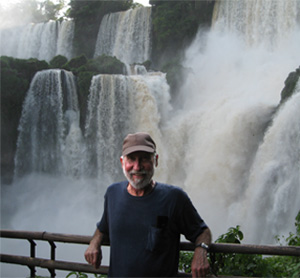
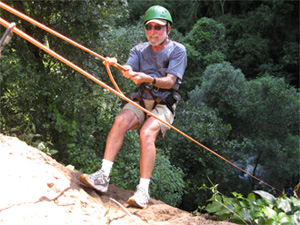
Argentina Iguazu FallsAt California Native, we are always exploring new and exciting destinations to develop unique itineraries to offer our fellow travel enthusiasts.Lee Rappelling at Iguazu Falls
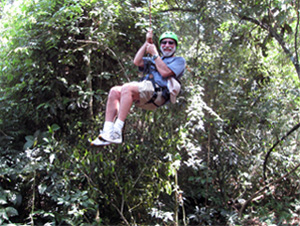
Last week I returned from a business trip to Argentina, where I was a guest of the Argentina Tourist Board. I interviewed many Argentinian tour operators and hotel owners and found several that appeared to meet the high standards that we set for California Native suppliers. I plan to return to Argentina in a few months to do an in-depth survey of this fascinating country. Then we will develop a new series of unique trips to Patagonia, Iguazu, and the many other wonderful destinations in this beautiful, friendly South American country.Lee on zipline at Iguazu Falls

While on last week’s trip I spent several days at Iguazu Falls, traveled under the falls in a high-speed Zodiac, rappelled down the face of cliffs, zip-lined through the jungle canopy, and hiked to the many beautiful spots where the views of the falls were breathtaking. At California Native, even our business trips are fun because, after all, fun is the business we’re in.