The year 2009 is coming to a close. We are now at the end of November and the holidays are coming up fast, but it is not too late to make your plans for a wonderful holiday getaway. We do have some space left on our Christmas/New Years escorted tour to Mexico’s Copper Canyon where we will celebrate Christmas with the Tarahumara Indians and the owners of the Paraiso del Oso.
On December 23rd, we will be departing with a small group out of Los Angeles and Phoenix airports for an exciting tour into the canyon. The 11-day Ultimate tour spends nights in El Fuerte, Cerocahui, Divisadero, Creel, Batopilas, Chihuahua and a wooded area just outside San Juanito. As with all of our Copper Canyon tours, we ride the Chihuahua al Pacifico Railroad for one of the most spectacular train rides in the Western Hemisphere. The train travels through the lowlands of Sinaloa State and up into the Sierra Madre Mountains, passing through 86 tunnels and crossing 37 bridges.
Some other highlights on this tour are the Cusarare and Basaseachic waterfalls, a day trip to the village of Urique, the “Lost Cathedral” just outside of the village of Batopilas located at the canyon bottom and the magnificent vista point which overlooks a whole series of intertwined “barrancas” (canyons).
On this special trip, participants will have the opportunity to enjoy a special Christmas Eve known as Noche-bueno (the Good Night), a delicious dinner at the Paraiso del Oso and Ana Maria’s famous Christmas punch. Those wishing to join the Tarahumara Indians and mestizo community may attend the midnight mass, also known as La Misa del Gallo (Rooster’s Mass). Traditional Tarahumara dancing usually starts an hour or two before the mass, then recommences afterwards to make it an all-night celebration. As an old Spanish saying goes, “Esta noche es Noche-Buena, y no es noche de dormir” (Tonight is the Good Night, and it is not meant for sleeping).
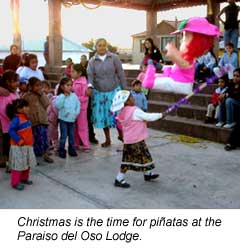
As Christmas morning arrives, the celebration moves back to the Oso Lodge where local Tarahumara join the hotel guests for the piñata party. The native Tarahumara live in isolated ranchitos in the rugged mountains surrounding the hotel. They take turns swinging at the Christmas piñata until it explodes showering candy and small toys to the ground. The hotel is filled with laughter and glee as the children scramble to collect their treasures. Gifts from under the Christmas tree are handed out. As the locals return to their mountain ranchitos, guests with The California Native prepare for the day trip to the Urique Canyon. In the evening after the excursion, guests enjoy a traditional turkey dinner with all the trimmings.
What better way to end this year and bring in the new year than to spend the night surrounded by pine trees in the Sierra Madre Mountains. We will stay in comfortable log cabins at the Lodge at Norítari meaning a “Place Above the Clouds” in the language of the Tarahumara Indians. Here one can hike to a nearby lake or relax on an old-fashion porch taking in the peacefulness of this lovely area.
To be a part of this year’s celebration and a truly unique experience, make your reservations now as time is running out. Happy holiday season to all of our fellow travelers.
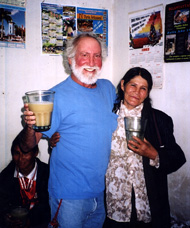 The strange-tasting drink, yellowish in color with a bubbly froth, is served warm for just a few coins, and is quite strong. It is not usually found in restaurants (a similar drink, chicha morada, made from blue corn, is sweet and sold everywhere like a soft-drink), but is sold by individuals, usually in the lower socioeconomic bracket, who have passed down the traditional recipes since pre-Inca times.