Costa Rica Rivers Rock for Rafting

For many people, no tour of Costa Rica would be complete without a thrilling rafting trip on one of the country’s beautiful jungle rivers. Costa Rica’s rivers are perfect for both beginners and experienced rafters. With ample annual rainfall, mountainous landscapes, and plenty of road-to-river access, the country prides itself on being a whitewater paradise. To top it off, Costa Rica has warm weather year round.

Your rafting adventure begins when you are met at your hotel in San Jose and driven to the outpost for a delicious breakfast. Then it’s on to the river’s edge where your equipment is issued and adjusted for a proper fit. There, you receive safety instructions and tips for basic paddling strokes. Safety is always at the forefront during any tours hosted by The California Native and the guides are experienced professionals with extensive knowledge of navigation, river rescue, and first aid.Whitewater rafting on Costa Rica tour
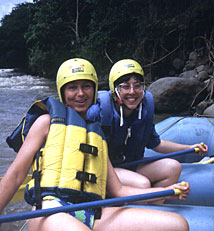
The Reventazon River is great for beginners and intermediate rafters. It is also perfect for those curious about the sport who want to experience the sensation of bobbing downstream, through magnificent rainforest, and experiencing the thrill of exciting—but not too scary—whitewater rapids.

For those who want even more adventure, the Pacuare River is your best bet. Chock full of expert-level rapids, the Pacuare is a world-famous run guaranteed to get the pulse pounding. Flowing toward the Atlantic, the 14-mile section winds through the jungle giving you plenty of opportunities to spot parrots, toucans, monkeys, and butterflies. But be sure not to take your eyes off the water for too long, because the Class I – V rapids are best viewed from inside the boat rather than out. If you do become separated from your seat, don’t panic, the guide will be quick to fish you back on board.

For those who can’t get enough, The California Native offers a 2-day option where guests are able to overnight on the Pacuare at a comfortable riverside lodge. There is no better way to relax from a day of paddling than to be lulled by the sounds of river while looking forward to another day of whitewater rapid transit. On the second day, more rapids with names like ‘Two Mountains’ and ‘Cimmaron’ (translated from Spanish as wild) lay downstream ready to challenge you and your crew mates. Back at the outpost, hot showers and a warm lunch await you before you are driven back to San Jose.

So grab your river-runner sandals, join The California Native on a Costa Rica Adventure, and come aboard!
Sun and Snow in Mexico

The question most frequently asked by guests going on trips with The California Native to Mexico’s Copper Canyon or the Yucatan is, “What weather can I can expect?”

Having an idea of what the weather will be makes it much easier to pack. For those going to the Yucatan, packing is easy. Lightweight clothing (preferably from natural fibers), light-colors (they reflect the sun’s rays), and a  wide-brimmed hat (to protect your face and ears from the sun). And, of course, don’t forget your swim-suit!

If you are traveling to Copper Canyon, predicting the weather is a bit more difficult.  Mexico has three climate zones, tropical, temperate and cold, and the Copper Canyon tours traverse all three of them.

Upon arrival in the town of El Fuerte (around sea level), you can expect temps in the 70’s even in January. This changes dramatically as you climb high into the Sierra Madre Mountains to the town of Creel where elevations around 6500 feet can cool the air considerably. Expect frost in the early mornings from mid-October through the middle of March. It may even snow. Dress in layers. Avoid taking bulky overcoats—a comfortable jacket on a couple layers of long sleeves or a sweater should suffice. Don’t forget a pair of gloves. In the winter, if the day is sunny, you can expect the air to be mild (highs in the low 60’s). Don’t get too acclimated to the chillier air because from Creel, an excursion to the town of Batopilas in the bottom of the canyon brings you back to the heat of Mexico. It is a fact that the folks who live in Batopilas only acknowledge three seasons; summer, fall, and spring.

As winter approaches, people in the United States and Canada look to Mexico as a top vacation spot to escape the cold. Providing  respite from the temperatures in the higher latitudes, Mexico has long been a sun-lover’s paradise.  From the splendid heat and humidity of the Yucatan Peninsula, to the coastal climate at the tranquil town of La Paz, Mexico is renown for short sleeves, sandals, and sunscreen. But this time of year is also the perfect time to visit the wonders of Copper Canyon, with its scenery, cultural diversity and wide range of temperatures for everyone to enjoy.

Toasting Tortillas Without Toil

Nothing can compare to a fresh, hot, homemade tortilla. I remember as a kid, my mom would give us tortillas right off the griddle sprinkled with a little cinnamon, sugar and butter. They were heavenly and  simple to make (if you use the prepared flour).

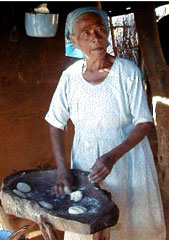
Mayo Indian Lady Making Tortillas in Mexico's Copper Canyon
Mayo Indian lady making
tortillas in Mexico’s Copper
Canyon

When you order a tortilla in Spain or South America you’ll receive an omelette—layers of eggs, potatoes and seasonings. But in the U.S., we are familiar with the tortillas of Mexico, kind of flat bread or pancakes. Meals are served with, in or on tortillas made of corn or wheat flour. Tortillas are very versatile and can be wrapped around fillings to make burritos and enchiladas, folded and filled to make tacos, served flat like a plate for a tostada, baked into a bowl for salads, or served like bread with a meal. Since 1985, NASA shuttle missions have been using tortillas to solve their food handling problems and eliminate bread crumbs in the instrument panels.

The Tortilla has become a regular food staple in most kitchens and can be found in every local grocery store. They are almost as common as a loaf of bread.

Of course you can’t beat the tortillas made in the traditional way in Mexico, such as the ones we enjoy on our trips to Mexico’s Copper Canyon , the Yucatan and Chiapas, but you can do a pretty good job of making them yourself.

The traditional way of making tortillas includes curing the corn in lime water until the hulls peel off, then grinding it with a stone mano (a cylinder-shaped stone similar to a rolling pin) and metate (a stone with a concave top for holding the corn). I usually skip this step, as it can be very time consuming.

Tortillas
3 cups flour (wheat, all-purpose or maza harina /corn flour)
1 teaspoon salt
2 teaspoons baking powder
5-6 tablespoons lard or vegetable shortening
1 1/4 cups warm water (mas o minos/more or less)

Mix the dry ingredients together in a large bowl. Cut in the shortening or lard using a pastry cutter or criss-cross two knives.

If the mixture crumbles, you do not have enough shortening or it is not mixed. If it is a hard ball then you need to add more flour.

Add the warm water and mix the dough quickly by hand moving it around the sides to pick up any flour remaining in the bowl. Continue to knead the dough until it is soft and no longer sticky.

Cover the dough with a towel or plastic wrap to let it rest for about 5 to 10 minutes. Letting the dough set allows the water and flour to mix and will give you a softer tortilla after cooking.

Take your ball of dough and begin forming 1-inch diameter balls. Pat each between your hands, turning and patting until it is shaped like a fat disk. Place it aside and continue to do with the rest of dough.

On a lightly floured surface take one of the dough patties and begin to roll it out until you the dough is about 1/8-inch thick and 8 to 10 inches in diameter.

Heat your comal, or heavy griddle, over medium to medium-high heat.  You will have to adjust
the heat after the first couple of tortillas. Heat till brown spots form, usually about 30 seconds each side.

Pull the tortillas off the griddle and lay them inside a folded towel or tortilla warmer until ready to serve.  You can use these to make tacos, enchiladas or burritos. Or, butter one up and sprinkle with cinnamon sugar for special treat. Can’t get any better!

Makes approximately 2 dozen tortillas