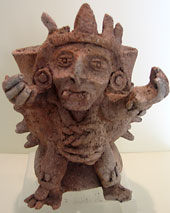
Each year the California Native International Adventures invites travel agents to join them on a tour of Mexico’s Copper Canyon to experience the wonders of this remarkable destination. This year our group consisted of 20 travel agents and companions, a tour conductor, an assistant and a nurse. Not only did the group learn about the canyons, the Indians and the hotels—they had a blast.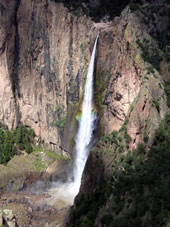
We started our trip with a flight from Los Angeles to Los Mochis, then on to the colonial town of El Fuerte where we overnighted in a wonderful boutique hotel, the Hotel Torres. There we enjoyed a magnificent dinner, then got to know each other and the Torres Family, our hosts at the hotel. After a good nights sleep we boarded the Chihuahua al Pacifico railroad for the phenominal ride up into the Sierra Madre Mountains.
The Copper Canyon train is considered to be one of the most spectacular rail routes in the Western Hemisphere. It passes through 86 tunnels and crosses over 36 bridges as it climbs to over 8000 feet in the Sierra Madre Occidental Mountains. At one point the train makes a 180° turn inside a tunnel and it was amazing to see the canyon suddenly appear on the opposite side of the train. As the train climbs higher into the mountains the scenery becomes more spectacular. The vegetation changes from semi-arid farmland to oak woodland. After several hours of a most enjoyable ride we arrived at the Bahuichivo Station and transferred to a lovely ranch-styled hotel, the Paraiso del Oso. This hotel, nestled in a beautiful valley just outside the town of Cerocahui, became our home for the next two days. The owners, Doug (Diego) and Ana Maria Rhodes made us feel like family. The home cooked meals were wonderful and the discada (a meal prepared on a disc over a fire pit) was a special treat.
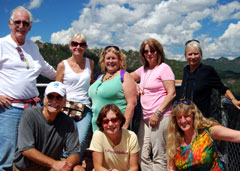
The first afternoon at Del Oso we visited the little town of Cerocahui and its Spanish-colonial church. The next day we took a journey to an overlook with a fantastic view almost a mile down into the Urique Canyon. At the overlook, we enjoyed a wonderful Bar-B-Que and Diego told us about the area’s long history of mining, dating back to the days of the Conquistadors. We also visited a small boarding school where we met with Tarahumara children. Many of the travel agents brought donations of school supplies, toys and clothes. The smiles on the student’s faces were heart warming. The agents also took up a collection to help fund a scholarship program for the children.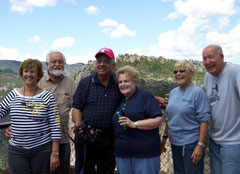
The next day we were back on the train to enjoy more of this marvelous rail ride. Traveling higher into the mountains (up to 7200 feet) the oak trees disappeared and the pines took over. We arrived at the Posada Barrancas Station and took a short bus ride to the Mirador hotel, located right on the edge of the canyon, where we were greeted with margaritas on a patio overlooking the canyon. The view was indescribable and we could only hope to capture a small part of the beauty with our cameras. After checking into our rooms, we discovered that the same great view was now our backyard—the balconies of the rooms hung over the edge, giving each room a unbelievable view. Before dinner we met for a happy hour, and it really was—we danced and sang to a wonderful mixture of Mexican, South American, and popular dance music.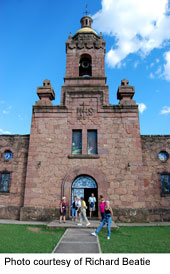
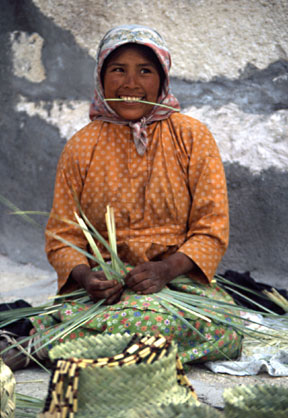
The next morning, after a full breakfast, local Tarahumara Indians, dressed in traditional costumes demonstrated their unique dances. They also performed a version of their running races. Real races can last over several days, the men kicking wooden balls ahead of them as they run, and the women rolling hoops. We enthusiastically cheered them on. After the race, we took a hike along the canyon’s edge to visit some Tarahumara caves (the indigenous people are cave-dwellers) and enjoy more wonderful views.
Next we traveled to the mountain town of Creel where we visited the plaza, the museum and the Mission Store. Here we purchased handicrafts made by the Tarahumara. The proceeds of the store fund the clinic that provides medical care to the Indians. We also had free time to wander the town and its many shops.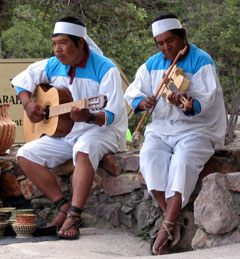
After a comfortable night in The Lodge at Creel, we headed out of town to tour the surrounding area. Our first stop was a visit to a Tarahumara cave and the families living there. Next we went to the rock formations in Mushroom Valley and Frog Valley, where nature has carved the rocks into strange imaginative formations. Next, we visited the San Ignacio Mission, built in the 17th Century to Catholicize the Indians, and the peaceful Lago de Arareko (Horseshoe Lake). We then had a lovely hike along the Cusárare River to Cusárare Falls, and enjoyed our sack lunches sitting upon rocks and logs, trading cookies and chips like schoolyard children. We then visited the 18th Century Cusárare Mission and the Loyola Museum, which houses a collection of masterfully restored paintings from the surrounding Sierra Madre missions. All along the way we came across Tarahumaras ready to sell us their handmade baskets, carvings and jewelry. The travel agents purchased many treasures and showed off their unique finds to each other.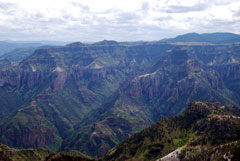
Six days into the ten-day tour we traveled past the town of San Juanito to Norítari, a 200-acre ecotourism project located in the heart of a pine forest. Upon arrival, the owners, Lauro and Sol greeted us and showed us around. Each cabin was uniquely decorated with country-style crafts and lovely art and equipped with fireplaces, solar-powered lighting, and private bathrooms. A true gem in the woods. After lunch, some of us chose to take a van ride to the reservoir while others wanted to hike. The hikers got wet from an afternoon rain but the fireplaces in the rooms were heavenly. All of the meals at Norítari were freshly prepared by the family using unique and healthy seasonings and techniques.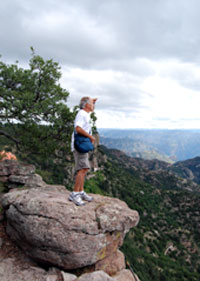
After a feast of a breakfast, we were on our way again. Driving over a bumpy mountain road allowed more breathtaking views at each turn. At last we arrived at our destination—Cascada de Basaseachic, the second highest waterfall in Mexico. We were fortunate to see a lovely rainbow arch across the cascade’s spray. We made a brief stop at a Mennonite community and then continued on our way to Chihuahua City, the capitol of the state.
A good night sleep and we were ready to see all the sights Chihuahua has to offer. We visited the Government Palace, with its murals, painted by Aarón Piña Mora to commemorate the history of the state. Then we visited the home of the notorious Pancho Villa, which is now a state museum. We also visited Quinta Gameros, a pre-revolutionary estate which, legend has it, was built as a wedding gift for a young bride by a much older man who was one of the world’s richest—she refused to marry him and left for Paris. The house was never lived in by a family and now hosts art exhibits. We also visited the Chihuahua Cathederal—it took almost 100 years to build. After touring the city’s highlights, some of the group went back to relax, swim, and enjoy the amenities of the hotel. The rest of us went on to the open-air market to sample and purchase artifacts from all over Mexico.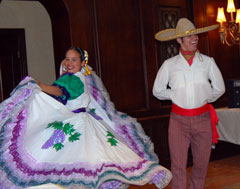
Our last night in Mexico was a grand one. We all joined in for a margarita party and farewell banquet, complete with folkloric dancers and a great dinner. Then we finished it off with a fellow traveler’s birthday celebration. What a night!
On the last day we traveled the historic route of the Sante Fe trail and to the El Paso Airport for our flights home. We said our good-byes and made plans to stay in touch with our new friends.
Thank you to all that traveled with me and made this trip such a special event. Happy Trails!